Tuesday, March 31, 2009

The best countries for business, 2009


The economic downturn that's swept the globe has crushed financial markets, exploded unemployment and shaken confidence in the banking system.

The disaster isn't shared equally, though. Some countries are in a much better position than others to rebound from the current malaise by attracting entrepreneurs, investors and workers.

Who are they? Our fourth annual Best Countries for Business ranking looks at business conditions in 127 economies. Topping the list for 2009: Denmark, for a second straight year, takes the No. 1 spot. The U.S. is up two spots to No. 2, Canada is up four spots to No. 3, Singapore is up four to No. 4 and New Zealand is up seven to No. 5.

See full Article.

A carbon tax is the way to cut emissions


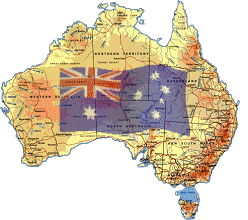
THE Rudd Government's environmental credentials are in tatters: the Carbon Pollution Reduction Scheme has been exposed as sham. This shouldn't be surprising. There isn't one cap-and-trade scheme in the world that has resulted in a reduction in carbon emissions. Instead, such schemes have made money for the biggest polluters and created a new branch of the derivatives industry that creates new wealth opportunities for brokers and financiers.

Rudd's cap and trade scheme benefits the worst polluters.

But the Australian scheme is special. It has been rorted at the planning stage. An emissions cut of 5 to 15 per cent by 2020 on 1990 levels is derisory. If the rest of the world adopted these targets as the standard at the forthcoming meeting in Copenhagen in December, then the science suggests that southern Australia can look forward to more extreme bushfires and heatwaves, while the north will be forced to adapt to more intense cyclones and collateral damage from shipping, such the recent oil spill that ended upon Queensland beaches.

See full Article.

Europe's Regulatory Chaos


Europe's financial system has suffered a tremendous shock with the current crisis.EU failings include the lack of a coherent crisis-management framework for dealing with cross-border institutions, the uneven playing field caused by governments racing to insure their national banking systems, and the "Icelandic" scenario: a whole banking system defaulting on foreign investors.

Even more worrisome is that the line of command is not clearly defined in the EU. In a financial crisis, as in war, you need a single authority, not a committee of regulators incapable of taking decisive action. In the euro zone there is one common currency but many national supervisory authorities. So the responsibilities for financial stability remain in national hands.

It is true that the European Central Bank has taken a lead role in providing liquidity to the banking system. But its ability to prevent systemic risks is impaired because it lacks authority, and potentially even the information, on systemically important cross-border groups.

See full Article.

Excessive executive pay in the eye of shareholders


SHAREHOLDERS of major companies will be given veto rights over massive golden handshakes for retiring executives under a Rudd government crackdown on corporate excess.

Wayne Swan has also ordered a Productivity Commission investigation into executive remuneration, arguing "obscene" payouts to retiring executives in recent years have smashed public trust in big business.

But the Government's crackdown, including its public identification of executives it said had been overpaid, provoked an angry backlash from the business sector last night.

Business organisations said the Treasurer was at risk of punishing Australian companies in response to community anger about stories of corporate greed in the US.

See full Article.
Pronto el optimismo ganará


Durante las dificultades financieras que estamos viviendo, lo más fácil es encontrar a los pesimistas, que sólo ven lo malo y que sólo esperan que las cosas empeorarán, e incluyo en estas páginas también.

Lo más difícil es encontrar a los optimistas, no porque no hay razones por ello, pero porque, en general, lo normal es pensar que, en tiempos difíciles, mañana será como hoy, o peor. Es el mismo sentimiento y casi siempre son las mismas personas que, en tiempos de bonanza y de burbuja, también piensan que mañana será como hoy o mejor.

La poca memoria que se ve hace que parezca que los problemas que sufrimos los estamos viviendo la primera vez y que tiene que ser, por definición, lo peor que se ha vivido.

Ver Artículo completo.

Curbs on risky banking proposed


Proposals aimed at overhauling the rules governing UK banking and stopping a repeat of the financial crisis are to be unveiled by the City watchdog.

Financial Services Authority chairman Lord Turner will put forward new rules on lending and seek to restrict banks' ability to take excessive risks.

The plans will aim to stop banks lending too much during boom years, which may include limits on home loans.

Banks may also be required to build up reserves in healthier economic times.

See full Article.

Samsung E200 Eco, el móvil ecológico


Tras su presentación en China hace medio año, llega por fin a España el teléfono ecológico más conocido, el Samsung E200 Eco.

El Samsung E200 Eco es un teléfono móvil que tiene la peculiaridad de estar fabricado con bioplásticos procedentes de plantas como el maíz. El uso de este material tiene dos claras ventajas: fabricarlo es menos contaminante y se gasta menos energía que con plásticos tradicionales, y se trata de un producto biodegradable.

Retomando aspectos más clásicos de los teléfonos móviles, este teléfono ecológico de Samsung es un ejemplo de terminal de bajo coste relativo y con especificaciones muy modestas. Su grosor es de menos de 10 mm, es un terminal solamente GPRS y su cámara es un discreto modelo de 1.3 megapíxeles.

Ver Artículo completo.

Breakthrough for FSA as insider trader is jailed


A solicitor was sentenced to eight months in jail yesterday for leaking secret information about a takeover, marking a significant breakthrough for the Financial Services Authority (FSA) and its efforts to combat insider trading. It was the first time that an insider dealer had been given a prison sentence in a case brought by the FSA.

Christopher McQuoid, a former general counsel of TTP Communications, a telecoms software business, was jailed at Southwark Crown Court in London for what a judge called his “deliberate and calculating behaviour”.

James Melbourne, McQuoid's father-in-law, who bought TTP shares after a tip-off from McQuoid, was jailed for eight months, suspended for a year.

See full Article.

Monday, March 30, 2009

Greenpeace denuncia solo 3,42% de edificios públicos mexicanos ahorra energía


La organización no gubernamental Greenpeace denunció hoy que apenas el 3,42% de los edificios públicos de México están inscritos en un programa de ahorro de energía eléctrica en dependencias oficiales, lo que es incongruente con los planes de este país de luchar contra el cambio climático.

Así lo reveló hoy la ONG ecologista en una rueda de prensa en la que lamentó la escasa aceptación que ha tenido el Programa de Ahorro de Energía en la Administración Pública Federal, en marcha desde junio de 2003, pero con pocos adeptos.

Según Greenpeace, de los 27.709 edificios públicos de la Administración federal repartidos por los 32 estados que hay en México sólo 948 están inscritos en el programa gubernamental.

Ver Artículo completo.

‘Green’ plan to consign Argentina’s debt woes to history


When Argentina announced in September that it was studying a proposal that could close the chapter on its $95bn 2001 debt default and regain access to the capital markets that have been closed to it for seven years, investors were delighted.

The proposal aimed to settle with the investors who held out against the terms of the 2005 debt swap, which was accepted by the majority of bondholders hit by the 2001 default.

See full Article.
Carbon costs will weigh on exports


AUSTRALIAN-MADE goods will suffer under a carbon trading scheme, burdened by costs that countries with nuclear power will not incur, says the head of the nation's peak nuclear agency.

Ziggy Switkowski, chairman of the Australian Nuclear Science and Technology Organisation, told a uranium conference in Adelaide yesterday that countries were turning to nuclear power to cut carbon emissions in response to climate change.

"Existing nuclear-powered economies will exploit their current cost advantages in having clean nuclear energy when competing with Australian products that will be newly burdened with embedded carbon costs," he told the Paydirt Uranium Conference.

Dr Switkowski, who headed an inquiry into the viability of a nuclear power industry for the Howard government in 2006 and is a former chief executive of Telstra, said later that Australia was progressively competing with countries that had embraced nuclear power. "So we are going to flip from a phase where we had a competitive advantage, where we had low-cost but dirty fossil fuels, to one where we're going to have our costs burdened by carbon costs through an emission trading scheme," he said.

See full Article.

Stimulus 'must help world's poor'


RICH nations spending hundreds of billions of dollars stimulating their own crisis-hit economies should set aside 10 per cent to tackle global poverty, East Timor's president says.

Global economic turmoil has caused a rise in poverty worldwide, but this is being forgotten as developed countries work to keep banks and businesses afloat, Jose Ramos Horta said in a speech to the country's parliament on Tuesday.

"At a time when the United States, Europe and Japan are pouring hundreds and hundreds of millions of dollars into their financial systems in an attempt to salvage banks that poor management has led to the brink of collapse, poverty in the world seems increasingly overlooked," Ramos-Horta said.

See full Article.

Automotive industry is 'chipping away' at carbon emissions


The automotive industry has made some "organic" changes to reduce the environmental impact of its vehicles and is continuing to chip away at carbon emissions, according to the managing director of Carbon Footprint.

John Buckley said there has been a lot of hard work going on among car manufacturers and pointed out that many firms are now actively "pushing" vehicles that have lower emissions.

"In the near-term, new models of cars coming out tend to have better carbon emissions and there's a lot of research going on in the background into alternative fuels as well," he remarked.

See full Press Release.

OECD Regional Policy Forum, ‘Global Crisis, Regional Responses’


When: Monday 30 March from 9:00 – 18:00
Where: OECD headquarters, Paris, France


As the economic crisis deepens, the public sector is stepping in to restore confidence and stimulate the economy. To be successful, this effort needs to include policy makers at all levels of government, as well as stakeholders in the private sector, civil society and academia. Sub-national governments are responsible for two-thirds of public investment in OECD countries and will have an important role to play in efforts to resolve the crisis.

You are invited to join politicians, policy makers, private stakeholders and academics attending the OECD Regional Policy Forum, ‘Global Crisis, Regional Responses’, at OECD headquarters in Paris on Monday 30 March from 9:00 – 18:00.

The Forum will look for answers to some of the challenges raised by the crisis:

See full Details.

Firms escape checks on pay equality


The state equality watchdog eased the pressure on companies over equal pay yesterday.

It said that bosses should not be compelled by law to publish details of what they pay men and women staff.

Instead it called for employers to be allowed time to change their pay systems.

The move from the Equalities and Human Rights Commission comes as Deputy Prime Minister Harriet Harman is preparing to publish legislation on equal pay.

Miss Harman has already dropped plans to make companies publish 'equal pay audits' last month. The Equalities Commission's stance reflects this decision.

See full Article.

Sunday, March 29, 2009

Survey Finds Changes Under Way in Executive Pay


A growing number of companies are freezing salaries, reducing bonus pools and making other major changes to their executive pay programs, a consulting firm reported Tuesday.

Of 145 companies surveyed during the first week of March, Watson Wyatt said roughly half plan to decrease this year's bonus pool by an average of 40 percent. Also, the number of companies that have frozen salaries jumped to 55 percent, from 21 percent when the companies were first polled in December 2008.

''The recession has shone a light on executive pay, causing many companies to re-evaluate the long-term implications of their executive pay policies,'' said Andrew Goldstein, Watson's Wyatt's co-leader of North American executive compensation consulting.

See full Article.

Rich countries are racking up debt, while developing countries are borrowing less | Weighed down


Rich countries, especially, are piling up debt

AMERICA, Britain and China are among the many countries that have adopted spend-now-pay-later policies to stave off economic disaster. But giant fiscal stimuluses, tax cuts and bail-outs are weighing heavily on public finances. In a paper prepared for the forthcoming G20 summit, the IMF sets out new forecasts for government debt. Japan's debt burden, which is already the largest of the world's big economies, will reach a sumo-sized 225% of GDP in 2010. Rich countries' debt is set to grow from 83.3% of GDP in 2008 to almost 100% in 2010. Developing economies will see much smaller growth from 35.7% to 37.8% in two years, but these countries also have lower debt tolerance than rich ones.

See full Details.

The world needs women with Veuve


Entrepreneurial women with fighting spirit can steer us through the recession, says shadow business minister

Baroness Judith Wilcox has been judging the Veuve Clicquot Business Woman of the Year Award for the past decade but this year the need for talented female entrepreneurs is at its most pressing.

"Everyone's trying to put out the forest fire of the financial crisis and those companies that emerge will be the keenest and leanest," she says. "We need those entrepreneurial women with fighting spirit to steer us through this time."

Baroness Wilcox, Conservative shadow business minister in the House of Lords, believes there is still some way to go towards putting more women in our boardrooms.

See full Article.

Young Global Leaders aim for gender parity


• World Economic Forum commits to increasing its efforts to identify and select women leaders to integrate into the Young Global Leaders community with the ultimate goal of reaching parity

In response to Philippines President Gloria Macapagal Arroyo’s call to action for countries, organizations and schools around the world, the Forum of Young Global Leaders and the World Economic Forum have announced a commitment to increasing their efforts to identify and select women leaders to integrate into the Young Global Leaders community with the ultimate goal of reaching parity.

David Aikman, Head of the Forum of Young Global Leaders“The Forum of Young Global Leaders strongly believes that the future of leadership is one of gender parity,” said David Aikman, Head of the Forum of Young Global Leaders.

See full Press Release.

How the recession is hurting the poor | The toxins trickle downward


A downturn that began in the rich world is hurting those who can least afford it

“POOR countries are innocent,” says Ngozi Okonjo-Iweala, the Nigerian managing director of the World Bank. They did not contribute one jot to the global credit crunch, and their banks and firms have few links to global capital markets. For a while, it seemed as if the rich world’s mess might even pass them by. The oil-price fall of 2008 benefited oil-importing developing countries to the tune of 2% of their national incomes. As recently as January, the IMF thought emerging and developing countries would grow 3.3% this year, compared with a predicted fall of 2% for rich economies.

But innocence, it seems, will not protect anyone. A financial crisis that began in New York and London and spread to manufacturing in rich, then industrialising countries, has now hit the “bottom billion”: the poorest people in 60-odd countries who have seen only halting gains from globalisation, but will feel its reverse, perhaps precipitously.

See full Article.

Where the livin' is expensive


TOKYO is currently the most expensive city in the world. The Economist Intelligence Unit, part of the Economist Group, has released its Worldwide Cost of Living survey, and the Japanese capital climbs from last year's seventh place to first.

The table's figures represent a weighted average of the prices of over 160 items found in 140 cities, from a loaf of bread to a luxury car. This year’s survey shows substantial changes from last year's because of recent exchange-rate fluctuations. For example, when the data was actually collected in September 2008, Oslo was the most expensive city in the world (as it was the year before). But the depreciation of the Norwegian krone since then has dropped the city to fifth place.

See full Article.

Saturday, March 28, 2009

Swiss warn lifting secrecy ‘will take time


No surprise that the Swiss want some time to move against their interests. It is clear that they are announcing responses as they want to fend off moves by States against them.

The problem is that delay and delay usually results in forget and, in the end, nothing happens.

This is the right stategy for the Swiss, although not convincing to those that want to see results.

As I have said before, there is no moral credit in helping people evade the law.

Onésimo Alvarez-Moro

See article:
Switzerland has warned countries against expecting swift results from its decision last week to water down bank secrecy laws, saying it could take years for the necessary legislation to come into action.

Hans-Rudolf Merz, Switzerland’s finance minister, said renegotiating the country’s more than 70 double taxation treaties “won’t be so fast” as each would have to be approved individually by the country’s parliament.

See full Article.

Las Maldivas contra el cambio climático


Las islas Maldivas utilizarán dentro de 10 años exclusivamente fuentes de energía renovable -como la eólica o la solar-, afirmó el presidente del país, Mohamed Nasheed.

El mandatario le dijo a la BBC, que su país, más que ningún otro, comprendía lo que podría llegar a suceder si el mundo fracasara en su intento por frenar el cambio climático.

Y es que las islas -ubicadas en el Océano Índico- se encuentran a menos de un metro por encima del nivel de mar y por tanto son muy vulnerables al aumento de los niveles del mismo, provocados por el calentamiento global.

Ver Artículo completo.

Two are guilty of insider dealing


Good news! It is difficult to catch insider trading. It is important that these things are taken seriously.

Onésimo Alvarez-Moro

See article:
The Financial Services Authority (FSA) has secured its first criminal convictions for insider dealing since its foundation in 1997.

Christopher McQuoid, a solicitor, and his father-in-law, James William Melbourne were today both found guilty.

They had been charged with illegally passing and receiving sensitive financial information.

See full Article.

Another Credit Crunch: National Regulators Tighten the Screws


As governments step in to help, bureaucrats in Europe are imposing rules that can make even the safest debt harder to sell

As a lawyer who prepares prospectuses for bond offerings from major banks, Anna Pinedo never thought she'd have to assemble hundreds of pages of facts on the creditworthiness of Federal Deposit Insurance Corp. and the U.S. government. But a frustrated Pinedo is doing just that, in a telling example of the new sand that's grinding the gears of the global financial system.

This grit was thrown in by regulators in London who won't authorize Pinedo's bank clients to sell newly guaranteed debt to European investors without detailed disclosures about the FDIC, which is promising to make sure the bonds are repaid. So Pinedo and her firm, Morrison & Foerster, are rounding up all manner of facts about the FDIC's solvency, about dates U.S. government debt matures, about trends in the U.S. trade balance, and so on. It doesn't seem to matter that U.S. currency and creditworthiness are still among the strongest in the world.

See full Article.

Se aplaza la reforma de la supervisión financiera


El director general de Seguros, Ricardo Lozano, señaló que, con la crisis,
“no hay suficiente ánimo para abordar esta tarea con el rigor necesario”

El Ministerio de Economía y Hacienda ha aparcado el proyecto para reordenar los órganos de supervisión financiera, que afectan a los seguros, a la CNMV y al Banco de España. El director general de Seguros, Ricardo Lozano, señaló, en un acto organizado por APIE, que, con la crisis, “no hay suficiente ánimo para abordar esta tarea con el rigor necesario”.

Además, tampoco parece existir el clima político que facilite el consenso necesario entre los dos principales partidos

El proyecto esbozado por el Ministerio, que era uno de sus objetivos para esta legislatura, planteaba la reordenación de los órganos supervisores en dos: uno que se encargara del control de la solvencia de las entidades y otro que vigilase su comportamiento en el mercado. Este es el modelo por el que parecen apostar los expertos de la Unión Europea, aunque, según Lozano, habría que esperar también a ver silos países miembros van en esa dirección.

Ver Artículo completo.

Australian Coal May Face $3.5 Billion in Carbon Costs


Australia’s coal-mining companies face costs of about A$5 billion ($3.5 billion) in the first five years of the nation’s planned emissions-trading system, threatening jobs and investment, an industry group said.

Additional costs will increase job losses beyond the 3,000 reductions so far due to the commodity-market slump, Ralph Hillman, executive director of the Australian Coal Association, said today in Sydney. As many as 10 mines risk closure because they won’t be able to pass on the costs to customers, he said.

Australia is due to introduce a national emissions trading system on July 1, 2010, to help reduce gases blamed for global warming. Woodside Petroleum Ltd., operator of Australia’s biggest liquefied natural gas project, Caltex Australia Ltd. and CLP Holdings Ltd.’s TRUenergy Pty unit are among companies that have said the system won’t cover their increased costs.

See full Article.

Friday, March 27, 2009

Microfinance and the credit crunch | Sub-par but not subprime


Lending to the poor has held up well but it is not as safe from the credit crisis as its champions hoped

A GLOBAL credit crisis caused by subprime mortgages is hardly the ideal backdrop for a business making unsecured loans to poor people without a credit history. Yet big microfinance companies, which do exactly that, seem to be in rude health. Mohammad Yunus, the unflappably optimistic founder of Grameen Bank in Bangladesh, a microfinance institution for which he won the Nobel Peace Prize in 2006, is adamant that business remains unscathed. “We have not been touched in any way by the financial crisis,” he said on a recent visit to Japan. “The simple reason is because we are rooted to the real economy—we are not paper-based, paper-chasing banking. When we give a loan of $100, behind the $100 there are chickens, there are cows. It is not something imaginary.”

He is not alone in thinking that microfinance is insulated from the problems of the global economy. Its proponents argue that any similarity with subprime loans is misleading. Microfinance institutions (MFIs) lend relatively small sums of money to people in developing countries to start small, profitable businesses, not to buy overpriced homes.

See full Article.

The Future of Green Building


How will the recession affect the green-building market? We asked Peter Morris, principal of the construction consultancy Davis Langdon

Proponents of green buildings have a long list of persuasive arguments they can use to convince clients and developers that green is the way to go: Build green, and your employees will be healthier, happier, and more productive! Build green, and you will use less water and energy, benefit your local environment, and promote global environmental responsibility! Build green, and you will save money over the long term!

But with U.S. economy in shambles, the question looms: How will the recession affect the green-building market? We put the question to Peter Morris, principal of the construction consultancy Davis Langdon. Morris heads up the firm's research initiatives.

See full Article.

Kenya Climate Change Round Table


When: 29th March and 2nd April 2009
Where: Morendant Training Centre in Naivasha, Kenya


Kenya held its national Climate Change Round Table at the plush Morendant Training Centre in Naivasha between 29th March and 2nd April 2009. Workshop participants included representatives from government ministries, civil society, local universities/research institutions, COMESA and EAC Secretariats, women/youth groups, the private sector and the media.

Mr. Lawrence Lenayapa Permanent Secretary, Ministry of Environment and Mineral Resources officially opened the Round Table. The local Member of Parliament, Honourable John Mututho, who is also the Chairperson of the Parliamentary Committee on Lands, Agriculture and Environment, also addressed the meeting.

The Round Table aimed at enabling participatory discussions to generate a common position on climate change for input into the unified African position on Climate Change negotiations.

The overall recommendations from the workshop included that Kenya should lay more emphasis on adaptation to climate change and undertake initiatives to ensure global commitment in providing financial and technical resources for the same as well as capacity building to enhance scientific, policy and practice excellence in climate change and related work.

See full Details.

Better batteries are on their way | Batteries now included


The missing piece of the electric-car jigsaw has just turned up

IF YOU want to buy an electric car, you can. Tesla Motors, a firm based in San Carlos, California, will sell you a nifty open-top sports job for $109,000. Not cheap, admittedly, but cheap to run. Plugged in overnight, it can be refuelled for the equivalent of 25 cents a litre of petrol. The catch is, “plugged in overnight”. Tesla’s vehicles use standard lithium-ion battery cells. As any owner of a mobile phone or laptop computer knows, these take time to charge. If you use 6,831 of them, as a Tesla sports car does, that time does tend to drag on. Which is fine if you are not planning a long trip the following day, for a full charge will take you about 350km (220 miles). But it might cramp the style of anyone planning to bomb down from, say, Paris to Cannes, and who would therefore need to refuel on the way.

Gerbrand Ceder and Byoungwoo Kang of the Massachusetts Institute of Technology hope to change this, and thus help make the electric car a work-a-day consumer item, rather than a high-end boy’s toy. In this week’s Nature they have published the technical details of a new battery material that will, if all goes well, take the waiting out of wanting, at least when it comes to recharging.

See full Article.

Harnessing the Sun, With Help From Cities


Rick Clark’s garage is loaded with fast toys for playing in the sun. He has a buggy for racing on sand dunes, two sleek power boats for pulling water skiers, and a new favorite: 48 solar panels that send his energy meter whirring backward..

Bronzed and deeply lined from decades of life in the desert sun, Mr. Clark is not one to worry about global warming. He suspects that if the planet’s climate is getting hotter, it is part of a natural cycle and will probably correct itself. “Experts have been wrong before,” he said.

But late last year, Mr. Clark decided to install a $62,000 solar power system because of a new municipal financing program that lent him the money and allows him to pay it back with interest over 20 years as part of his property taxes.

See full Article.

Businesses reminded over new compliance checks regime


Businesses are being urged to prepare for the introduction of a new framework for compliance checks on April 1st.

HM Revenue and Customs (HMRC) said firms must ensure they understand the new regime and what it will mean for them.

It includes new record keeping requirements and time limits for tax assessments and claims. It also brings in new information and inspection powers for HMRC.

The non-ministerial department will have one set of powers covering PAYE, VAT, income tax, capital gains tax and corporation tax.

See full Article.

Más de 5 millones de mujeres son víctimas de trata de personas en América Latina


Más de cinco millones de niñas y mujeres han caído en redes de tráfico de personas en América Latina y diez millones más se encuentra en riesgo de hacerlo, dijo hoy a Efe en México la directora regional de la coalición regional contra ese delito, Teresa Ulloa.

La Coalición contra el Tráfico de Mujeres y Niñas en América Latina y el Caribe (CATWLAC, por su sigla en inglés) señaló además que los tratantes "están cada vez más vinculados con el crimen organizado", y agregó que la pobreza ha provocado que esta trata con fines de explotación sexual "se haya disparado en los últimos años".

"Es un problema muy grave", indicó Ulloa después de inaugurar en Ciudad de México la "Primera reunión regional de buenas prácticas para combatir la Demanda y legalización de la prostitución. Siglo XXI", que concluirá el próximo día 25.

Ver Artículo completo.

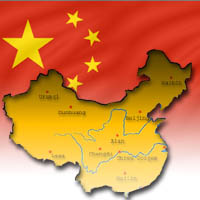
China seeks export carbon relief


China has proposed that importers of Chinese-made goods should be responsible for the carbon dioxide emitted during their manufacture.

China's top climate change negotiator, Li Gao, said his country should not pay for cutting emissions caused by the high demands of other countries.

In recent years China has overtaken the US as the world's largest producer of greenhouse gases.

See full Article.

Thursday, March 26, 2009

Everyone Hates Ethanol


These days, it's routine for businesses to fail, get rescued by the government, and then continue to fail. But ethanol, which survives only because of its iron lung of subsidies and mandates, is a special case. Naturally, the industry is demanding even more government life support.

Corn ethanol producers -- led by Wesley Clark, the retired general turned chairman of a new biofuels lobbying outfit called Growth Energy -- want the Obama Administration to make their guaranteed market even larger. Recall that the 2007 energy bill requires refiners to mix 36 billion gallons into the gasoline supply by 2022. The quotas, which ratchet up each year, are arbitrary, but evidently no one in Congress wondered what might happen if the economy didn't cooperate.

Now the recession is hammering demand for gas. The Energy Information Administration notes that U.S. consumption fell nearly 7% in 2008 and expects another 2.2% drop this year. That comes as great news for President Obama, who is achieving his carbon-reduction goals even without a new carbon tax, but the irony is that the ethanol industry is part of the wider collateral damage.

See full Article.

How the recession is hurting the poor | The toxins trickle downward


A downturn that began in the rich world is hurting those who can least afford it

“POOR countries are innocent,” says Ngozi Okonjo-Iweala, the Nigerian managing director of the World Bank. They did not contribute one jot to the global credit crunch, and their banks and firms have few links to global capital markets. For a while, it seemed as if the rich world’s mess might even pass them by. The oil-price fall of 2008 benefited oil-importing developing countries to the tune of 2% of their national incomes. As recently as January, the IMF thought emerging and developing countries would grow 3.3% this year, compared with a predicted fall of 2% for rich economies.

But innocence, it seems, will not protect anyone. A financial crisis that began in New York and London and spread to manufacturing in rich, then industrialising countries, has now hit the “bottom billion”: the poorest people in 60-odd countries who have seen only halting gains from globalisation, but will feel its reverse, perhaps precipitously.

See full Article.

In Staten Island, Harnessing the Wind


STAND for a moment by the shores of Arthur Kill, on the southwestern coast of Staten Island, and look past the choppy waves at the fuel storage tanks of Sewaren, N.J.

Stroll toward the water’s edge, by rotting barges from the old Kreischer brick factory and through a 190-unit town-house complex being built on the factory’s former site in Charleston. Then glance back, up a hill, to the vacant house once owned by a son of the company’s founder, and listen to the faint whistling and hum overhead.

Are those the sounds of the ghosts that are rumored to haunt the old house?

See full Article.

Cómo combatir la escasez de agua


Es un recurso esencial para sobrevivir, pero millones de personas alrededor del mundo todavía carecen de agua.

En el futuro podrá haber guerras a causa de la escasez de agua.
Y esta escasez se verá exacerbada en los próximos años debido al rápido crecimiento de la población y al cambio climático.

La Organización de Naciones Unidas ya ha advertido que a medida que el planeta se caliente y se seque, podríamos presenciar conflictos y guerras a causa de este recurso.

See full Article.

FSA publishes Financial Risk Outlook


The main risks facing financial firms, consumers and the regulatory system as a result of the economic downturn have been set out by the Financial Services Authority (FSA).

Its latest Financial Risk Outlook (FRO) highlights the challenges created by deleveraging in the banking sector and in the wider economy as the recession continues.

The report addresses the need for banks to alter their business models to reflect deteriorating market conditions.

Companies are also reminded of their obligation to treat customers fairly and offer support to those experiencing financial difficulty.

See full Press Release.

How to stop the drug wars


The Economist, the appropriate legalization of the drugs trade is the only way to resolve its growth and the criminality associated with it.

Onésimo Alvarez-Moro

See article:
Prohibition has failed; legalisation is the least bad solution

A HUNDRED years ago a group of foreign diplomats gathered in Shanghai for the first-ever international effort to ban trade in a narcotic drug. On February 26th 1909 they agreed to set up the International Opium Commission—just a few decades after Britain had fought a war with China to assert its right to peddle the stuff. Many other bans of mood-altering drugs have followed. In 1998 the UN General Assembly committed member countries to achieving a “drug-free world” and to “eliminating or significantly reducing” the production of opium, cocaine and cannabis by 2008.

That is the kind of promise politicians love to make. It assuages the sense of moral panic that has been the handmaiden of prohibition for a century. It is intended to reassure the parents of teenagers across the world. Yet it is a hugely irresponsible promise, because it cannot be fulfilled.

See full Article.

Africa faces deepening gloom


There was a shadow over the meeting of African finance ministers called by the International Monetary Fund even before it started.

But the gloom deepened at the start of the proceedings, when IMF Managing Director Dominique Strauss-Kahn told African delegates his latest assessment of the economic outlook.

For the world economy, it was a contraction, a decline in the total output of goods and services, which would be its worst performance in decades.

For Africa, his forecast was growth of just 3%. Allowing for increasing population, that leaves very little growth in average living standards and deepening poverty for many.

See full Article.

Wednesday, March 25, 2009

The state of philanthropy: A conversation with Acumen Fund’s CEO


Jacqueline Novogratz discusses the challenges that divide and unite today’s philanthropic community.

As global philanthropy reshapes itself to accommodate a widening array of private-sector involvement and a blend of private and public investment, discussion of both the ethics and effectiveness of these diverse methods has moved front and center. In this video interview, Jacqueline Novogratz, CEO of venture-philanthropy firm Acumen Fund, shares her perspective on the current challenges facing the philanthropic community and the opportunity she sees to move past a traditional public-sector approach to charitable giving.

See full Article.

Developing entrepreneurship among the world’s poorest


Acumen Fund founder and CEO Jacqueline Novogratz shares stories of social-sector entrepreneurship in an excerpt from her new book, The Blue Sweater. A video interview with the author takes you behind the book.

Jacqueline Novogratz began her career as an international banker but soon, aspiring to change the world, joined a nonprofit women’s microfinance group that dispatched her to Africa. At the request of an official in Rwanda’s Ministry of Family and Social Affairs, she visited that country, at first to investigate the possibility of starting a credit program for women. A remarkable experience there inspired the title of her book, The Blue Sweater: Bridging the Gap between Rich and Poor in an Interconnected World, which tells the story of her work as an entrepreneur in the social sector. As a child in the 1970s, she had given the charity Goodwill Industries an old, blue sweater.

See full Article.

Europe’s Way of Encouraging Solar Power Arrives in the U.S.


Solar cells adorn the roofs of many homes and warehouses across Germany, while the bright white blades of wind turbines are a frequent sight against the sky in Spain.

If one day these machines become as common on the plains and rooftops of the United States as they are abroad, it may be because the financing technique that gave Europe an early lead in renewable energy is starting to cross the Atlantic.

Put simply, the idea is to pay homeowners and businesses top dollar for producing green energy. In Germany, for example, a homeowner with a rooftop solar system may be paid four times more to produce electricity than the rate paid to a coal-fired power plant.

See full Article.

Engines for Hybrids Take a Supporting Role


ELECTRIC cars, in one form or another, are taking an increasingly important role in the future of personal transportation. That does not mean the internal combustion engine, our faithful power source for more than a century, is on its way to the scrap heap anytime soon.

But the familiar petroleum-fueled engine is being reconfigured for a considerably different role in the electric propulsion era.

This change will be especially evident in cars like the Chevrolet Volt, a hybrid whose gasoline engine only powers a generator to charge the battery pack — the engine has no mechanical connection to the wheels. The engine is tuned to operate over a narrow speed range, using the least gas and producing the smallest amount of pollutants.

See full Article.

European Commission triples green investment to €105 billion


The European Commission has outlined plans to invest €105 billion in green projects as part of its 2007-2013 regional policy budget – almost three times as much as that invested during the last budgetary period.

The investment will mainly go towards helping member states comply with EU climate change and environmental legislation. Of the total, €4.2 billion is earmarked for energy efficiency and €4.8 billion for renewables.

Improvements to transport infrastructure to reduce emissions get €23 billion for railways and €6 billion specifically for clean urban transport.

See full Article.

Car industry figures reveal shift to low carbon vehicles


Average new car CO2 emissions in 2008 dropped 4.2 per cent from 2007

The average emissions of a new car in the UK fell by the biggest margin ever in 2008, thanks to technical innovation and changes in consumer spending habits.

That is according to new figures from the Society of Motor Manufacturers and Traders (SMMT), which found that average new car CO2 emissions dropped 4.2 per cent from 164.9g/km to 158.0g/km last year. The fall means that average car emissions have now fallen 16.8 per cent from the 189.8g/km recorded in 1997 – the base year for the data.

Paul Everitt, chief executive of SMMT said that average emissions have fallen every year during the last decade. "Through technological innovation and consumer education, manufacturers have made genuine progress towards meeting tough environmental targets," he argued.

See full Article.

Renewables could meet 40% of global electricity needs by 2050


Previous estimates of the potential of renewable technologies like wind and photovoltaics are wrong, says Finnish researcher Peter Lund, and could supply 40% of the world’s electricity demand by 2050.

“If we prioritize and recognize the value of renewable energy technologies, their potential to supply us with the energy we need is tremendous,” he said in an address to the International Scientific Congress on Climate Change: Global Risks, Challenges & Decisions.

See full Article.

Tuesday, March 24, 2009

Carbon-neutral goal for Maldives


The Maldives will become carbon-neutral within a decade by switching completely to renewable energy sources like wind and solar power, its leader has said.

President Mohamed Nasheed told the BBC the Maldives understood better than most what would happen if the world failed to tackle climate change.

His tiny country is one of the lowest-lying on Earth and so is extremely vulnerable to rises in sea level.

See full Article.