Monday, November 30, 2009

Financial markets: For whose benefit?


Banks and investment companies are more than mere financial firms. They hold and manage assets, such as retirement income, on behalf of others, whether individuals, companies or governments. In short, they have a fiduciary role to fulfil, based on trust. So why have the beneficiaries not really benefitted?

The moment has arrived for an honest conversation about the standards applied to fiduciaries. Fiduciary responsibility has, particularly in the United States though in other countries too, come to mean making money. But the best interest of the beneficiary may not rest on making money alone. If the money is made in a way that engenders a lower quality of life, or a shorter life, the beneficiary has in fact been ill-served.

See full Article.

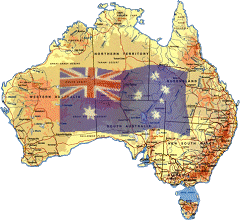
Australian aims to breed 'green' sheep that burp less


Australian scientists have said they are hoping to breed sheep that burp less as part of efforts to tackle climate change.

The scientists have been trying to identify a genetic link that causes some sheep to belch less than others.

Burping is a far greater cause of emissions in sheep than flatulence, they say.

About 16% of Australia's greenhouse emissions come from agriculture, says the department of climate change.

See full Article.

Why governance and investment matter for development


Angel Gurría, Secretary-General of the OECD

The world is going through hard times. Though there are some signs of an economic recovery, global confidence remains fragile. From the economic and social crisis to climate change, natural disasters and conflict, rarely in modern history have we faced such a testing period.

The crisis has taught us many lessons, about our policies, our practices and our ways of life. But if there is one lesson that stands out, it is the importance of international co-operation to help us overcome the challenges we face.

Even before the crisis struck, the MENA region faced difficulties, but with growth and investment reeling from the global downturn, the situation has become urgent: millions of new jobs will be needed for the MENA region's expanding population over the next decade. With annual growth rates that averaged 6% in previous years set to fall to closer to 2-3% this year and foreign direct investment inflows into parts of the region plunging by an estimated 30%, governments need to work hard to attract investment by domestic, regional and international companies.

See full Article.

Reform of carbon trading 'could pay for UK nuclear stations'


EDF, the French utility giant, has insisted that reform of the carbon trading system would be a cheap way for consumers to help pay for a new generation of UK nuclear power stations.

The move could cost the average household an estimated extra £20 to £40 per year.

The power company has been lobbying for an overhaul of the European emissions market, arguing that the market mechanism has failed to incentivise enough investment in low-carbon energy such as nuclear power.

Vincent de Rivaz, chief executive of EDF Energy, would like to see a minimum “floor price” on carbon emissions credits for electricity generators, since the current system has not made the production of clean energy cheaper than by burning fossil fuels.

See full Article.

The Psychology and Economics of Green Business:


Everyone takes a free green grocery bag, but how do you lure stressed-out consumers and businesses to walk the green walk more consistently? Marketing students look for levers of change

ONE DAY LAST YEAR, marketing Professor Baba Shiv stood outside a Trader Joe’s near Stanford for more than an hour approaching shoppers who were leaving the store with reusable grocery bags. He gave them his business card and asked if he could call them later.

These shoppers were trying to do their part to solve a big problem: Each year, retailers pay billions of dollars to supply customers with plastic bags that are littering the planet, killing marine life, and poisoning our food chain. Paper sacks also have costs, both monetary and environmental.

But when Shiv called the shoppers later and asked if they had brought the bags with them on their next shopping trip, almost all of them said no. They knew they should have, but they forgot. Did they buy additional reusable bags? No, they went back to single-use bags.

“When people have already paid for being green but they forget next time, they’re not willing to invest more in their behavior,” Shiv said.

Shiv carried out this informal research to prepare for a week-long seminar on green marketing that he taught last September with colleague Sridhar Narayanan, assistant professor of marketing. Shiv does research on consumer decision making and decision neuroscience, especially the role of emotion in decisions. Narayanan’s research focuses on empirical analysis of marketing problems. The course was one of several seminars offered to second-year MBA students at the beginning of the school year. The short, intense seminars let both students and faculty members explore topics that aren’t part of the traditional MBA curriculum.

See full Article.
Climate change: the biggest threat to economic recovery


Angel Gurría, Secretary-General of the OECD, and James P. Leape, Director General of WWF International

After a year of pain and pessimism, we are starting to see signs of an economic recovery. Green shoots are sprouting. Governments' bold economic and financial actions of over the past year are beginning to take effect.

But we are not out of the woods yet. We now need to make sure that recovery is sustained, and for that bold action on climate change will be needed. As world leaders prepare for the UN climate change talks in Copenhagen this December, one of their top priorities must be to move their economies towards a low-carbon future.

Business as usual is not an option if the economic recovery is to be sustained. If we carry on increasing greenhouse gas emissions, the resulting climate change will lead to massive upheavals: floods and droughts, more violent storms, more intense heat waves, escalating conflicts over food and water and resources.

See full Article.

Invest in employability


Respond to the needs of the newly unemployed while continuing to engage with people who are disadvantaged within the labour market: this is the major challenge facing employment ministers today.

Unemployment is rising sharply in many countries, and with pressure growing on social assistance bodies, employment services and broader public finances, there are difficult questions for governments to answer in terms of where to invest scarce resources and how to ensure value for money. Renewed commitment to employment support underpinned by improved analysis of how this can be most effectively delivered must be central to the discussion.

Here are some key elements to help ministers build an effective response to the crisis.

First, maintain focus on the long-term goal of sustainable employment for all.
It is critical to learn the lessons of previous downturns. Mitigating the current rise in unemployment by increasing rates of early retirement or take-up of disability or health benefits will lead to dysfunctions in the labour market over the long term. With the workforce ageing and the trend towards tightening labour markets, it is important to invest in keeping older people and those with health conditions engaged with the labour market.

See full Article.

Sunday, November 29, 2009

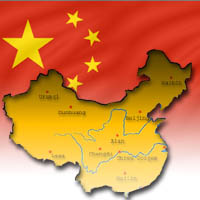
China carbon cut target puts pressure on India


China's decision to unveil carbon emissions targets two weeks before the Copenhagen climate change summit has put pressure on India, a minister says.

Environment Minister Jairam Ramesh has said China's decision is a "wake-up call to India".

India, like China previously, says it will not commit to cuts until developed nations also pledge to meet targets.

China said this week it aimed to reduce its "carbon intensity" by 40-45% by the year 2020, compared with 2005 levels.

See full Article.

8th European Corporate Governance Conference


When: 2-3 December 2009
Where: Stockholm, Sweden


BEYOND THE CRISIS - NEW CHALLENGES FOR CORPORATE GOVERNANCE

On 3 December 2009, in conjunction with the Swedish EU Presidency during the second half of 2009, the Swedish Corporate Governance Board and the European Corporate Governance Institute will host the 8th European Corporate Governance Conference in Stockholm, Sweden. A welcome reception will be held on the evening of 2 December.

In the first morning session, Mr Jean-Nicolas Caprasse of the RiskMetrics Group will make the first public presentation of the findings of a major study on monitoring and enforcement mechanisms in corporate governance in the EU Member States. The study was commissioned by the European Commission and carried out by a consortium led by RiskMetrics. Mr Pierre Delsaux of the European Commission will comment on the findings, and their ramifications for the future of corporate governance regulation in the EU will be assessed by a roundtable panel of experts with backgrounds in different jurisdictions and corporate governance traditions in the European Union.

See full Details.

Rich should help Amazon forests, summit says


Nine nations in the Amazon region have called on rich countries to provide poorer nations with the funds to preserve forests.

The nations, meeting in Manaus, Brazil, also discussed supporting a 40% reduction in global emissions by 2020.

The meeting comes shortly before the key global summit on climate change in Copenhagen, Denmark.

The Amazon nations agreed on broad principles rather than concrete steps, correspondents said.

See full Article.

Walker Review summary


The review also calls for:

• A bank's remuneration committee should have direct responsibility for the pay of all high-paid employees
• Board-level risk committees chaired by a non-executive. (Non-executive directors are appointed from outside a company to sit on its board and scrutinise its performance)
• Risk committees to have power to scrutinise and if necessary block big transactions
• Chairman of remuneration committee to face re-election if annual report gets less than 75% approval
• Non-executive directors to spend up to 50% more time on the job
• Chairman of the board to face annual re-election
• Institutional investors to be more active in monitoring the banks.

See full Article.

Global warming science alarming, say climate experts


Three UK groups studying climate change have issued a strong statement about the dangers of failing to cut emissions of greenhouse gases across the world.

The Royal Society, Met Office, and Natural Environment Research Council (Nerc) say the science of climate change is more alarming than ever.

They say the 2007 UK floods, 2003 heatwave in Europe and recent droughts were consistent with emerging patterns.

See full Article.

Wind turbine noise rules are outdated, say campaigners


The government urgently needs to update its guidance on how local authorities should assess the impact of noise from wind turbines, campaigners have said.

Environmental Protection UK say turbines are now so large, the noise generated by the turning blades can affect those living nearby.

The pressure group believes that changes in technology are not being reflected in the current guidelines.

The government says it is continuing research into the impact of noise.

See full Article.

Climate cash for poor countries 'has not materialised'


Large sums promised to developing countries to help them tackle climate change cannot be accounted for, a BBC investigation has found.

Rich countries pledged $410m (£247m) a year in a 2001 declaration - but it is now unclear whether the money was paid.

UN Secretary General Ban Ki-moon has accused industrialised countries of failing to keep their promise.

The EU says the money was paid out in bilateral deals, but admits it cannot provide data to prove it.

The money was pledged in the 2001 Bonn Declaration, signed by 20 industrialised nations - the 15 countries that then made up the European Union, plus Canada, Iceland, New Zealand, Norway and Switzerland.

See full Article.

Australia carbon emissions law hit by opposition revolt


The Australian government's plans to enact a law for an emissions trading scheme have been thrown into chaos.

A revolt within the opposition Liberal Party means a key deadline for the Senate to pass the legislation has been missed.

Liberal leader Malcolm Turnbull had agreed with Prime Minister Kevin Rudd to pass the scheme in the Senate, where the government is in a minority.

If the Senate fails to pass the scheme, Mr Rudd can call a snap election.

That could be an appealing option, as he would be expected to win by a very big margin, seriously damaging the Liberals.

See full Article.

Saturday, November 28, 2009

China promete crecer emitiendo menos CO2


China, considerado el mayor emisor de gases que provocan el efecto invernadero y contribuyen al calentamiento global, anunció sus metas de reducción de volumen de dióxido de carbono dos semanas antes de que comience en Copenhague una cumbre mundial sobre cambio climático.

La agencia de noticias china Xinhua reveló que para 2020 China pretende haber reducido su intensidad de carbono entre un 40 y un 45% en comparación con los niveles de 2005.

Ver Artículo completo.

Green software holding finance directors back


Expert claims the software industry has not provided FDs with suitable and affordable environmental data systems

Software providers are holding back adoption of environmental strategies as they do not have the necessary tools.

The comments came from Jyoti Banerjee, a technology consultant and director of Kite Blue, at the ICAEW's sustainable business and green IT conference.

He said: "It is disappointing vendors are not playing a deep or significant enough role" when it comes to environmental IT. He also pointed out environmental software can be "easy" to create.

See full Article.

Planned legislation extends FSA powers


The Financial Services Authority is to get new powers that will allow it to seize data from hedge funds.

The City regulator will receive its new remit in proposed legislation outlined in the Queen’s Speech today.

Ministers believe that changes to the regulator’s remit will be crucial in tackling any future financial crises.

Crucially, the Bill will include a requirement for banks to produce “living wills” to assist regulators in the event of an institution collapsing.

See full Article.

Climate sceptics claim leaked emails are evidence of collusion among scientists


Hundreds of emails and documents exchanged between world's leading climate scientists stolen by hackers and leaked online

Hundreds of private emails and documents allegedly exchanged between some of the world's leading climate scientists during the past 13 years have been stolen by hackers and leaked online, it emerged today.

The computer files were apparently accessed earlier this week from servers at the University of East Anglia's Climate Research Unit, a world-renowned centre focused on the study of natural and anthropogenic climate change.

Climate change sceptics who have studied the emails allege they provide "smoking gun" evidence that some of the climatologists colluded in manipulating data to support the widely held view that climate change is real, and is being largely caused by the actions of mankind.

See full Article.

Climate 'is a major cause' of conflict in Africa


Climate has been a major driver of armed conflict in Africa, research shows - and future warming is likely to increase the number of deaths from war.

US researchers found that across the continent, conflict was about 50% more likely in unusually warm years.

Writing in Proceedings of the National Academy of Sciences (PNAS), they suggest strife arises when the food supply is scarce in warm conditions.

Climatic factors have been cited as a reason for several recent conflicts.

One is the fighting in Darfur in Sudan that according to UN figures has killed 200,000 people and forced two million more from their homes.

See full Article.

Who pays and who gains from carbon offsetting?


When booking a plane ticket to next month's United Nations Climate Change Conference in Copenhagen, a little button that offers the chance to "offset" the carbon dioxide emissions appears.

According to Easyjet, it will cost £1 each way to make the necessary reduction in emissions elsewhere.

But where does that money go?

Many are unsure, and some businesses are hoping world leaders will take steps to reform the industry.

Offsetting life

The offsetting concept emerged from the 1997 Kyoto protocol.

See full Article.

FT sustainable investment conference 2010


Building on the success of our inaugural event in March 2009, the 2nd annual FT Investing in a Sustainable Future international conference will reveal how some of the top minds in today's corporate, financial and investment arena are generating bottom-line profits by putting sustainable and ethical investment strategies at the heart of their organizations.

Why attend?

* Get to grips with the implications of future domestic and global regulation on your business
* Understand how to distinguish between green and "green-wash"
* Meet and hear from companies embedding sustainability into their strategic planning
* Meet and hear from investors who take sustainability into account
* Understand how to demonstrate CSR value and relevancy to the business, stakeholders and institutional investors
* Find out where the "green" dollar is really being spent
* Learn from international and innovative case studies
* Hear outcome-oriented presentations and no-nonsense interviews
* Discover what investors really want to see in your CSR reports

See full Details.

Friday, November 27, 2009

Leaders urge new low-carbon initiatives for success at climate talks


• The world has reached a point of no return in the fight against climate change
• Business, government and civil society leaders call for funding and partnerships to support local projects
• The leaders believe these initiatives will facilitate the ultimate success of Copenhagen


Dubai, United Arab Emirates, 21 November 2009 – The world has reached a tipping point in the fight against climate change yet leaders are optimistic that incremental victories will ensure the battle is ultimately won. Countries, internal states and companies are increasingly implementing low-carbon initiatives with measurable impact as talks to agree on a global climate framework in Copenhagen continue.

According to leaders at the World Economic Forum’s Summit on the Global Agenda in Dubai, public-private partnerships and financing are key to expanding the number of low-carbon projects that are making use of the enabling technologies and policies already in place.

See full Press Release.

Carbon has no place in global trade rules


Crunch time for an international agreement to tackle global warming is only weeks away. In December, the world will meet in Copenhagen to negotiate a new agreement on cutting global emissions of greenhouse gases, with prospects for a meeting of minds still far from certain. Developed countries’ fears that the competitiveness of their industries will be undermined by weak emission-reduction pledges from developing countries are clouding hopes for progress. These fears have led to calls in some advanced countries, such as France and the US, for taxes on imports from countries that do not adopt stringent greenhouse gas targets.

Calls for border taxes on imports divert attention from the fundamental issue: the need for everyone to take action on greenhouse gas emissions. Developed countries acknowledge that they have a responsibility to lead action to combat climate change. But their calls for import tariffs are antagonising developing countries anxious to provide improved living conditions for their citizens.

See full Speech.

Greenpeace: Las cifras de reducción de CO2 de China y EEUU son insuficientes


Greenpeace ha advertido hoy de que los objetivos de reducción de emisiones anunciados por los Estados Unidos y China son "claramente insuficientes".
Para esta organización ecologista, el anuncio del presidente estadounidense, Barack Obama, de reducir sus emisiones un 17 por ciento en 2020 sobre los niveles de 2005, es un objetivo "claramente insuficiente" porque esa rebaja supone una reducción del 4 ó 5 por ciento para 2020 respecto a los niveles de 1990.

Greenpeace advierte además que el viaje de Obama a Copenhague el 9 de diciembre "no responde a las necesidades políticas del proceso" porque es "indispensable que los jefes de Estado y de Gobierno acudan a la cumbre en el tramo final" de las negociaciones.

Ver Artículo completo.

Not-so-wonderful Copenhagen


A forthcoming climate-change summit will not produce a binding deal on emissions

EXPECTATIONS for the Copenhagen climate conference, held next month in Denmark, have been steadily dwindling. On Sunday November 15th, as Barack Obama toured Asia, he and the Danish prime minister, Lars Lokke Rasmussen, quietly agreed what many had anticipated—that no binding agreement would be reached at the conference. There is now no hope of new legal targets for emissions-reductions to replace those set out in the Kyoto Protocol and which will lapse in 2012. Instead the pair suggested that the best to be expected is a political deal on cutting emissions.

Some of the blame for this must be directed at Capitol Hill. Not only will Mr Obama now not sign a cap-and-trade bill before Copenhagen; the Senate is not even expected to pass one.

See full Article.

Shareholders demand Goldman bonuses


Investment bank under fire again as investors protest at record bonuses of $717,000 each

Goldman Sachs has had to defend itself from angry taxpayers, regulators, the government – and now its own shareholders.

Some of the US investment bank's largest investors are furious about the New York-based firm paying record bonuses to its staff – bonuses are estimated to be $717,000 (£435,000) each for 2009, the biggest payout in the firm's 140 years.

Investors claim that now profits are back, rewards should go first to shareholders because they suffered the cost of the credit crunch more than anybody else.

"Most of the losses were for equity shareholders," said a fund manager at a large investment firm. "If they had cared about the preservation of equity value, the crisis wouldn't have been nearly as bad as it was. It would be in everybody's interest, the taxpayer and of banks themselves, if management's interests were more aligned with shareholders."

See full Article.

Obama anunciará reducción de emisiones


Estados Unidos anunciará metas para reducir las emisiones de gases de invernadero antes de la cumbre sobre cambio climático en Copenhague el próximo mes, de acuerdo a un funcionario de la Casa Blanca.

Se espera que la meta coincida con las cifras que está manejando ahora el Senado en un proyecto de ley que busca reducir entre 17% y 20% las emisiones de carbono de los niveles de 2005 para el año 2020.

clic Lea: Copenhague: "Aún hay esperanzas"

La falta de una meta clara por parte de Estados Unidos ha sido vista como uno de los mayores obstáculos de la cumbre para llegar a un acuerdo.

Ver Artículo completo.

The 10 worst retailers for exploiting foreign workers


Britain’s major high street retailers are continuing to exploit workers in the developing world and some of the more upmarket chains are the worst offenders, according to new research.

Labour Behind the Label, a group campaigning against sweatshop conditions, surveyed 25 major retailers and found that not a single one paid a living wage to all workers in their supply chain.

John Lewis, Laura Ashley and Clarks are three of the most heavily criticised companies, while Primark and New Look were given credit for their efforts to improve working conditions.

See full Article.

Thursday, November 26, 2009

The rot spreads


A survey reveals that desperate times have led to illegal measures

THE recession has taken its toll on morals as well as profits. PricewaterhouseCoopers (PwC), a consulting and accounting firm, has conducted a biennial survey of economic crime for the past ten years. The most recent, published on November 19th, is not only the most thorough, based on over 3,000 responses from firms in 54 countries. In many ways it is also the most worrying.

A third of those responding reported that they had suffered at least one economic crime in the past year. The incidence was particularly high in developing countries, notably Russia; in financial services and communications; in big companies and in state-owned enterprises.

See full Article.

Green with envy


The tension between free trade and capping emissions

STATEMENTS by Barack Obama on his travels through Asia have lowered expectations that December’s global summit on climate change in Copenhagen will lead to binding cuts in carbon emissions. The urgency of dealing with climate change means that many countries are drawing up national policies to limit emissions. Yet in a globalised world, where production is increasingly mobile across national borders, some worry that there is a fundamental tension between the effectiveness of such policies and a commitment to open trade.

These carbon-reduction policies, such as America’s proposed cap-and-trade scheme, typically put a price on carbon in the hope that this will force producers to bear the costs that their activities impose on the climate. But if different countries cut emissions by different amounts, as is likely, then the price of carbon will vary across nations. If so, manufacturers in countries with tighter environmental rules will face added costs which foreign competitors do not. This could in turn prompt them to relocate some of their production to “carbon havens”, where the cost of polluting is lower. If enough production emigrates, global emissions might even increase.

See full Article.

Proposals for Global Redesign go forward as Summit on the Global Agenda closes.


• The second Summit of the Global Agenda closed today with participants putting forward a host of ideas for redesigning the global system
• The proposals debated by the Global Agenda Councils will form the basis of discussion at the World Economic Forum Annual Meeting in Davos-Klosters, Switzerland, in January


The World Economic Forum’s second Summit on the Global Agenda ended today, with over 700 experts and thought leaders from business, academia, civil society and government putting forward their ideas.

“This is really the blueprint of the future direction of the global well-being,” said Summit Co-Chair Mohamed Alabbar, Chairman of Emaar Properties, United Arab Emirates, in the closing plenary.

See full Press Release.

World Future Energy Summit - 2010


See full Details.

Carbon market clouded by uncertainty


The offices of London's carbon trading companies are a little quieter than usual.

The firms - many based in the City - buy and sell one of the world's newest commodities: carbon dioxide.

The trade in such permits allows polluters to pay for emissions reductions made elsewhere.

The market could be huge, but its future is now uncertain. It depends on how governments decide to tackle climate change beyond 2012.

See full Article.

US to go to Copenhagen summit with proposed target on carbon emissions


• Barack Obama to announce target in next three weeks
• Figure to be provisional in nature, officials say


The White House said today it would go to the Copenhagen climate change summit with a proposed target for reducing greenhouse gas emissions after facing international pressure to commit to stronger action on climate change.

An administration official told reporters that President Barack Obama would propose the targets before the climate meeting, which is less than three weeks away. The move removes the biggest obstacle to a political deal at Copenhagen.

See full Article.

CBI sees recession as a catalyst for new business era


The recession has become the catalyst for a new era in business, according to a report by the CBI.

The study by the employers' group identifies four key areas of UK business where new ways of working could develop because of the downturn.

They include more flexible workforces, greater collaborations among businesses and wider financing options.

See full Article.

Wednesday, November 25, 2009

Financing Climate Change


The OECD is ready to assist G20 countries in their efforts to find lasting solutions to finance action on climate change, building on the long-standing work of the organisation to share country experiences and identify lessons learnt and policy recommendations for good practice:

Financing Climate Change Action, Supporting Technology Transfer and Development. Key messages and recommendations from recent OECD work (8-page booklet)

The OECD works with government representatives from finance ministries, environment ministries and development co-operation agencies, as well as with other international organisations on key issues concerning financing climate change. We are examining key questions on post-2012 financial architecture:

* Overall financial architecture: What are the goals and objectives of financial support for climate action? How to track relevant streams of public finance and monitor/assess progress in a transparent and accurate manner?

See full Press Release.

Public buildings in Europe will lead the way in energy efficiency


The European Commission, European Parliament and European Council talks in Brussels yesterday have ruled that public buildings will lead the way in improving the energy efficiency of buildings in the region.

The decision makers reached an agreement that will see new or refurbished public buildings having to reach new standards in energy efficiency from the end of 2018.

Most newly constructed buildings will also have to meet the same improved efficiency standards, but only be the end of 2020.

See full Article.

FIB - Felicidade Interna Bruta

The Happy Plannet Index 2.0


Why good lives don’t have to cost the Earth

In an age of uncertainty, society globally needs a new compass to set it on a path of real progress. The Happy Planet Index (HPI) provides that compass by measuring what truly matters to us – our well-being in terms of long, happy and meaningful lives – and what matters to the planet – our rate of resource consumption.

It brings them together in a unique form which captures the ecological efficiency with which we are achieving good lives. This report presents results from the second global HPI. It shows that we are still far from achieving sustainable well-being, and puts forward a vision of what we need to do to get there.

Not since World War II has society globally been faced with so many threats. In the last few years we have driven straight into the wall of the biggest global economic downturn since the Great Depression of 1929, whilst mainstream culture has, at last, been rudely awoken to the ever-growing threats of climate change and the exhaustion of our natural resources. People fear for the future. Meanwhile, the problems that plagued us before, risk becoming even more acute: more than half the world’s population lives on less than $2.50 a day; inequality continues to rise even in richer countries.

See full Report, in pdf format.

Global CO2 emissions from fossil fuels up 29% since 2000


Global CO2 emissions from fossil fuels have risen 29% since 2000, according to an international team of researchers. Compared to 1990, the Kyoto Protocol reference year, the rise is 41%.

The Global Carbon Project, writing in peer reviewed journal Nature Geoscience, also report a 2% increase in emissions during 2008 despite the economic downturn. However, this is less than the 3.4% average annual rate of increase over the same period.

The use of coal as a fuel now exceeds oil for the first time in 40 years and developing countries have overtaken their western counterparts in the amount of greenhouse gas emissions.

“The only way to control climate change is through a drastic reduction in global CO2 emissions,” says lead author Corinne Le Quéré of the University of East Anglia and the British Antarctic Survey.

See full Article.

Tuna body shies from fishing ban


The body responsible for managing Atlantic bluefin tuna has decided not to suspend the fishery in response to concerns over dwindling stocks.

The International Commission for the Conservation of Atlantic Tunas (Iccat) instead decided to lower the annual catch quota by about one third.

Conservation groups said the decision would encourage illegal fishing.

Iccat scientists said recently that bluefin numbers were at about 15% of pre-industrial-fishing levels.

See full Article.

Holy Smokes -- Reasons Not To Smoke Stack Up


We were already working on a story on the relationship between smoking and well-being when we realized the American Cancer Society marks its 34th annual Great American Smokeout on Thursday. On its Web site, the ACS lists more than a few good reasons to quit smoking -- all of them having to do with benefits for physical health.

Our story today adds to that list of reasons, revealing how much better nonsmokers fare than smokers in terms of overall well-being beyond just physical health. We cut the data by income to make sure income wasn't the driving factor in what are truly remarkable findings.

Our story and analysis by Brett Pelham reveals that, across all income brackets, the difference in "net thriving" -- which is the percentage who are classified as "thriving" minus the percentage who are "suffering" -- is consistent and substantial. Not only do nonsmokers do better across the board, Pelham finds that "for those making less than $60,000 per year, not smoking appears to be the equivalent of moving up one income category in evaluative well-being. What's more, nonsmokers making between $60,000 and $90,000 per year have higher well-being than smokers in the top income bracket."

See full Article.

Tuesday, November 24, 2009

IASB completes first phase of financial instruments accounting reform


The International Accounting Standards Board (IASB) issued today a new International Financial Reporting Standard (IFRS) on the classification and measurement of financial assets. Publication of the IFRS represents the completion of the first part of a three-part project to replace IAS 39 Financial Instruments: Recognition and Measurement with a new standard - IFRS 9 Financial Instruments. Proposals addressing the second part, the impairment methodology for financial assets were published for public comment at the beginning of November, while proposals on the third part, on hedge accounting, continue to be developed.

The new standard enhances the ability of investors and other users of financial information to understand the accounting of financial assets and reduces complexity – an objective endorsed by the Group of 20 leaders (G20) and other stakeholders internationally. IFRS 9 uses a single approach to determine whether a financial asset is measured at amortised cost or fair value, replacing the many different rules in IAS 39. The approach in IFRS 9 is based on how an entity manages its financial instruments (its business model) and the contractual cash flow characteristics of the financial assets. The new standard also requires a single impairment method to be used, replacing the many different impairment methods in IAS 39. Thus IFRS 9 improves comparability and makes financial statements easier to understand for investors and other users.

See full Pres Release.

Karzai Faces Steep Climb to Curb Perceptions of Corruption


Pre-election surveys show Afghans perceive widespread government corruption

President Hamid Karzai last week vowed to remove the "dark stain" of corruption from Afghanistan in his second five-year term. Gallup surveys in Afghanistan underscore the enormity of the challenge Karzai faces in keeping this promise. Roughly 8 in 10 Afghans (81%) interviewed in June before the fraud-marred August election said corruption is widespread throughout the country's government.

In the contentious post-election environment in which Karzai starts his new term, concrete efforts to honor this pledge may help resurrect some of his credibility among disaffected Afghans. But to do this, Gallup's surveys suggest the president will need to seriously tackle graft in his country, as well as his previous administration's record. At the time of the survey, about 7 in 10 (69%) Afghans continued to say the government is not doing enough to fight corruption -- essentially unchanged from 2008.

See full Article.

Not-so-wonderful Copenhagen


A forthcoming climate-change summit will not produce a binding deal on emissions

EXPECTATIONS for the Copenhagen climate conference, held next month in Denmark, have been steadily dwindling. On Sunday November 15th, as Barack Obama toured Asia, he and the Danish prime minister, Lars Lokke Rasmussen, quietly agreed what many had anticipated—that no binding agreement would be reached at the conference. There is now no hope of new legal targets for emissions-reductions to replace those set out in the Kyoto Protocol and which will lapse in 2012. Instead the pair suggested that the best to be expected is a political deal on cutting emissions.

Some of the blame for this must be directed at Capitol Hill. Not only will Mr Obama now not sign a cap-and-trade bill before Copenhagen; the Senate is not even expected to pass one. The House of Representatives passed in June its version of cap-and-trade but the Senate, preoccupied by a debate over the reform of health care, has left climate talks to inch along slowly behind. John Kerry, one of the Senate’s cap-and-trade champions, now says he hopes for a vote on the bill only in the spring.

See full Article.

Non-green asset managers could be sued -UN report


Investment advisors and asset managers could be sued for negligence if they do not consider the environment and other social issues when making investment decisions, a United Nations report said on Tuesday.

Money managers have a legal responsibility to raise environmental, social and governance (ESG) issues when tendering investment and advising clients, a law expert and one of the report's authors said.

"(There is a) very real risk that (the advisor) will be sued for negligence on the grounds that they failed to discharge their professional duty of care to the client by failing to raise and take into account ESG considerations," said Paul Watchman.

The report was produced by the Asset Management Working Group of the U.N. Environment Programme's Finance Initiative (UNEP FI), a partnership between the United Nations and more than 180 financial institutions with over $2 trillion under management.

See full Article.

Water mission returns first data


Europe's latest Earth observation satellite has returned its first data.

Smos was launched earlier this month on a quest to help scientists understand better how water is cycled around the Earth.

The spacecraft will make the first global maps of the amount of moisture held in soils and of the quantity of salts dissolved in the oceans.

The data will have wide uses but should improve weather forecasts and warnings of extreme events, such as floods.

See full Article.

FTSE firms 'failing women bosses'


The number of female directors on FTSE 100 boards has stalled at 131 over the past year, a report has said.

Furthermore, the number of firms with female executive directors fell from 16 to 15, the Cranfield School of Management report found.

There was also a "disappointing" drop in the number of boards with multiple women directors, from 39 to 37.

See full Article.

Greenhouse gas emissions study highlights need for tighter national targets Power station


Developing countries now emit more greenhouse gas than rich countries, according to a study that will intensify demands for all countries to set targets for cutting emissions.

Total emissions from burning fossil fuels in developing countries, including China, India and Brazil, have more than doubled since 1990 and are continuing to rise rapidly. By contrast total emissions from developed countries, such as the US, Japan and Britain have hardly changed over the same period.

Last year developed countries were responsible for 46 per cent of global emissions, with developing countries responsible for 54 per cent.

See full Article.