Thursday, June 30, 2011
Running dry - Oil production and consumption

Oil production fails to keep up with demand
CRUDE-OIL prices shot up on June 8th—Brent crude to a one-month high of $118.59 per barrel—after OPEC representatives meeting in Vienna were unable to reach an agreement on production quotas. Many had expected an increase in quotas as members with spare production capacity, led by Saudi Arabia, pushed to avoid a price spike that may dampen long-term demand. As figures released in BP’s "Statistical Review of World Energy" show, global oil production has struggled to keep up with increased demand recently, particularly from Asia. In China alone consumption has risen by over 4m barrels per day in the past decade, accounting for two-fifths of the global rise.
See full Article.


Beastly tales - Endangered species

OVER 19,000 species of animal and plant are in danger of extinction, up from just over 11,000 in 2000, according to the latest "Red List of Threatened Species" from the International Union for Conservation of Nature (IUCN). Of those evaluated, nearly one-third are considered "threatened" (critically endangered, endangered or vulnerable). Between 2000 and 2011 the number of species assessed by the IUCN grew by over 60%.
See full Article.
Time for sustainable house design

While the Federal Government is making half-hearted commitments to energy efficiency, trail-blazing architecture firms like G-O Logic Homes and Victoria’s own Sunpower Design are proving that sustainable housing need not cost an arm and a leg – nor necessitate the owning of a hair shirt.
In Victoria this May, the ‘six-star’ building standard came into operation affecting all new homes, renovations and additions and bringing the building industry into line with national energy efficiency measures. To achieve a six-star rating, certain measures must be implemented when designing and constructing new buildings such as orientation, insulation, draught proofing, window design, shading and building materials.
See full Article.
¿Cuáles son las marcas más verdes del mundo?

Cuando las marcas toman la senda “verde”, deben hacer visible su respeto a la naturaleza en todas sus prácticas empresariales y mantener un constante feedback con sus clientes para dar forma a su política medioambiental. Un reciente estudio internacional de Cohn & Wolfe, Esty Environmental Partners, Penn Schoen Berland y Landor sondea la opinión de 9.000 consumidores procedentes de ocho países (Australia, Brasil, China, Francia, Alemania, Estados Unidos, Reino Unido e India) sobre el compromiso verde de las grandes marcas.
Según este informe, las grandes marcas más citadas por los consumidores de estos ocho países por su respeto a la naturaleza son Starbucks, Microsoft, Ikea, Dove, Volkswagen, Apple, Unilever, Kimberly-Clarck y Nivea.
Ver Artículo completo.
Galápagos: a different kind of evolution

Project funded by the IDB teaches locals how to protect the environment and produce better food and services for the tourism industry
For years tourism in the Galápagos archipelago seemed like a sure win for inhabitants of the remote islands.
Cruise ships would unload tourists, who admired the volcanic landscape and local fauna that inspired British explorer Charles Darwin to write his theory of evolution.
See full Press Release.
El Calentamiento Global hace que Ballenas y y Plancton emigren desde Arctica

Como resultado del calentamiento global las ballenas comienzan a desplazarse hacia otros hábitats y aparece plancton en el Atlántico Norte.
El año pasado frente al poblado de Herzliya en Israel fue detectada una ballena gris de 13 metros de largo. Los científicos suponen que este gigante mamífero llego por una ruta cubierta de hielo arriba de Canadá donde el clima cálido abrió un canal tres años antes.
Por otro lado los científicos encuentran plancton en el Atlántico Norte, luego que después de que al menos en 800 mil años no había existido ahí.
See full Article.
Wednesday, June 29, 2011
Electric vehicles: will Australia miss its ride

The future is looking bright for electric vehicles (EV) – and their investors.
Last week, California-based EV infrastructure company Better Place Australia (BPA) signed a landmark deal with multi-utility company ActewAGL to the amount of $60 million dollars over ten years. The agreement will hook BPA’s EV recharge stations up to renewable energy sources.
The news is an important step in the right direction for Australia’s transport future, yet it does not come without its drawbacks. It’s becoming a familiar story: while others grasp the enormous potential inherent Australia’s green future – and at a rate that should make us sit up and take note – we continue to miss out on opportunities right under our noses. The legacy of our oblivious attitude to global market trends and our own exceptional renewable resources will be a disadvantaged and vulnerable economy – and our inaction will only guarantee it.
See full Article.
Clearing the air on climate change

At a FASTS press conference today, representatives drew attention to the peer-review process and the integral role it plays in the integrity and credibility of scientific information. The peer-review process involves the testing of ideas by members of the scientific community. This is part of FASTS’ ‘Respect the Science’ campaign which coincides with SMP. Of the campaign, FASTS’ CEO Anna Maria Arabia said:
See full Article.
IDB to Promote Early Childhood Development Strategies

IDB President and First Lady of Colombia to host debate on strategies to guarantee social protection, education, nutrition and health for children
Luis Alberto Moreno, President of the Inter-American Development Bank, and Maria Clemencia Rodriguez de Santos, First Lady of Colombia, will lead a panel discussion on Early Childhood Development issues in Latin America and the Caribbean at IDB headquarters in Washington, DC, on June 29.
See full Press Release.
The World Food Prize - Improving the Quality, Quantity and Availability of Food in the World - The 2011 World Food Prize Laureates

John Agyekum Kufuor and Luiz Inácio Lula da Silva have been chosen to jointly receive the 2011 World Food Prize for their personal commitment and visionary leadership while serving as the presidents of Ghana and of Brazil, respectively, in creating and implementing government policies to alleviate hunger and poverty in their countries.
The significant achievements of these two former heads of state illustrate that transformational leadership truly can effect positive change and greatly improve people’s lives.
See full Details.
"Now is the Time to Be Bold: A Call for New Technology, Policy... and Thinking"

"The last few years have not been kind to those who favor energy policy reform. First we had an economic recession that brought many renewable projects to a grinding halt. Simultaneously, oil prices shot up as high as $140 per barrel and dropped as low as $47.
Today, we have a partisan budget fight that threatens to table many of the government’s efforts to bring new and innovative technologies to the marketplace, a deceleration in the pace of offshore oil and gas exploration due to last summer’s oil spill, and a nuclear accident in Japan that has the potential to set that industry back ten years.
See full Article.
Sostenibilidad urbana en Latinoamérica y el Caribe
IntroductionAmérica Latina y el Caribe (ALC) es la región en desarrollo que ha registrado la más rápida urbanización en el mundo. El porcentaje de población urbana pasó del 41% en 1950 al 80% en 2010. Simultáneamente, la región muestra una importante concentración de la actividad económica en sus urbes. En la actualidad, entre un 60% y un 70% del producto interno bruto (PIB) regional se produce en los centros urbanos. A pesar de esta generación de riqueza, dos de cada tres personas que viven en las urbes latinoamericanas lo hacen en condiciones de pobreza. Estos hechos, unidos a la creciente importancia del impacto de las ciudades sobre el ambiente y a la alta vulnerabilidad de las urbes latinoamericanas al cambio climático, a los desastres naturales y a las limitaciones financieras, obligan a reflexionar sobre el concepto de sostenibilidad en el desarrollo urbano de ALC.
See full Report, in pdf format.

Tuesday, June 28, 2011
Oxfam Calls for Global Governments to Help Fix "Broken Food System"

Oxfam has launched a fresh campaign to pressure the world's governments to boost investment in agriculture and better manage food supply to create a fairer and more sustainable food system it says is currently "broken."
Unless governments help support a new and more efficient way to grow and distribute the planet's food supply, it won't be enough to meet burgeoning food demand, which is expected to rise 70 percent by 2050, the non-for-profit body said.
The G20 must invest in the 500 million small scale farms in developing nations which offer the greatest potential for increasing global yields -- and they must help them adapt to a changing climate, Oxfam said. The campaign, called Grow, was presented in conjunction with the "Growing a Better Future" report.
See full Article.
Fishing for Sustainable Practices to Conserve Fisheries

Global fish production has reached an all-time high, according to research done by Nourishing the Planet (www.NourishingthePlanet.org) for the Worldwatch Institute’s Vital Signs Online publication. Aquaculture, or fish farming—once a minor contributor to total fish harvest—increased 50-fold between the 1950s and 2008 and now contributes nearly half of all fish produced worldwide.
According to the United Nations Food and Agriculture Organization, an estimated 53 percent of fisheries are considered fully exploited—harvested to their maximum sustainable levels—with no room for expansion in production. Population growth and a higher demand for dietary protein are putting increasing pressure on depleted stocks and threatened ecosystems. Mainstream approaches to fisheries management have focused narrowly on short-term profit and boosting production. Worldwatch’s analysis states that practices will need to shift to more sustainable strategies to meet demand and support fishing communities.
See full Press Release.
Record carbon emissions mean 2 °C rise ever closer

What's more, around 80 per cent of the predicted 2020 emissions from power stations are already "locked in" – from stations that are already built or under construction.
"This significant increase in CO2 emissions and the locking in of future emissions due to infrastructure investments represent a serious setback to our hopes of limiting the global rise in temperature to no more than 2 °C," Fatih Birol, chief economist at the IEA, said in a statement.
So should policy-makers focus on adapting to the effects of climate change rather than trying to mitigate its cause?
See full Article.
Verdict on G20 food summit? Dismal, please try harder

Agriculture is a hot potato (sorry…) in most countries’ domestic politics. Think rioting French farmers, US agribiz lobbies or the long death-by-agriculture of the WTO Doha round. So perhaps the most notable thing about the G20 agriculture ministers’ meeting that ended yesterday was that it took place at all – it was the first ever meeting of its kind. It shows just how globally important the topic of food prices and production have become.
Cling to that, because the actual result was dismal – the classic vacuous summit fudge of empty rhetoric, calls for more transparency
See full Article.
Water and sanitation initiative

The relationship between poverty, health, and access to water and sanitation services is widely confirmed in technical literature and has been recognized by the international community. People who consume polluted water become trapped in a vicious circle of disease, low productivity, and greater poverty. Ensuring access to water and adequate sanitation services is one of the most efficient ways to break this cycle. That is why the Millennium Development Goals, adopted by 189 countries in 2000, included the target of halving the number of people without access to water suitable for human consumption and providing adequate sanitation services by 2015.
See full Report, in pdf format.
Transparency and Governance Monitoring the European Central Bank

Summary: Even though the general orientation of policy has been faultless, the ECB is still trailing behind state-of-the-art transparency. Previous MECB Reports have already pointed this out and some progress has been achieved but more remains to be done. At a time when euro area inflation expectations are ringing alarm bells, ECB credibility is sliding down. Since late 2005 the ECB has removed its highly accommodative stance, but inflation could have been lower even with the same path of interest rate decisions had not financial markets taken a long time to understand its aim. With the policy rate now close to ‘neutral’, financial markets face greater uncertainty about the next policy move, including its direction. This shows how important it is for the public to understand the reasoning behind the ECB’s policy decisions.
See full Details.
Ending the plague, improving lives - The end of Rinderpest today!

Rinderpest, or cattle plague, is about to make history as the first animal disease to be eliminated thanks to human efforts, and only the second disease of any kind, after smallpox in humans. On June 28, during the 37th FAO Conference, the 192 Member countries of the UN Food and Agriculture Organization (FAO) will adopt a Resolution declaring global freedom from rinderpest.
©FAO/Tony KarumbaLike most people, dairy farmer Ajith Habarakada has never seen a case of rinderpest, the ancient animal virus that, worldwide, has wiped out countless herds of cattle and other hoofed animals, both domesticated and wild.
See full Press Release.
Monday, June 27, 2011
Women Dominate The Global Market Place; Here Are 5 Keys To Reaching Them

Here's what works (and what doesn't) when selling to this large, but surprisingly often ignored group of consumers.
Women are the next global emerging market.
Their economic power is truly revolutionary, representing the largest market opportunity in the world. Just look at the numbers: Women control 65 percent of global spending and more than 80 percent of U.S. spending. By 2014, the World Bank predicts that the global income of women will grow by more than $5 trillion. In both emerging markets and developed nations, women’s power of influence extends well beyond the traditional roles of family and education to government, business, and the environment.
See full Article.
Green Fighter: Germany's Renate Kunast

The 55-year-old lawyer and social worker will face off against hugely popular incumbent Klaus Wowereit, nicknamed Partymeister after he was photographed getting ready to pour champagne into a cabaret actress’s red stiletto.
See full Details.
Ban Ki-moon and the Age of Sustainable Development - Jeffrey D. Sachs - Project Syndicate
The world can breathe easier with the reelection this month of United Nations Secretary-General Ban Ki-moon to a second term in office. In a fractious world, global unity is especially vital. During the past five years, Ban Ki-moon has embodied that unity, both in his unique personal diplomacy and in his role as head of this indispensable global organization.
Winning re-election to lead the UN is no straightforward matter. As head of an organization of 192 member states, the Secretary-General inevitably feels the powerful crosscurrents of global divisions. On almost any issue, the Secretary-General is likely to find himself between contending groups of countries. Yet Ban has inspired global confidence in his leadership to the point of securing an uncontested and unanimous second mandate.
See full Article.
The Future of Natural Gas

As the world economy attempts to balance burgeoning energy demand with lower carbon emissions, natural gas has become a central pillar of energy strategy in both the developed and developing world. Advances in exploration and production technology have led to newly abundant sources of “unconventional” natural gas in the United States, with implications for policymakers as they look to reduce dependence on imported oil, promote manufacturing and create jobs. Decisions by Germany and Japan to reduce their reliance on nuclear power also have major implications for the global gas market as governments and businesses look for alternative means of power generation. Sustained rapid economic expansion in emerging economies will continue to drive up demand for natural gas, while increased production capacity for liquefied natural gas production in Australasia and the Middle East is already changing the market dynamics of a resource that has historically relied on the politics of pipelines and proximity.
See full Details.
Gael García Bernal y Lula da Silva se suman al diálogo global sobre los alimentos
Intermón Oxfam organiza un debate en directo y online con expertos de la FAO
Lula Da Silva
La campaña CRECE de Oxfam, Intermón Oxfam en España, inicia hoy un diálogo global y online sobre cómo podemos cultivar y compartir mejor los alimentos ahora y en el futuro. Se han sumado al debate famosos de la talla del ex presidente de Brasil, Lula da Silva, el arzobispo Desmond Tutu, la compositora y artista Angelique Kidjo de Benin y el actor Gael García Bernal de México.
Intermón Oxfam se suma hoy también al diálogo global sobre el sistema alimentario mundial con un acto multimedia e interactivo esta tarde en Madrid. Se podrá seguir online y en directo a partir de las 20 h. a través de http://www.intermonoxfam.org/CRECE, y cualquier persona podrá contribuir al debate a través de Facebook y de Twitter simplemente escribiendo mensajes con el hashtag #CRECE.
Ver Nota de Prensa completa.
Pawlenty's Scam | The New Republic

Coral Davenport has a thorough account of the very sad tale of Tim Pawlenty's embrace and subsequent abandonment of cap and trade. Pawlenty initially took up the cause with a fervor that was quite literally religious:
Pawlenty also had a personal motivation. As an evangelical Christian, he had been brought to believe in the urgency of climate change by his pastor, Leith Anderson, who earlier in 2006 had banded with a group of other evangelical leaders to challenge the Bush administration on global warming. In a letter to the president, they argued that there was no longer a legitimate scientific debate on the merits of climate science and that evangelicals had a moral obligation to solve a problem that threatened the world’s most vulnerable inhabitants. (Anderson is now president of the National Association of Evangelicals.)
See full Article.
Conference: accelerating he shift towards a low carbon economy

Over the past 20 years, the GLOBE™ Series has become the nexus for global networking and leadership on the business of the environment. Taking place in Vancouver, Canada every two years since 1990, the famed GLOBE bienniel conference series has served as a major world platform to transform environmental challenges into lucrative business opportunities.
In June 2011, GLOBE will launch the first of a new series of biennial conference events with a specific focus on Latin America - GLOBE 2011.
See full Details.
Sunday, June 26, 2011
Policy Recommendations for a Sustainable Copper Supply Chain: A Chinese perspective

As the world's most important importer of copper ore, and the single most important producer of refined copper and key copper-based products, China fulfills a unique role in the global copper supply chain. China has already made rapid advances in reducing the environmental impacts of its primary production, resulting in average impacts that are less than the world average and less than most of the countries exporting primary copper to China. Notwithstanding its leadership in creating sustainable primary production, there are important opportunities to carry its learning and technological capacity to the rest of its supply chain.
See full Press Release.
Drogas y crimen organizado amenazan paz mundial, alerta UNODC a Consejo de Seguridad

Las drogas ilícitas y el crimen organizado transnacional amenazan la seguridad y el desarrollo de países y regiones enteras, afirmó hoy ante el Consejo de Seguridad el director ejecutivo de la Oficina de la ONU contra la Droga y el Delito (UNODC).
En un informe sobre el tema, Yuri Fedotov subrayó la urgencia de emprender una acción concertada para detener estas amenazas crecientes y pidió a la comunidad internacional dar respuestas prácticas a esos problemas.
Ver Nota de Prensa completa.
Estimating poverty

Management guru Peter Drucker once said, “What gets measured gets managed.” He was referring to the management of organisations, private and public, in this dictum. But the saying is equally applicable to issues of national importance. Correct measurement or determination is the first step towards effective tackling of a public policy issue. What if this seemingly small rule is not followed? Put simply it would mean: lax monitoring, sub-optimal public policy choices, poor planning, ad-hoc strategies, and lacklustre efforts.
Unfortunately application of this simple approach is badly lacking at the organisational level as well as in the management of national issues. The issue of poverty is a case in point. Poverty figures have not been quantified in the Economic Survey 2010-11, meaning we do not have official poverty figures.
See full Article.
India forces equity back on climate agenda

India has got the issue of 'equity' – the bedrock of its climate stance -- back on the international agenda after it had been all but smacked out of discussions at the Cancun meet in 2010.
The subject has now been put back on the provisional agenda for the next big jamboree at Durban slated for the end of the year.
India, along with other developing countries, has long demanded that all countries should have their atmospheric space allocated based on a per capita endowment. They have consistently pointed out that the emissions from the developed world occupy more than their fair share of carbon space in the atmosphere and should be reduced substantially to vacate space for growing economies.
See full Article.
Verdict on G20 food summit? Dismal, please try harder

Agriculture is a hot potato (sorry…) in most countries’ domestic politics. Think rioting French farmers, US agribiz lobbies or the long death-by-agriculture of the WTO Doha round. So perhaps the most notable thing about the G20 agriculture ministers’ meeting that ended yesterday was that it took place at all – it was the first ever meeting of its kind. It shows just how globally important the topic of food prices and production have become.
Cling to that, because the actual result was dismal – the classic vacuous summit fudge of empty rhetoric, calls for more transparency
tadaaa......!
See full Article.
How Western Environmental Policies Are Stunting Economic Growth in Developing Countries
Decades ago, the use of DDT (dichlorodiphenyltrichloroethane) was banned worldwide for what were generally seen as noble and unassailable environmental and public health reasons. Today, ample evidence shows that the ban on DDT spraying has been a tragic mistake. In developing countries, it is linked to millions of preventable deaths from malaria. Worse, some protectionist European business sectors and activist groups continue to exploit the fears of DDT in ways that increase the suffering of the poor around the world.
See full Article.
Biennial business of the environment event

“GLOBE serves as a major world platform to transform environmental challenges into lucrative business opportunities,” says John Wiebe, President and CEO of the GLOBE Foundation. “What’s more, it offers a networking environment that facilitates and encourages dialogue amongst participants who wouldn’t otherwise ever have the opportunity to be in the same room.”
See full Details.
Saturday, June 25, 2011

This year, we will examine the issues of sustainability for businesses in Asia for the 21st century amidst weaknesses in the global economy, environmental disasters, political instability in the middle east and the global food crisis. The theme of the event “Beyond Sustainability” highlights the future directions of CSR. It involves going beyond narrow concepts of sustainability that aims at minimizing environmental harm and maintaining the status quo towards a new paradigm of embracing innovative and cutting edge solutions that contribute beneficially to profits, societies and the environment.
See full Details.
Poverty and Hunger: Has the Narrative Changed Since the 1960s?

I was recently in Paris for a conference called “To Abolish Hunger.” We grappled with the question I have been hearing for the past forty years: Have we made any progress in reducing hunger and poverty in the developing world?
Take my country, India. Despite rapid economic growth the total number of hungry people has remained stubbornly high at around 200 million. When I first visited Ethiopia in 1983, the country was on the verge of a famine. Agriculture productivity has remained low and there is talk of famine in parts of the country this year. In 1983, the average fertilizer use in Africa was around 10 kilograms per hectare, and it still is today.
Why haven’t we seen more change?
See full Article.

Is sustainable growth a contradiction in terms for the ethical company?

Every ambitious small company wants the same thing – to grow. And small companies that produce a more sustainable product, or a healthier product, and does it with style can often find that the marketplace rewards them by giving the chance to grow quickly.
You will be familiar with some of the names that fit the description. Seventh Generation. Innocent. Green & Blacks.
But the question is this – is never–ending growth even a desirable goal for companies leading the charge towards a sustainable future? Isn't growth a big part of the problem, as our species continues to gorge itself in an orgy of overconsumption?
See full Article.
SRI investors target lobby group members over climate change
A number of socially responsible investor groups have criticised companies that have a progressive position on climate change but which remain members of the Board of the National Association of Manufacturers (NAM). According to the group, NAM lobbies for measures to weaken EPA regulations to reduce greenhouse gas emissions.
The 23 investors have sent a letter to each of the companies, which includes the likes of 3M, Ford, GE and Procter & Gamble, and suggested that whilst the individual companies had set the right tone in their own approach to the environment, this approach was undermined by their membership of NAM which was seeking to achieve incompatible goals.
See full Article.
The limits of sustainability reporting
Last year, the oil and gas industry's associations IPIECA and OGP launched the revision of their sustainability reporting guidance for companies in their sector. For me, it highlighted how the most important and interesting stories are hard to capture in any kind of reporting framework.
There is no sector that is going to be subject to massive pressure and forces for change quite like the oil sector.
The recent return of high oil prices – back to the levels that created the shockwaves in the US that did for brands like Hummer – have begun to focus minds once again. Airlines are seeing profits disappear due to those rising costs. And the non–fossil fuel alternative visions have been thrown into confusion by the backlash following the crisis at the Fukushima nuclear plant.
See full Article.
C40 and World Bank Form Groundbreaking Climate Change Action Partnership
“The leaders of C40 Cities -- the world’s megacities -- hold the future in their hands,” said C40 Chair, New York City Mayor Michael R. Bloomberg. “This unique partnership with the World Bank will help solve many of the problems that cities face in obtaining financing for climate-related projects, both from the World Bank and other lenders. It will also make it easier for C40 cities to access the resources of the World Bank.”
The key objective of this new partnership is to enable megacities to expand mitigation and adaptation actions and at the same time, strengthen and protect economies, reduce poverty and protect vulnerable populations. It addresses structural issues that make it difficult for cities to finance climate actions that have been identified by both C40 Cities and the World Bank Group.
See full Press Release.
Friday, June 24, 2011
Argentina: Grain traders accused of criminal tax evasion

The world's largest grain traders, ADM, Bunge, Cargill and Dreyfus, will be taken to court by the government for allegedly avoiding the payment of tax.
In an interview with the UK's Guardian newspaper, the head of the country's revenue service said that the companies had shown very little profit in Argentina in a year (2008) when commodities prices had risen and retail prices had gone up. Ricardo Echegaray described the situation as being one where the companies had "gone into criminality."
The government had investigated some of the destinations of exports, and found that declarations made to customs did not tally with corporate income tax returns.
See full Article.
Appetite for Change

Reinventing the Global Food System
The global food system is under scrutiny for environmental impacts including habitat degradation, greenhouse gas emissions and freshwater use. Half the world’s farmers go hungry, while around a billion people are clinically obese. Demand for food is growing and yields are falling. Radical and rapid systemic change is required.
Appetite for Change was conceived to identify what change is needed, and the role the corporate sector must play in making it happen.
See full Article.
China accounting scandals put Big Four auditors on red
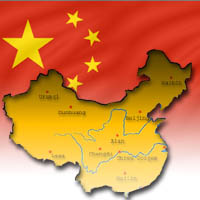
The string of accounting problems and stock plunges at publicly traded Chinese groups has sparked deep concerns across the world's biggest audit firms, putting the so-called Big Four on alert from worries that their reputation could be brought down along with a growing list of stricken companies.
Auditing Chinese firms preparing to go public on overseas exchanges is a lucrative business and one that plays into the strengths of the top, international auditing partnerships known as the Big Four: KPMG, Ernst & Young, Deloitte Touche Tohmatsu and PricewaterhouseCoopers.
Yet fears are growing that the struggle to find enough high-quality auditors in China and Hong Kong means it may only be a matter of time until one of the top firms finds itself caught in a blow-up rivaling Enron, which brought down their old rival Arthur Andersen.
See full Article.
Grease, Gift or Graft? Boundaries of Business Courtesies in China (Part 2)

Reasonable business expenditures
Although not expressly an affirmative defense, a reasonable and bona fide business expenditure, as described in the FCPA, is unlikely to trigger liability under the AUCL as long as it is supported by a genuine underlying transaction.
However, in practice, the frontier between a bona fide and reasonable business expenditure and a bribe is uncertain. Whether a particular expenditure is problematic depends not only on the type and value of the gift/entertainment offered, but also the circumstances under which it is provided (i.e., the nature of the parties’ relationship and purpose of the gift). For example, a working lunch of a reasonable value following a business meeting is unlikely to be regarded as a bribe, while inviting clients to a night club and ordering expensive wines for them is obviously more problematic.
See full Article.
Eliminating Environmental Fraud: The Truth, and Nothing But the Truth, is the Only Option

The term “environmental fraud” calls to mind unconscionable acts of brazen deceit. For example, a rogue company hides a catastrophic discharge of toxic chemicals as executives falsify reports, lie to regulators and skulk around in a Watergate-style coverup.
Truthfully, operators of this caliber would never even read a publication like CCI or heed any compliance-related warnings contained therein.
But while environmental fraud (as opposed to, say, shoddy compliance) does require intentional deceit, even well intentioned companies sometimes run the risk of committing fraud by taking a few furtive steps onto a certain slippery slope that involves “shading” the truth.
See full Article.
International Accounting Standards Board (IASB) - latest news

In a further step in the evolution of the accounting for retirement benefits, the International Accounting Standards Board (IASB) have issued an amendment to IAS 19, Employee Benefits.
The changes to IAS 19 will affect entities differently, depending on the nature of their plans and current accounting policies, but would often result in some or all of the following:
- Lower net income
- Less volatility in net income
- Higher balance sheet liability or lower balance sheet asset for retirement benefits
- Greater volatility in the balance sheet asset or liability
- More onerous disclosure requirements.
ICC suggestions for the next G20 meeting

The six themes around which the ICC G20 policy work has been shaped are:
- Trade, investment and development
- Strengthening financial regulation
- Fighting corruption
- Reforming the international monetary system
- Reducing commodity price volatility
- Green growth
Thursday, June 23, 2011
Grease, Gift or Graft? Boundaries of Business Courtesies in China (Part 1)
Anti-corruption compliance-minded companies understand the importance of linking an all-expenses paid trip to training and product demonstration, the use of logo-embossed knick-knacks to generate goodwill, and carefully verifying recipients of charitable donations to avoid issues with the Foreign Corrupt Practices Act (FCPA). But where does Chinese “Guanxi” fit in?
Many Chinese business relationships are backed by close personal relationships, sometimes referred to as “Guanxi” in Chinese. Building these networks of connections is critical for successfully doing business in China. But network access traditionally requires meals, entertainment, traditional gift-giving and, for some occasions, cash gifts before business even begins. All of which leads to a question some companies aren’t quite sure how to answer: Is it grease, gift, graft or Guanxi?
See full Article.
Five Stages of Financial Reporting Evolution

Recent and proposed changes in financial and regulatory reporting (FRR) requirements are placing great strains on the resources of CFOs and finance organizations at insurers. As a result, CFOs need to rethink how they assess and communicate the performance of their insurance businesses, and develop systems and processes that can generate timely, secure and auditable information.
But before they can tackle any changes, CFOs need to have a clear understanding of the capabilities of their own financial and regulatory reporting function, including technical capabilities, the robustness of controls and governance, the aptitude to perform key analyses, forecasting and budgeting capacity, and the link between financials and strategic decision making.
See full Press Release.
Subscribe to:
Posts (Atom)






 Posts
Posts