Friday, September 30, 2011

Baillieu accepts Deloitte carbon report

Victorian Premier Ted Baillieu says he accepts the findings of a report commissioned by his government, that Victoria won't be the worst hit by a carbon tax.

But he says it could come off worst further down the track.

For months Mr Baillieu argued the tax would have the heaviest economic impact in Victoria, and his Treasurer Kim Wells repeated the claim after the Deloitte Access Economics report was released on Tuesday.

See full Article.

Op-Ed: Greenpeace At 40: What Now?

Last week, Greenpeace celebrated its 40th anniversary. The occasion was marked in the media by a good deal of well-earned retrospective backpatting by current and former members. Some of the best stuff came out of Vancouver, where Greenpeace was born in 1971 as a single anti-nuclear campaign before rapidly expanding into one of the first modern global environmental organizations and possibly the world’s most recognized environmentalist brand.

My favorite slice of Greenpeace nostalgia was a fantastic article and gallery published by the indispensable western Canadian news site, The Tyee. The words are by longtime senior Greenpeace official and in-house historian Rex Weyler, and the pictures are a treasure trove of intimate images from the group’s many successful campaigns.

See full Article.

Bridges Are Great But Let's Invest In Our Natural Infrastructure - Forbes

U.S. President Barack Obama wants to shore up our crumbling bridges, roads, and sewers – in part because our economy depends on our infrastructure. But what about the rivers, forests, lakes, and swamps that provide our air, water and food?

That’s a question Ricardo Bayon raises in an op-ed posted on Ecosystem Marketplace this morning, where he argues that our economy also depends on our ecology – and that the “green” infrastructure we’re gradually destroying is even more critical to our well-being than is the grey one we’re trying to rebuild.

See full Article.

Smoking in films 'encourages teenagers to take it up'

Teenagers who watch films showing actors smoking are more likely to take it up, new UK research suggests.

Experts who made the link by questioning 5,000 15-year-olds say their findings should prompt a change in film certification so that under-18s are no longer exposed to such images.

The Bristol University investigators say a precautionary approach is needed.

But pro-smoking choice campaigners say this is unjustified and nonsensical.

See full Article.

Car fumes 'raise heart attack risk for six-hour window'

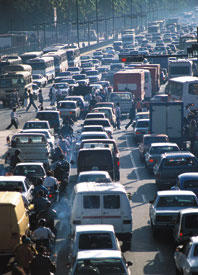
Breathing in heavy traffic fumes can trigger a heart attack, say UK experts.

Heart attack risk is raised for about six hours post-exposure and goes down again after that, researchers found.

They say in the British Medical Journal that pollution probably hastens rather than directly cause attacks.

But repeated exposure is still bad for health, they say, substantially shortening life expectancy, and so the advice to people remains the same - avoid as far as is possible.

See full Article.

G.M. Plans to Develop Electric Cars With China

General Motors said Tuesday that it would develop electric cars in China through a joint venture with a Chinese automaker, and would transfer battery and other electric car technology to the venture.

G.M., which is already the largest foreign maker of conventional vehicles in China, is keen to help define the emerging generation of green-energy automobiles here. And the state-controlled Chinese auto industry is just as eager for expertise from G.M., an acknowledged global leader in car manufacturing.

Tuesday’s announcement was being made as the Chinese government was putting heavy pressure on foreign automakers to transfer electric car technology to joint ventures in China.

See full Article.

Thursday, September 29, 2011

Equality and Efficiency

Is there a trade-off between the two or do they go hand in hand?

Equality and Efficiency

IN his influential 1975 book Equality and Efficiency: The Big Tradeoff, Arthur Okun argued that pursuing equality can reduce efficiency (the total output produced with given resources). The late Yale University and Brookings Institution economist said that not only can more equal distribution of incomes reduce incentives to work and invest, but the efforts to redistribute—through such mechanisms as the tax code and minimum wages—can themselves be costly. Okun likened these mechanisms to a “leaky bucket.” Some of the resources transferred from rich to poor “will simply disappear in transit, so the poor will not receive all the money that is taken from the rich”—the result of administrative costs and disincentives to work for both those who pay taxes and those who receive transfers.

Do societies inevitably face an invidious choice between efficient production and equitable wealth and income distribution? Are social justice and social product at war with one another?

See full Press Release.

Egypt - World Bank Helps to Enhance Access to Finance for Micro and Small Enterprises in Post-revolution Egypt

The World Bank is supporting increasing access to finance for Egyptian micro and small enterprises that play a vital role is the creation of employment opportunities and improving the conditions of the most vulnerable citizens.

The Enhancing Access to Micro and Small Enterprises Project is the first World Bank-funded operation to support the MSE sector, which has, in the wake of the January 25th Revolution, become an even greater priority for the Government of Egypt in the coming period.

The sector is estimated to account for over 99 percent of Egyptian enterprises, 85 percent of non-agricultural private-sector employment, and, correspondingly, almost 40 percent of total employment. This makes it a critical path to building a more inclusive system able to cater to less privileged segments in the society.

See full Press Release.

Farmers "Have Good Reason to Worry"


Bananas are harvested where apples used to grow; cassava, a traditional crop, is disappearing from the Northeast; and the southeast is losing the fragrance of good coffee. This is the science fiction of a new distribution of crops in Brazil, South America's agricultural powerhouse.

The government is starting to get ready for this open-ended story of science fiction. Only one thing is for sure: the bad guys are neither extraterrestrials nor robots, but the most fearsome human invention: climate change.

In the midst of unusual temperature swings and increasingly intense and frequent natural disasters, weather patterns are modifying landscapes and will also start changing harvests.

See full Article.

Modelling up a carbon tax

Economic modelling is a mug's game. It sounds more scientific than just ordinary “forecasting” with tea leaves or Tarot cards, but substitute a computer for the chook's gizzards and it's only a matter of degree, not absolute difference.

The problem with modelling is that no matter how many computers you use, how much Australian Bureau of Statistics data you input, how long an algorithm you can write to wrestle with it, you can never have enough to accurately forecast such an infinitively complex and variable beast as an advanced nation's economy. Modelling a nuclear reaction or a moon shot are relatively simple exercises by comparison.

See full Article.

Corporate Social Responsibility pays for itself: Here’s the evidence

In recent years, the call for corporate social responsibility has grown louder, and many companies have committed to serious CSR programs.

However, a big question for companies is to what extent CSR—specifically behavior that affects the environment—actually alters shareholder value. Is it better to pursue a single bottom line, or do shareholders benefit more when a company supports the “triple bottom line” that includes people, the planet, and profits?

It’s easy to see that a company’s environmental footprint can sometimes make a big difference in shareholder value, as when the BP oil spill, in April 2010, sent BP’s stock price plummeting from $59.50 that day to $28.90 by the end of June, reducing shareholder value by half. But that was a dramatic event, the biggest offshore oil spill in U.S. history. What about lesser happenings at other companies?

See full Article.

Climate change review to cover coastal planning

COASTAL planning laws and building regulations face a Productivity Commission inquiry as doubts emerge over how local councils will deal with the effect of a carbon price on rubbish dumps.

Climate Change Minister Greg Combet and Assistant Treasurer Bill Shorten announced the inquiry yesterday into regulations and policies that may be barriers to adapting to climate change.

The inquiry follows government reports showing coastal housing and infrastructure is at risk from rising sea levels.

See full Article.

Wednesday, September 28, 2011

UN drives biodiversity plan through webcast


Two of the key figures driving the response to the earth's loss of biodiversity have given a live webcast.

Biodiversity, the diversity of plant and animal life, is the basis for a wide range of ecosystem services on which we depend for food, health, clean air and water.

Biodiversity contributes to livelihoods and economic development and is essential in the fight against poverty.

See full Article.

Egyptian steel magnate jailed for corruption

Ahmed Ezz and former industrial development chief Amr Assal sentenced to 10 years in prison and joint fine of $110.9m.

An Egyptian court has sentenced Ahmed Ezz, a steel tycoon, and Amr Assal, a former industrial chief, to 10 years in prison on corruption charges relating to the illegal sale of steel licences.

The two senior officials in the former ruling party of ex-president Hosni Mubarak also received a joint fine of $110.9m.

See full Article.

World Bank: Gender equality boosts economy

World Bank report finds that better opportunities for women increase productivity.

Gender equality is shrewd economics as well as a human right, the World Bank has said in a report that showed countries with better opportunities for women and girls can boost productivity and development.

The most glaring disparity is the rate at which girls and women die relative to men in developing countries, according to The World Development Report 2012: Gender Equality and Development.

"Blocking women and girls from getting the skills and earnings to succeed in a globalised world is not only wrong, but also economically harmful," said Justin Yifu Lin, World Bank chief economist.

See full Article.

Amartya Sen: "El desarrollo es más que un número"

Han transcurrido 20 años desde que Naciones Unidas comenzara a publicar el Índice de Desarrollo Humano (IDH). El indicador, que tiene en cuenta factores como la expectativa de vida y la educación, surgió ante el reconocimiento de que los indicadores macroeconómicos de los países no necesariamente reflejan cómo viven en realidad sus habitantes.

El IDH se basa en gran medida en el trabajo del Premio Nobel de Economía, Amartya Sen, y su visión de una economía en la que lo central es el ser humano. Sen es el propulsor del concepto de desarrollo como libertad, en el que la pobreza y la falta de oportunidades económicas son vistas como obstáculos en el ejercicio de libertades fundamentales. Desarrollo significa entonces expandir la libertad de los seres humanos.

Ver Artículo completo.

EU launches biofuel sustainability scheme


The EU Commission has announced new voluntary rules on biofuels saying it will raise standards in the sector.

Despite concerns over the environmental impact of certain biofuels Brussels says the scheme will help bring down carbon emissions.

Biofuel made from crops grown on land that used to be rainforest or natural grassland will no longer be considered sustainable.

In addition, the Commission says that the carbon emissions created over the whole production chain will also need to be at least 35 percent lower than those of fossil fuels if they are to get a certificate.

See full Article.

Beer company threatens Tibetan antelope

Snow Beer is offering customers an expedition to the Tibetan Plateau that is supposedly off-limits to everyone except scientists

A promotion for the world's best-selling beer encroaches on the protected breeding ground of the Tibetan antelope, according to Chinese conservationists who are campaigning against the commercial exploitation of one of the planet's most unique nature reserves.

Snow Beer – which is partly owned by the London-based SABMiller brewery company – is offering its customers an expedition to Kekexili, a remote region high on the Tibetan Plateau that is supposed to be off-limits to everyone except scientists with permission from the national government.

See full Article.

Tuesday, September 27, 2011

Women good enough for front line: Hurley

The head of the Defence Force says women who meet physical standards for the front line are good enough for the job, despite criticism of a plan to open up all combat roles to females.

The Federal Government yesterday announced women will be allowed to serve in all frontline combat roles within five years.

At the moment women are excluded from 7 per cent of all positions on the basis of their sex.

Defence Force Chief David Hurley has told ABC's Lateline that some members of the Australian military will not agree with allowing women on the front line.

See full Article and Interview.

Nueve de cada diez españoles respira aire contaminado

El 87 por ciento de la población española respira un aire que supera los índices recomendados por la Organización Mundial de la Salud, según el informe «La Calidad del Aire en el Estado Español durante 2010» de Ecologistas en Acción.La ONG precisa que si se toman en cuenta los límites de contaminación que marca la legislación europea, menos exigente...

Ver Artículo completo.

Scientist says 'pie in the sky' engineering won't deal with climate change

Some scientists are warning against tackling climate change with major engineering projects.

Proposals to build a solar umbrella, or add fertiliser to oceans to take up more carbon dioxide, are deemed too costly and inefficient.

Professor David Karoly, of the University of Melbourne's School of Earth Sciences, says another 'pie in the sky' solution is to shoot sulfur particles in the atmosphere to shield the earth from the sun.

See full Article.

Science should drive water reform: expert


Science must remain the driving force behind any plan to improve management of water in the Murray-Darling Basin, South Australian MPs have been told.

Environmental engineer Tim Stubbs, a member of the Wentworth Group of Concerned Scientists, briefed SA MPs and government officials on Tuesday about the group's concerns about planning for the future of the basin.

See full Article.

“Audit regulation: the quest for international harmonisation”. FEE Conference on Audit Policy

The aim of my intervention is to convey a single clear message: the relevant role of audit in financial markets and the importance of achieving a harmonised regulatory framework based on common high quality standards.

I think we all here share the view that one of the main challenges for public authorities and private players in the current crisis situation is to restore public confidence in the functioning of world capital markets.

One essential ingredient of any sensible strategy to pursue that goal is to enhance transparency of the current economic and financial situations of all issuers of securities in financial markets.

See full Speech, in pdf format.

¿Quién le quitó el hielo a Groenlandia?


Pocos libros reciben tanta publicidad como la que ha recibido la decimotercera edición de "The Times Atlas of the World".

No sólo es considerado como el Atlas más prestigioso del planeta, sino que además esta versión, como las anteriores, registra grandes cambios en el mundo.

Aparece, por ejemplo, un nuevo país y otro más pequeño, resultado de la división de Sudán, y un Mar de Aral tremendamente reducido.

Ver Artículo completo.

Monday, September 26, 2011

Kenya's Nobel laureate Wangari Maathai dies aged 71


Kenya's Nobel laureate Wangari Maathai has died in Nairobi while undergoing cancer treatment. She was 71.

She won the Nobel Peace Prize in 2004 for promoting conservation, women's rights and transparent government - the first African woman to get the award.

She was elected as an MP in 2002 and served as a minister in the Kenyan government for a time.

See full Article.

WWF: 25 creativos anuncios publicitarios nos recuerdan que necesitamos un mundo mejor

La WWF – World Wide Fund for Nature (Fondo Mundial para la Naturaleza), es la más grande organización conservacionista independiente del mundo con 5 millones de miembros y una red mundial de 27 organizaciones nacionales.

Su principal misión es la de concienciar y detener la degradación del ambiente natural del planeta y construir un futuro en el cual los seres humanos vivan en armonía con la naturaleza. Para ello, esta organización ha recurrido en numerosas ocasiones al poder de la publicidad.

See full Article.

Environmental Regulation and Jobs, Again

Over at Econbrowser, James Hamilton argues that environmental regulation may be a job-killer after all. There are two themes: the first is that US trade is weighted toward natural resources, and regulation is raising costs and reducing capacity in these tradables, and the second is that, in recessionary times, jobs lost due to regulations are not regained elsewhere. I think he overstates his points, but he clarifies important issues that tend to get muddied in economic debates.

Lets take the second first. I had argued that regulations tend to lower the measured productivity of workers in regulated industries, leading to some combination of more employment to restore output and expenditure-switching, as consumers shift to different products. Hamilton’s examples—California agriculture, Texas oil and lignite, Alabama cement kilns—do not dissuade me. We will continue to eat, power and pave, and if we do a bit less of some of this (especially the powering and paving), we can shift to more benign activities.

See full Article.

Wading in to protect the ‘european Amazon’

Croatia wants to get a grip on its rivers to generate electricity, upgrade inland waterways and protect from flooding with multi-million euro projects.

But the natural floodplains of the Drava and the Danube are home to eagles and other rare wildlife.

Reporter asks: is this natural paradise under threat from man’s river management?

See full Article.

DOMINICAN REPUBLIC: Women Challenge Monopoly on "Men's Jobs"


From a small office inside a public school on the eastern side of the Rio Ozama in the capital Santo Domingo, a programme operated by a local NGO, Ce-Mujer, has been leading a quiet revolution to empower women in the workplace for the last 13 years.

After an initial three years of pilot programmes, the Programme for Technical Training and Jobs for Women has trained over 6,000 women in non-traditional jobs such as furniture making, upholstery, small appliance repair, and the installation and repair of power invertors - all areas for which there is great demand in the labour market and in which there are few women working.

See full Article.

IESE Insight Accounting and Control

Management control systems are intended to motivate managers to ensure their company’s organizational goals are accomplished.

They do this by rewarding and promoting people according to certain criteria. Usually they are designed to create the greatest goal congruence – i.e., where people in the organization are working toward the same personal objectives as the organization’s.

A new working paper by IESE’s Natàlia Cugueró and Josep M. Rosanas breaks new ground in the study of management control systems, by analyzing the role of organizational justice. What they find is that justice is closely and crucially related to management control systems.

See full Article.

Christiana Figueres: 'lobbyists for fuels of yesterday have a louder voice'

Progressive companies must be braver if they want to fight climate change amidst a field of timid politicians and powerful fuels lobbyists. Jo Confino reports on Carbon Disclosure Project's Global Forum

A lack of courage and co-ordination is preventing progressive businesses from matching the firepower of energy companies that are investing heavily to sow the seeds of doubt about climate change and prevent timid politicians from introducing tougher regulation.

This was one of the conclusions from a debate hosted this week on the Guardian Sustainable Business website between business leaders from across the world under the auspices of the Carbon Disclosure Project (CDP).

See full Article.

IESE Insight Restoring Respect in a Damaged Institution

With so many bright people leading our corporations, why was the financial crisis not averted? Rather than finger-pointing, in Building Respected Companies, IESE Dean Jordi Canals gets to the root of our current woes: corporations are suffering from a crisis of identity and purpose. Only by rethinking the true nature of corporations and their role in society will firms be able to retake their rightful place as one of our key institutional pillars.

“We consider firms to be vital institutions for society and believe we cannot afford to see them and their reputations crumble,” says Canals.

Regulation can go some way toward address the shortcomings, but Canals believes the debate needs to go further. The book aims to shift the debate from a strictly regulatory one to refocusing on the firm’s primary mission and purpose.

See full Article.

Sunday, September 25, 2011

Human rights: The compass fails


Loss of moral authority, competition and distraction weaken Western clout in promoting human rights. Fighting corruption (see article) is another story

ACCORDING to a cable leaked last month, the European Union’s man in Ethiopia told his masters that “basic human-rights abuses are being committed by the government on a daily basis” and “the EU must respond firmly and resolutely.” That was in 2005. Neither the EU nor any other Western donor has done anything of the kind. The United States, Germany and Britain have continued to pour money into the country despite the arrest of opposition politicians on trumped-up treason charges, the harassment of ordinary citizens, the curbing of internet access, and heavy spying on universities and workplaces. Sweden is one of the few donors that publicly raises civil liberties.

When outsiders do bring up such issues, Meles Zenawi, Ethiopia’s prime minister, responds tartly that, with famine again stalking the Horn of Africa, the right of people to food, shelter, a job and indeed to life itself depends on the stability of the state. To challenge this is sabotage.

See full Article.

2020 She-conomy


An excerpt from the Intuit 2020 Report

Over the next decade, women around the world will enter the workforce at an unprecedented rate. Close to 1 billion women, many of whom have either never worked or worked at a subsistence level, will be contributors in the world economy. Because of urban migration, increased access to education, mobile technologies, micro-credit and low market entry costs, women will create work and start businesses more readily than ever.

In the industrialized world, women will continue making educational, economic and political advances. The gender gap in earnings will narrow over the decade, approaching parity by 2020. In academia, women will enter and graduate from colleges at a higher rate than men, better preparing them to lead in a knowledge economy. They will be a dominant force in the health, education and service sectors, which are all expected to grow significantly in the next 10 years.

See full Article.

IESE Insight A Renewed Interest in Conservative Accounting

Business leaders are adjusting to the new economic realities brought about by the continuing global financial difficulties. In exploring new avenues to profitability and growth, all areas of company operations are on the table.

IESE’s Fernando Peñalva, together with Juan Manuel García Lara and Beatriz García Osma, researched the link between conditional conservatism and cost of capital. Their findings, “Conditional Conservatism and Cost of Capital,” were published in the Review of Accounting Studies.

What Is Conditional Conservatism?
Conditional conservatism is an accounting practice that imposes more stringent verification requirements on economic gains than economic losses. This results in earnings that reflect losses in a timelier manner than gains, often called asymmetric reporting.

See full Article.

Germany’s energy revolution

How Germany gets it power is about to radically change. The Berlin government’s recent decision to unplug all nuclear power stations is creating a number of far reaching consequences.

On the plus side, Europe’s leading economy could produce around 80 percent of its total energy supply from renewable resources by 2050. And that is where the problems start.

See full Article.

Turkey tackles violence against women

European countries are being urged to sign up to a new convention which will introduce tougher measures to tackle violence against women.

The convention has been created by the Council of Europe and opened for signing and ratification by the organisation’s 47 member states.

Turkey was the first country to sign the document and was closely involved in drawing up the new convention.

See full Article.

Three Market-Based Solutions To Pull People Out Of Poverty

Using capitalism instead of just giving aid was the focus of the latest eBay/Ashoka contest. Here are the most interesting and exciting winners.

Traditional charity and philanthropy has given way in recent years to organizations like Kiva and MicroPlace that aim to help disadvantaged populations by providing them with economic opportunity, and then letting the people help themselves. This week, the eBay Foundation and Ashoka Changemakers announced the winners of the Powering Economic Opportunity: Create A World That Works Competition--a challenge that asked entrants to offer up "the world's most innovative market-based solutions that create economic opportunity and generate employment for disadvantaged populations." Below, we look at three of our favorite winners, all of whom will receive $50,000.

See full Article.

Saturday, September 24, 2011

"Missing" Global Heat May Hide in Deep Oceans


The mystery of Earth's missing heat may have been solved: it could lurk deep in oceans, temporarily masking the climate-warming effects of greenhouse gas emissions, researchers reported on Sunday.

Climate scientists have long wondered where this so-called missing heat was going, especially over the last decade, when greenhouse emissions kept increasing but world air temperatures did not rise correspondingly.

The build-up of energy and heat in Earth's system is important to track because of its bearing on current weather and future climate.

See full Article.

Las mujeres dominarán el mundo


El título es muy pretencioso, sin ninguna duda. No obstante, ¡qué mujer no ha soñado con ello alguna vez! . La influencia económica de la Mujer es revolucionaria y dominan cada vez más el mundo del consumo.

Basta con mirar los números: las mujeres, que son el 50% de la población de este planeta, controlan el 65% del gasto mundial y más del 80% del gasto en los EE.UU. Para el año 2014, el Banco Mundial prevé que los ingresos globales profesionales de las mujeres aumenten en más de $5 trillones de dólares.

En el mundo profesional, el poder de las mujeres se extiende y avanza tanto en los países desarrollados como en los mercados emergentes.

Ver Artículo completo.

China: Villagers protest at Zhejiang solar panel plant

Hundreds of villagers in eastern China have held three days of protests at a solar panel plant over pollution fears.

Around 500 people started gathering at Zhejiang Jinko Solar company in Haining city, Zhejiang province, on Thursday.

Some of protesters stormed the factory, overturning several company cars and destroying offices, officials said.

See full Article.

‘Clean Tech’ pays off

A venture capitalist notes alternative energy’s ups and downs

Clean energy is back in the news, with Washington fighting over solar panel maker Solyndra, which took a $535 million federal loan guarantee in 2009 to build a factory and then went belly-up Aug. 31. Silicon Valley is nurturing dozens of unprofitable makers of electric cars, solar panels and more as capital remains tight.

Still, Vinod Khosla is slouching, and snickering, toward the bank. The 56-year-old venture capitalist took the Valley aback in 2009, raising nearly $1 billion to make big capital-intensive energy bets as the markets were retrenching. In the last year, three of the 80-plus companies that Khosla Ventures has backed since 2006 went public, handing Khosla’s firm a $1 billion return.

See full Article.

When too much green is not green at all

Another summer’s day, another huge tide of green algae along the coast of Brittany in north western France.

It is a complex environmental problem that has divided ecologists, farmers, and holidaymakers – among others – since the 1970s.

See full Article.

CDP Global 500 Report 2011 - Accelerating Low Carbon Growth

Corporations, investors and governments today are faced with a choice: to compete aggressively for finite resources, or to advance towards a low carbon economy that enables sustainable, profitable growth, whilst reducing reliance on increasingly scarce materials.

Last year, global energy-related carbon dioxide emissions reached a record high. The International Energy Agency’s estimates made for bleak reading but compounded the necessity to take bold and decisive action if we are to have any chance of limiting temperature increase to the 2°C level agreed by world leaders to protect against catastrophic climate change.

What’s more, rising energy demands are competing for a limited supply of fossil fuels. The competition for increasingly scarce natural resources is putting pressure on commodity prices and having a growing impact both socially and economically. It is clear that today, more than ever, we must build momentum to decouple economic growth from emissions.

See full Report, in pdf format.

Friday, September 23, 2011

African Ministers Gear up for Durban Climate Talks

At the AMCEN meeting in Bamako, Andrew Steer launched the Connect4Climate campaign that includes a global video and photo competition with the aim of bringing together African communities that care about climate change. The campaign seeks to engage Africans, including young people, to share stories about how climate change is affecting Africa, individual countries and communities, individuals, friends and family.


A new hub for climate change exchange, Connect4Climate includes a photo or video competition, and focuses on young people from around the world with a focus on African youth—ages 13-17, 18-24, and 25-30.

See full Details.

The Importance of Feeding the Hungry

Ever wonder exactly how many Americans struggle to put food on table? It’s a question pondered more and more during a tough economy. Today, the USDA Economic Research Service (ERS) has shed some light on these conditions with their annual analysis of Americans’ success in feeding themselves and their families.

The report, Household Food Security in the United States in 2010, provides an important analysis of how well people are faring on this front during difficult economic times.

In 2010, just over 85 percent of American households were food secure throughout the entire year. However, about 17.2 million households were unable, at some point in the year, to provide either enough food or adequate food for at least one member due to a lack of resources.

See full Article.

Gender Equality: the Right and Smart Thing to Do – World Bank Report

Despite impressive gains in gender equality, nearly 4 million poor women “missing” each year in developing countries

Gender equality matters in its own right but is also smart economics: Countries that create better opportunities and conditions for women and girls can raise productivity, improve outcomes for children, make institutions more representative, and advance development prospects for all, says a new World Bank flagship report.

The World Development Report 2012: Gender Equality and Development details big strides in narrowing gender gaps but shows that disparities remain in many areas. The worst disparity is the rate at which girls and women die relative to men in developing countries: Globally, excess female mortality after birth and “missing” girls at birth account for an estimated 3.9 million women each year in low- and middle-income countries. About two-fifths are never born due to a preference for sons, a sixth die in early childhood, and over a third die in their reproductive years. These losses are growing in Sub-Saharan Africa, especially in countries hard-hit by HIV/AIDS.

See full Press Release.

'Most environmentally aware' firms highlighted


A report has identified 16 companies from across the developing world that are best showing how to grow profits at the same time as actively tackling environmental and social challenges.

The study by the World Economic Forum (WEF) pinpointed firms in countries as diverse as Costa Rica, Egypt and China.

The WEF said it showed that global "green" businesses were not the only ones with sustainability credentials.

See full Article.

Food Crisis

Government by Example

Green strategies for the federal government

Deloitte and Kyoto Publishing released a report that identifies strategies available to help the United States government become a global leader in energy management, sustainability and responsible consumption. The report, “Government by Example,” offers agency and industry insights on overcoming the challenges of current sustainability programs as well as case studies that illustrate successes in this arena.

Sustainability is at the core of many decisions being made in Washington. This report provides a review of how the government, working in cooperation with industry, can achieve cost, energy and environmental impact reductions as they adopt sustainable strategies. According to the U.S. Green Building Council (USGBC), buildings in the United States alone account for 70 percent of electricity consumption, 39 percent of energy use, 39 percent of GHG emissions, and 30 percent of waste output. Considering the fact that the United States government occupies 500,000 buildings, operates 600,000 vehicles, employs 1.8 million civilians and purchases $500 billion per year in goods and services, there is much that can be done, including leading by example.

See full Article.

Thursday, September 22, 2011

From the Frontier: Solar Energy

Learn how alternative energy solutions are transforming:

  • National competitiveness
  • Energy markets
  • Technology investments
Key Points
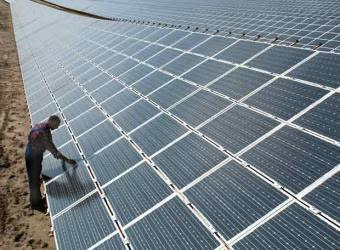
  • Solar power will be an increasingly important option in any energy mix
  • Future investments can be calculated according to trends in the falling price of solar technology
  • High volatility of fossil fuel prices and uncertain future availability make renewable-energy investments necessary now
  • Beyond subsidies, profitability is necessary to persuade markets of solar energy’s viability
See full Article.

End in sight for sale of cosmetics tested on animals

Report on the Development, Validation and Legal Acceptance of Alternative Methods to Animal Tests in the Field of Cosmetics (2009)

1. Introduction

The present report is the ninth Commission report on the development, validation and legal acceptance of alternative methods to animal tests in the field of cosmetics1. It has a twofold purpose:

• It is the yearly report in accordance with Article 9 of Council Directive 76/76 EEC of 27 July 1976 on the approximation of the laws of the Member States relating to cosmetic products (hereinafter “Cosmetics Directive”).2 In this regard it reflects the data on the number and type of experiments on animals relating to cosmetic products in 2009, as well as progress made in the development, validation and acceptance of alternative methods to animal testing in the Union and internationally.

See full Report, in pdf format.