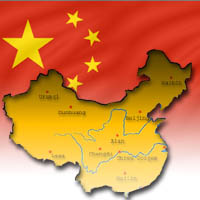
Which are the top 10 countries for employing women in top roles – and which are the 10 worst? Grant Thornton has been tracking the proportion of women in senior management across 40 economies since 2004. Now our 2012 survey figures, released to mark International Women’s Day (IWD), reveal which of the world’s economies are the most business-friendly for women.
The latest figures from Grant Thornton’s International Business Report (IBR) show women in senior management to be on the rise in Europe while their peers in emerging markets fall away, resulting in a global average of 21% employed in top positions – barely higher than 2004 levels.
See full Article.
Showing posts with label BRIC. Show all posts
Thursday, March 08, 2012
BRICs score well for women in business but one of them lags far behind…
Monday, September 05, 2011
Rousseff Winning Allies in Undeclared War on Corruption
Brazilian President Dilma Rousseff is starting to gain support for a war on corruption that she is quietly waging.As far as "cleaning up" goes, Luiz Inácio Lula da Silva’s successor - also a member of the leftwing Workers’ Party (PT) - says she is only interested in wiping abject poverty off the map of this country of 192 million people, which is Latin America’s economic powerhouse.
But in the eight months she has been in office dozens of top-level officials, including her chief of staff, the agriculture and transportation ministers and the undersecretary of tourism, from the PT as well as allied parties, have been removed from their posts on charges of corruption.
See full Article.
Saturday, August 27, 2011
The daughter also rises

Women are storming emerging-world boardrooms
ZHANG YIN (also known by her Cantonese name, Cheung Yan) was the eldest of eight children of a lowly Red Army officer who was imprisoned during the Cultural Revolution for “capitalist offences”. Today she is one of the world’s richest self-made women, with an estimated fortune of $1.6 billion. In the early 1980s, as a dogsbody in a paper mill, she noted that the waste paper her superiors so casually discarded was actually worth something. She has been capitalising on her insight ever since. Nine Dragons Paper, which she founded with her husband in 1995, is now one of the world’s largest paper recyclers.
The emerging world is home to many businesswomen like Ms Zhang. Seven of the 14 women identified on Forbes magazine’s list of self-made billionaires are Chinese. Many firms in emerging markets do a better job of promoting women than their Western rivals, some surveys suggest.
See full Article.
Sunday, July 03, 2011
Fighting Hunger in Brazil

Much achieved, more to do
Brazil has made impressive recent strides in reducing poverty, food insecurity and hunger. Between 2000–2 and 2005–7, the proportion of people living in hunger was reduced by one-third in Brazil. Between 2003 and 2009, the number of people living in poverty decreased by 20 million.
These successes are widely considered to be due to pro-poor policies introduced during the presidency of Luiz Inácio Lula da Silva, including a national cross-sectoral strategy called Fome Zero (Zero Hunger), launched in 2003. This consists of 50 linked initiatives including cash transfers for poor families and support for small-scale food producers. Under the championship of President Lula, Fome Zero was able to integrate the activities of multiple government ministries within a broad agenda. These transformational policies were also the result of many years of activism by Brazilian civil society and social movements.
See full Press Release.
Friday, May 20, 2011
Brazil: Amazon rainforest deforestation rises sharply
Deforestation of the Brazilian Amazon rainforest has increased almost sixfold, new data suggests.
New satellite images show deforestation has increased from 103 sq km in March and April 2010 to 593 sq km (229 sq miles) in the same period of 2011, Brazil's space research institute says.
Much of the destruction has been in Mato Grosso state, the centre of soya farming in Brazil.
See full Article.
Thursday, August 20, 2009
A new experiment is setting the Amazon on fire
Burning issues - FLPA Revaluing the leaf
THIS month Jennifer Balch will head into the Amazon rainforest of Mato Grosso state, in Brazil. She intends to set fire to it and find out what happens. When Dr Balch, who is based at Woods Hole Research Centre, in Massachusetts, and her 30 helpers have finished their weeklong task, 50 hectares will have been torched. “It’s pretty darn exciting, and a bit crazy”, she says, “to see a bunch of researchers running around burning down a forest.”
The questions that prompt all this destruction are important. The first is: will tropical forests survive the increasing occurrence of wildfires as the climate changes and people move in, or will the landscape shift from one ruled by trees to one dominated by grassland? The second is: how much carbon do such wildfires release into the atmosphere?
Wildfires are certainly a problem in Brazil. During the droughts of 1997 and 1998, which were linked to El Niño, an irregular warming of the Pacific Ocean, 39,000 square kilometres of Amazonian forest were burned by such fires. That is twice the area deliberately cut down in Brazil each year between 1988 and 2005.
See full Article.
Saturday, June 27, 2009
BRICs, emerging markets and the world economy: Not just straw men

Not just straw men
The biggest emerging economies are rebounding, even without recovery in the West
THE inaugural summit of the BRICs—Brazil, Russia, India, China—came and went in Yekaterinburg this week with more rhetoric than substance. Although Russia’s president, Dmitry Medvedev, called it “the epicentre of world politics”, this disparate quartet signally failed to rival the Group of Eight industrial countries as a forum for economic discussion.
But that should be no surprise: to realise how disparate they are, consider that Russia and Brazil are big commodity exporters, whereas China is a big commodity importer; China is a proponent of the Doha trade round, India a sceptic; India and China vie for influence in the Indian Ocean, Russia and China compete in Central Asia.
Instead, the really striking thing is that four countries first lumped together as a group by the chief economist of Goldman Sachs chose to convene at all, and in such a high-profile way. And that when they met, they discussed topics such as reforming the IMF; their demand for more say in global policy-making; and, in the case of China, Brazil and Russia, a plan to switch some of their foreign-currency reserves out of dollars and into IMF bonds.
See full Article.
Wednesday, July 18, 2007
Doing business in China: A McKinsey Survey of executives in Asia

* Less than two-thirds of executives in Asia who responded to a recent McKinsey survey say their company currently has operations in China or trades with the country, but the vast majority say they’ll be doing business there within five years.
* Executives identify several potential threats to China’s continued economic growth; many say that even if China does not address those threats sufficiently there will be little effect on their companies’ revenue.
See full Article.
Monday, July 16, 2007
Five priorities for Brazil's economy

* Brazil’s economic growth has stalled during the past 25 years. A McKinsey study proposes five groups of priority measures aimed at removing barriers to productivity. If implemented, these measures could lift GDP growth to a sustained rate of 7 percent a year.
* Brazil must tackle its huge informal economy, which distorts competition; reduce high levels of government consumption, which keep the cost of capital high; improve the inefficient judicial system and other public services; and develop an adequate infrastructure. The fifth priority is to create a nationwide commitment to a long-term economic vision and to ways of implementing these measures.
See full Article.
Subscribe to:
Posts (Atom)