Sunday, October 31, 2010

May You Live in Interesting Times


An ancient Chinese proverb – “May you live in interesting times” – comes to mind as I sit down to sum up our most recent corporate responsibility progress. It is interesting for the sheer diversity of issues and events.

Not so long ago, I was watching a live webcast of President Obama launching “Change the Equation” – a new public-private initiative to promote science, technology, engineering, and math (STEM) education. AMD’s innovative “Changing the Game” program that teaches youth through game development will be a prominent aspect of this new White House initiative, and it was an honor to be among the leading companies the president recognized for stepping up to the challenge of improving our nation’s educational programs.

See full Article.

Government of Ukraine Audit Uncovers Corrupt Practices in Past Financial Operations


The Government of Ukraine announced today that a team of international auditors has completed the initial stage of its independent audit of Ukraine's state finances and operations. The audit revealed evidence of fraud and misapplication of government funds from 2008 to the first quarter of 2010.

The team of lawyers and forensic investigators led by the Washington, DC law firm of Trout Cacheris, PLLC examined a group of transactions by various government bodies. The audit found evidence of the use of offshore shell companies, sham contracts and other international money laundering mechanisms in transactions involving private parties and the previous administration, as well as the unlawful misapplication of funds, resulting in the waste and misuse of government assets and the enrichment of private parties.

See full Press Release.

US tests standard setter's independence


Securities and Exchange Commission publishes work plan for assessing its decision to accept IFRS and the IASB

The independence and funding of the International Accounting Standards Board (IASB) will be among the key issues to be examined by the US before it finally makes a decision on whether to buy into international standards.

A work plan released by the US Securities and Exchange Commission reveals the details of the key issues to be placed under the microscope before the watchdog commits the world’s biggest economy.

The SEC will look at whether the current governance structure will maintain the standard setter's independence.

See full Article.

A vision for sustainable growth


This publication examines China's changing position in the chemicals value chain and the role played by both domestic and multinational companies.

See full Details.

Updated guide on IFRS for boards and audit committees


Deloitte (United States) has published an updated edition of IFRS: An Update for Boards and Audit Committees (PDF 738k), a guide to help boards and audit committees stay abreast of the latest IFRS developments and understand their potential implications.

The publication includes:

An outline of some of the key potential accounting differences between IFRS and United States GAAP
An update on standard-setting developments
Questions that board and audit committee members should be asking management as they help guide their companies down the path of IFRS implementation

See full Details.

Nature deal 'on knife-edge' as nations clash on money


Talks have run through the night at the UN Convention on Biological Diversity meeting as delegates tried to salvage talks on protecting nature.

Major differences remained on targets for protected areas, equitable access to genetic resources, and funding.

See full Article.

The African Challengers: Global Competitors Emerge from the Overlooked Continent

The African economy is frequently overlooked. Scores of African companies have been rapidly expanding and competing in the global economy. To spotlight the economic awakening of Africa, we have identified 40 fast-growing companies with global aspirations—the African challengers. This report focuses on this relatively small number of companies in order to understand specific strategies and challenges of African firms and the evolution of African capitalism.

See full Report, in pdf format.

Saturday, October 30, 2010

Más de mil millones de personas pasan hambre en el mundo


Más de mil millones de personas sufren de desnutrición en el mundo según las cifras del informe del Índice Global del Hambre 2010. En América, la situación es "seria" en Bolivia, Guatemala y Haití.

El informe muestra que la desnutrición infantil es la principal causa de hambre en el mundo: casi la mitad de los afectados son niños. Los niveles más altos están en el África subshariana y también en el Asia meridional.

Los autores del informe, el Instituto de Investigación en Política Internacional Alimentaria (IFPRI, en inglés) llamaron a los países a tomar medidas contra la desnutrición

Ver Artículo completo.

A Climate Proposal Beyond Cap and Trade


Michael Greenstone has the résumé of somebody who should be despondent over Washington’s failure to pass a climate bill. An environmental economist who worked in the Obama White House, he is now back to being an M.I.T. professor and also runs the Hamilton Project, the well-connected, Democratic-leaning research group.

But Mr. Greenstone is not despondent. He thinks the benefits of the bills that died in the Senate — which would have raised the cost of carbon emissions, through a system known as cap and trade — were sometimes exaggerated.

See full Article.

Exploring the Role of Business through Vision 2050


The Vision 2050study lays out a pathway leading to a global population of some 9 billion people living well, within the resource limits of the planet by 2050. The report ( 2.6 MB) was released at the 2010 World CEO Forum in New Delhi, India.

Twenty-nine companies, led by Alcoa, PricewaterhouseCoopers, Storebrand and Syngenta, have come together to rethink the roles that business must play over the next few decades to enable society to move toward being sustainable. This endeavor has resulted in a call to action that aims to encourage companies to reinvent themselves, their products and services to get where they and society want to be.

Participating companies contributed through workshops, virtual working groups and feedback throughout the project. Vision 2050 also runs a Regional Engagement Program to ensure the project is informed and validated by the major regions of the world.

See full Article.

UK boardroom pay leaps 55% in a year


'Don't they know that this is meant to be austerity Britain?' said TUC general secretary Brendan Barber

Britain's bosses have been accused of greed and ignoring economic reality after boardroom pay leapt by 55% over the last year.

FTSE 100 directors saw their total earnings soar in the 12 months to June, thanks to sharp rises in bonuses and performance-related pay. The average FTSE 100 chief executive now earns £4.9m a year, or almost 200 times the average wage.

See full Article.

What Are Species Worth? Putting a Price on Biodiversity


When officials gather for an international summit on biodiversity next month, they might look to remind the world why species matter to humans: for producing oxygen, finding new drugs, making agricultural crops more productive, and something far less tangible — a sense of wonder.

We live in what is paradoxically a great age of discovery and also of mass extinction. Astonishing new species turn up daily, as new roads and new technologies penetrate formerly remote habitats. And species also vanish forever, at what scientists estimate to be 100 to 1,000 times the normal rate of extinction.

Over the past few years, as I was working on a book about the history of species discovery, I often found myself coming back to a fundamental question: Why do species matter?

See full Article.

A High-Risk Energy Boom Sweeps Across North America


Energy companies are rushing to develop unconventional sources of oil and gas trapped in carbon-rich shales and sands throughout the western United States and Canada. So far, government officials have shown little concern for the environmental consequences of this new fossil-fuel development boom.

The most direct path to America’s newest big oil and gas fields is U.S. Highway 12, two lanes of blacktop that unfold from Grays Harbor in Washington State and head east across the top of the country to Detroit.

The 2,500-mile route has quickly become an essential supply line for the energy industry. With astonishing speed, U.S. oil companies, Canadian pipeline builders, and investors from all over the globe are spending huge sums in an economically promising and ecologically risky race to open the next era of hydrocarbon development.

See full Article.

US whistleblower's $96m payout from GlaxoSmithKline


An American pharmaceuticals worker who blew the whistle on manufacturing failures at GlaxoSmithKline's drug-making factory in Puerto Rico was today rewarded with a $96 million (£60.7 million) payout.

Cheryl Eckard, 51, Glaxo's global quality-assurance manager, spent most of her time working at the British pharma firm's Puerto Rico plant, her lawyer Neil Getnick said.

There she discovered manufacturing problems, including micro-organisms in Glaxo's antibiotic cream Bactroban and Paxil depression pills which lacked the active ingredient.

Getnick said Eckard urged Glaxo managers to improve the manufacturing process, or even close the plant, but was sacked in 2003 for raising the complaints.

See full Article.

Friday, October 29, 2010

Million-dollar beds fuel Madagascar timber crisis


Soaring demand in China and political unrest in Madagascar are fuelling illegal logging for hardwoods in the African nation, a report concludes.

Global Witness and the Environmental Investigation Agency (EIA) talked to loggers, government agencies and traders to compile their report.

In China, they discovered beds on sale for $1m, made from Madagascan wood.

The report was launched at the UN Convention on Biological Diversity (CBD) meeting in Nagoya, Japan.

See full Article.

How Marketplace Economics Can Help Build a Greener World


Consumers now have little information about the true ecological impacts of what they buy. But that may be about to change, as new technologies that track supply chains are emerging and companies as diverse as Unilever and Google look to make their products more sustainable.

With climate legislation dead in Congress and the fizzled hopes for a breakthrough in Copenhagen fading into distant memory, the time seems ripe for fresh strategies — especially ones that do not depend on government action.

Here’s a modest proposal: radical transparency, the laying bare of a product’s ecological impacts for all to see.

See full Article.

Steady Growth of Wind Industry Moves EU Closer to Green Goals


Europe is in the midst of a wind energy boom, with the continent now installing more wind power capacity than any other form of energy. In an interview with Yale Environment 360, the European Wind Energy Association's Christian Kjaer describes his vision of how wind can lead the way in making Europe’s electricity generation 100 percent renewable by 2050.

Today, only five percent of Europe’s electricity comes from wind. But that will not be the case for long. For the past two years, 40 percent of all new electricity generating capacity in Europe came from wind turbines. From Spain to Sweden, so many new turbines are being erected that Europe is on target to produce 15 percent of its electricity from wind by 2020. By 2050, half of Europe’s electricity is expected to come from wind.

See full Article.

MT unveils Green Business Awards shortlist


Nominees include a hand dryer and a woollen coffin maker - as well as some of the UK's biggest businesses.

Ever thought about being buried in a woollen coffin? Neither had we – until we drew up the shortlist for this year’s Green Business Awards, unveiled today. Hainsworth eco-coffins, which are designed to break down easily, are made from the wool of the Dorset Horn sheep, so occupants can stay snug on their journey into the underworld (and it even comes with a free woollen blanket - for the family, presumably).

See Details.

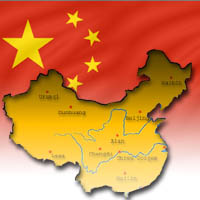
China unveils ambitious plan to protect wildlife at UN talks


Foreign supporters say the move will put the country at the forefront of global efforts to reverse habitat and species decline

China has unveiled its most ambitious conservation plan in a generation, ahead of the opening today of a crucial UN biodiversity conference.

Foreign supporters say the move will put China at the forefront of global efforts to reverse habitat and species decline.

See full Article.

How carbon dioxide controls earth’s temperature


NASA's Lacis: "There is no viable alternative to counteract global warming except through direct human effort to reduce the atmospheric CO2 level."

A study by GISS climate scientists recently published in the journal Science shows that atmospheric CO2 operates as a thermostat to control the temperature of Earth….

CO2 is the key atmospheric gas that exerts principal control (80% of the non-condensing GHG forcing) over the strength of the terrestrial greenhouse effect. Water vapor and clouds are fast-acting feedback effects, and as such, they are controlled by the radiative forcing supplied by the non-condensing GHGs….

There is no viable alternative to counteract global warming except through direct human effort to reduce the atmospheric CO2 level.

See full Article.

Bachelet: las mujeres han sido las más golpeadas por la crisis


La ex presidente de Chile Michelle Bachelet lleva sólo un mes en su nuevo trabajo como secretaria general adjunta de ONU Mujer y ya tiene un gran problema que resolver: el efecto de la crisis financiera en las mujeres de todo el mundo.

Las consecuencias de la crisis aún se sienten en numerosos países, pero las mujeres han sido las más golpeadas porque parten de una posición menos aventajada, según Bachelet.

Ver Artículo completo.

Thursday, October 28, 2010

Hacia un modelo de Crecimiento Inteligente


Las empresas -y los gobiernos- no podemos ser ajenas a los desafíos a los que se enfrenta la sociedad. Debemos de ejercer un liderazgo responsable, ir más allá de los estrictamente económico y trabajar para el bien de nuestros stakeholders.

Estos grupos de interés nos exigen ya comportamientos respetuosos con el medio ambiente, el impulso de la eficiencia energética, de las fuentes de energía alternativas al petróleo y, en definitiva, de una economía baja en carbono y combativa con el cambio climático.

Ver Nota de Prensa completa.

Shape the agenda - Ideas, inspiration, innovation

The 14th IACC will feature forty interactive workshops and five plenary sessions, each revolving around one of the key “Global Challenges” of the Conference. You will also be able to enjoy special sessions throughout these four days. The Conference will take place from 10 – 13 November 2010 in Bangkok, Thailand, so do get started with your planning!

Four key global challenges stand out for this year’s Conference. These global challenges in some way or another affect us all – and for this reason we are looking for solution oriented workshop proposals. You can click on the links below to know more about each global challenge and why is it so relevant to address them:

See full Details.

Workshop: Climate change adaptation means investing in water management: Focus on water integrity and transparency

Coordinator: Teun Bastemeijer, Director Water Integrity Network (WIN), Berlin, Germany.

“Water is the medium through which climate change acts upon societies, economies and environments.”
Henk van Schaik

Cooperative Programme on Water and Climate (CPWC)


The world confronts a future where water resources are depleted while the global population continues to rise and increases in extreme weather events disrupt food supplies and habitations. In response to global concerns, the 2009 Copenhagen Accord pledged to channel large sums, rising to US$100 billion by 2020, to help developing countries adapt to protect against future threats, for example by increasing water storage, protecting low lying areas and planting drought resistant crops.

See full Details.

Workshop: Finding Common Ground: tackling corruption in land and natural resources tenure

The administration of land and other natural resources is one of the most corrupted sectors in many countries. The survey for the Global Corruption Barometer 2009 found that approximately 15 percent of the people who contacted land authorities in the previous 12 months reported paying a bribe. These corrupt practices prevent citizens from obtaining the services to which they are entitled and have a disproportionately severe impact on the poor and other vulnerable groups.

See full Details.

Workshop: How to tackle the different faces of state capture

State capture, understood as the phenomenon by which vested interests influence and manipulate the policy making process to its advantage, is a concept that was initially coined in the early 90’s when the privatisation process in Eastern Europe was bent to favour oligarchs’ interests. Since then, the concept has been broadened to include different channels through which actors influence policymakers, to include the fact that both legal and illegal entities are interested in capturing the state, and to include the fact that the intended goal goes beyond obtaining economic benefits –actors seek among many others judicial and administrative benefits -, and to include the fact that the focus of the capturing process is not exclusively the legislative branch of the government.

See full Details.

Workshop: Setting Anti-Corruption Agenda for MDGs: Challenges and Opportunities

Workshop Coordinator: Anga R Timilsina, Coordinator of the “Global Thematic Programme on Anti-Corruption for Development Effectiveness (PACDE)”, UNDP.

The year 2008 marked the mid-point between the adoption of the MDGs and the 2015 target date for achieving them. Looking at the progress to achieve MDGs in sub-Saharan Africa, several middle-income countries, and countries that are in or emerging from conflict, which face particularly severe challenges in meeting the MDGs and other internationally agreed development goals, there is an urgent need to work on the MDG acceleration process.

See full Details.

14th International anti-corruption conference 2010

With the first decade of the new millennium drawing to a close, transparency now has a place on global, regional and national agendas. It has become fashionable for political candidates to campaign on anti-corruption and good governance platforms. International agreements have been ratified and international firms progressively adopt compliance and oversight programmes. Yet trust in institutions on which our future depends has eroded.

In the aftermath of the financial crisis the challenges threatening the rights and livelihood of populations across the world have increased while hope for greater social justice has faded: Efforts to reduce poverty and to deliver on promises for sustainable development, human security, curbing illicit trade and climate control have not yet resulted in positive change.

See full Details.

Wednesday, October 27, 2010

The 2010 Corruption perceptions index


With governments committing huge sums to tackle the world's most pressing problems, from the instability of financial markets to climate change and poverty, corruption remains an obstacle to achieving much needed progress. The 2010 Corruption Perceptions Index shows that nearly three quarters of the 178 countries in the index score below five, on a scale from 10 (highly clean) to 0 (highly corrupt). These results indicate a serious corruption problem.

See full Report.

Why governments must lead the fight against obesity


Locally led social movements are required to reverse the obesity pandemic. Governments are in a uniquely powerful position to catalyze these movements.

The world is getting fat. In many countries, the proportion of people at an unhealthy weight has more than doubled in the past few decades. Globally, at least 1.3 billion adults and more than 42 million children are overweight or obese.

The consequences are considerable. Excess weight increases the risk of a wide range of illnesses, including diabetes, heart disease, and certain cancers; an estimated 2.6 million people die each year as a result of being overweight or obese.

See full Article.

More species slide to extinction


One fifth of animal and plant species are under the threat of extinction, a global conservation study has warned.

Scientists who compiled the Red List of Threatened Species say the proportion of species facing wipeout is rising.

But they say intensive conservation work has already pulled some species back from the brink of oblivion.

See full Article.

Reporting on corruption, at a price


To illustrate how public sector corruption impacts on different issues, such as development and freedom of expression, we asked our friends at other organisations to let us know how public sector corruption affecting the areas that they work on. We hope you’ll join in the discussions on the multi-dimensional effects of corruption and, most importantly, how we can work together to overcome this global disease. The following post has been written by Gypsy Guillén Kaiser, Advocacy and Communications Director at the Committee to Protect Journalists (CPJ), a New York-based, independent, nonprofit organisation that works to safeguard press freedom worldwide.

It happened one day, after many direct warnings. Neighbours found Mikhail Beketov, editor of Russia’s Khimkinskaya Pravda, in a pool of blood. He was left to die in the cold after a savage beating that ended with broken legs, smashed hands and a cracked skull. Although with severe brain damage and unable to speak, he survived and is recovering.

See full Article.

Securing sustainable developent outcomes through good governance and transparency


To illustrate how public sector corruption impacts on different issues, such as development and freedom of expression, we asked our friends at other organisations to let us know how public sector corruption affects the areas that they work on. We hope you’ll join in the discussions on the multi-dimensional effects of corruption and, most importantly, how we can work together to overcome this global disease. The following post has been prepared by Dr. Sipho S. Moyo, ONE Africa Director.

At ONE we are enhancing our aid advocacy work by highlighting attention on issues of good governance and transparency as being key elements to achieving sustainable development outcomes, including better service delivery across sectors like health, education, and better management of natural resource revenues,

See full Press Release.

Workshop: Settling Foreign Bribery Cases: A Deterrent or a Dodge?

According to the World Bank, over $1 trillion in bribes are paid annually, undermining development, distorting business competition and impeding foreign investment. Although most of the world’s governments are now parties to multilateral conventions prohibiting foreign bribery, implementation and, particularly, enforcement of foreign bribery laws is still inadequate.

See full Details.

Nature's sting: The real cost of damaging Planet Earth


You don't have to be an environmentalist to care about protecting the Earth's wildlife.

Just ask a Chinese fruit farmer who now has to pay people to pollinate apple trees because there are no longer enough bees to do the job for free.

And it's not just the number of bees that is dwindling rapidly - as a direct result of human activity, species are becoming extinct at a rate 1,000 times greater than the natural average.

BBC News - Nature's sting: The real cost of damaging Planet Earth

Tuesday, October 26, 2010

War-hit countries 'most corrupt'


War-torn states are still seen as being the most corrupt in the world, according to a new report from Transparency International.

The Berlin-based watchdog monitors perceived corruption and has published its annual report, based on a poll of businesses and people in 178 nations.

The worst country is Somalia, followed by Burma, Afghanistan and Iraq.

See full Article.

Going Green(er): Planning the Next Era of Environmental Regulation in India


Barely a week passes without controversy for Jairam Ramesh, India's environment and forests minister. In late September, when a speeding train killed seven elephants in India's eastern state of West Bengal, Ramesh criticized the railway ministry with failing to do enough to prevent such tragedies (150 elephants have died in similar accidents since 1987). A series of meetings were hurriedly convened between top-level railway, forests and environment officials to find solutions.

The same week, Ramesh was able to persuade the developers of a new international airport near Mumbai to agree to modify their project in an effort to preserve 400 acres of mangroves and prevent the diversion of two rivers. This week, the environment ministry will send experts to study the new site plan; approval is expected to come within a month, according to The Economic Times newspaper.

See full Article.

Leadership at all Levels


This paper looks at how digital is revolutionising the technology, media and telecoms sector, acting as a catalyst to change business models and putting increased focus on Leadership to guide organisations through the change.

In developing this paper, Spencer Stuart and Deloitte LLP have combined perspectives from interviews with a number of leaders from TMT clients with their own expertise and experience of developing leadership at all levels in organisations.

See full Press Release.

America's Leadership in Clean Energy


In welcoming President Obama, MIT President
Susan Hockfield summarizes the vast array of energy innovation at MIT, including the MIT Energy Initiative and the student-led 1700 member Energy Club, and declares, "We share President Obama's view that clean energy is the defining challenge of this era."

In his introduction of President Obama, Professor Ernest Moniz, Director of the MIT Energy Initiative (MITEI) and member of the President's Council of Advisors on Science and Technology (PCAST), discusses global issues on clean energy, science and innovation, and credits Obama for expanding the nation's energy vision.

See full Article.

UK rail network 'at risk' from climate change


Changes to the climate could pose a "serious threat" to the UK rail network, scientists have warned.

Extreme weather events - wet winters and hot summers - are projected to become more common over the next 50 years as a result of global warming.

A new study, in the Quarterly Journal of Engineering Geology and Hydrogeology, predicts this could lead to more landslides and floods.

See full Article.

Warming 'destabilises aquatic ecosystems'


Rising temperatures could result in major changes in freshwater ecosystems, the study suggests
Future warming could have "profound implications" for the stability of freshwater ecosystems, a study warns.


Researchers said warmer water affected the distribution and size of plankton - tiny organisms that form the basis of food chains in aquatic systems.

See full Article.
Nagoya biodiversity talks stall on cash and targets


Conservation groups have expressed concern that a major UN conference on nature protection is stalling, with some governments accused of holding the process hostage to their own interest.

Their warning comes halfway through the UN Convention on Biological Diversity (CBD) meeting in Nagoya, Japan.

During negotiations some countries have proposed weaker rather than stronger targets for protection, they say.

See full Article.

UN turns to wiki power for wildlife conservation


The UN Environment Programme is turning to the wiki-world in an attempt to improve protection of the natural one.

Its new venture - protectedplanet.net - aims to help people visit little-known protected areas, so generating revenue and improving knowledge about them.

The launch at the UN Convention on Biological Diversity (CBD) meeting came amid reports warning that protection of the sea needs to be increased rapidly.

See full Article.

A look at those reporting corruption


Nizar Manek, who volunteered in our Conventions Programme at Transparency International this summer, wrote this piece for the Guardian Comment is Free blog entitled Internationalising the public interest highlighting the need for international media to not forget the campaigners who pay a high price for exposing corruption in the developing world.

See full Article.

Monday, October 25, 2010

UN hails "landmark" move to simplify carbon offset rules


Setting one global standard for monitoring should give investors certainty beyond 2012, says Joint Implementation Supervisory Committee

The UN body tasked with expanding carbon emission reduction projects around the world has agreed to streamline the process for approving such projects, potentially providing a major boost to the global carbon market.

Under the Joint Implementation (JI) process established by the Kyoto Treaty, countries signed up to the Protocol can participate in emission reduction schemes in other countries and put the savings towards their own carbon reduction targets.

See full Article.

AICPA IFRS Readiness Survey 2010


The American Institute of Certified Public Accountants (AICPA) has published its IFRS Readiness Survey 2010 showing that the movement within the U.S. accounting profession toward IFRS has been on hold since May 2010.
The IFRS Readiness Survey is a semi-annual survey of AICPA members that is used to gauge the level of knowledge members have about IFRS, their knowledge needs and the progress their organizations are making towards implementing IFRS.

See full Article.
G20 Finance Ministers and Central Bank Governors push for global standards and consistency


A Communiqué has been issued from the meeting of the G20 Finance Ministers and Central Bank Governors held in Gyeongju, Korea on 23 October 2010.

Whilst the key outcomes from the meeting concern reform of the International Monetary Fund (IMF) and avoiding so-called "currency wars", the Communiqué also discusses the consistent global implementation of accounting, banking and regulatory standards. The Financial Stability Board (FSB) had previously met on 20 October 2010 to discuss key elements of these financial reforms.

See full Article.

Accounting for World War III


Our current accounting model is so flawed that it is used in a new fictional novel to trigger a global conflict. So, how might weaknesses in methods of valuation lead to the disaster told in ‘A silent War’

As members of the accounting community, we are aware of the shortcomings of the accounting model in measuring the true value within business. We have been aware of this problem for decades. We even know the problem is getting worse, yet what have we done about it?

Granted, it’s a big problem with no easy solution, but if we are to retain our role as accountants, then we are going to have to embrace this challenge. We can of course continue to let the problem slide, but then this isn’t good for business– or our reputations.

See full Article.

Environmental legislation pushed back a year


Spending review announcements means the Carbon Reduction Commitment will be pushed back a year

PwC has welcomed the government decision that environmental legislation affecting approximately 4,000 business will be pushed back a year.

The first allowances sales for 2011/12 will now take place in two years in 2012 instead of next year 2011.

Henry Le Fleming, carbon policy specialist at PwC, said: "A worrying proportion of companies covered by the scheme were behind with their necessary preparations. So the delay in the timetable for purchase of allowances will be welcomed by business."

See full Article.

PwC slates FRC idea to create Big Five


PwC attacks watchdog's suggestion Audit Commission could become next big firm

PwC has rounded on the UK’s corporate reporting watchdog over its suggestion the Audit Commission could be transformed into a big-five audit firm.

Paul Woolston, head of public sector assurance at PwC, criticised the Financial Reporting Council’s suggestion the Audit Commission be used to create a fifth player in the audit industry, currently dominated by the Big Four – PwC, Ernst & Young, Deloitte and KPMG.

“It is at least ironic that the FRC has said what it has, in that the Audit Commission itself has operated with a large monopoly,” he said.

See full Article.

Comment: EU audit proposals full of contradictions


Michel Barnier’s green paper on audit reform would increase risks for auditors, but remains silent on the issue of liability, argues Matthew Lawson

The green paper on audit policy published 13 October by Europe's internal market commissioner, Michel Barnier, is full of contradictions. While recognising that auditors were not responsible for the banking crisis, it nevertheless puts forward proposals for consultation which, if adopted, might lead to the break up of the Big Four, a regulatory fate not so far visited on the naughtiest of Europe's problem banks.

While the aim of increasing competition in the audit market is a laudable one, the immediate problem is that only the largest firms tend to have the resource required to audit the largest companies. It will not be straightforward in the short term to open up the audit of those companies to more players while at the same time maintaining quality and controlling risk and cost.

See full Article.