Showing posts with label Business. Show all posts
Showing posts with label Business. Show all posts
Thursday, May 03, 2018
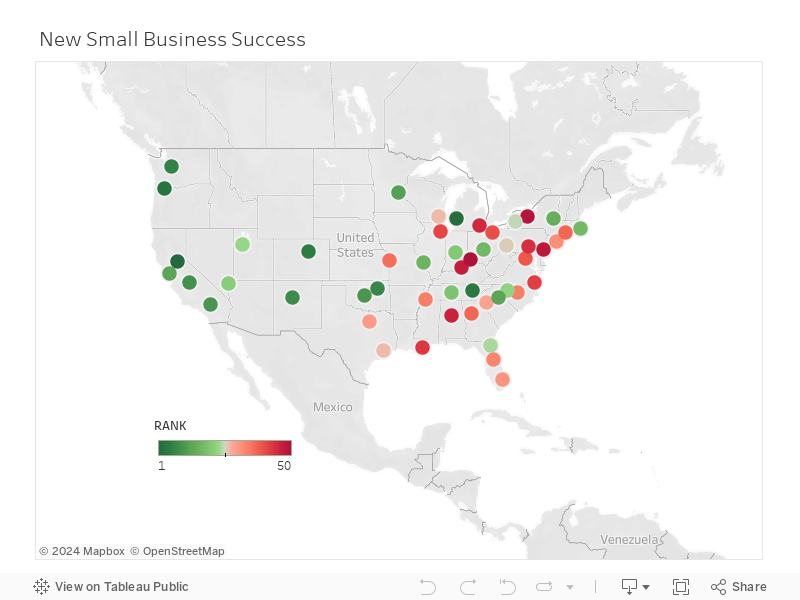
LendingTree Ranks the Best and Worst Cities for New Small Businesses


Thursday, July 30, 2015
Wednesday, January 14, 2015
Monday, March 17, 2014
Uncovering hidden investment opportunities in Africa

Recent research on the African private-equity market reveals a mismatch between supply and demand for financing that could point to investment opportunities.
Private equity is set to grow rapidly across Africa. Continent-wide demand for capital should increase by 8 percent a year between now and 2018. Annual growth could reach 20 percent in resource-rich Angola and nine other countries, and $50 billion in total investment is possible over the next decade.1
But there will be wide variations by country and industry, and the supply of capital doesn’t seem to match the growing demand. Large international investors often prefer proven investment managers, sizable investments, and diversification across Africa. Those preferences may lead them to overlook some attractive—and growing—country and sector gems.
See full Article: http://www.mckinsey.com/insights/africa/uncovering_hidden_investment_opportunities_in_africa
Monday, March 10, 2014
6 Industries That Will Profit From Global Warming

Forget Bitcoin—savvy investors bet on water. Global warming is changing the planet: Melting ice caps cause floods, fresh water vanishes, rising temperatures shift arable regions and spread disease-carrying bugs. In his new book, Windfall: The Booming Business of Global Warming, McKenzie Funk investigates the profiteers cashing in on the planet’s woes. Engineers excited to see their seawall technology in action are just the tip of the iceberg—for some investors, catastrophe is a safe bet.
See full Article: http://www.wired.com/business/2014/02/climateprofiteers/
Sunday, March 17, 2013

As anyone who’s ever used a compass knows, mistaking “magnetic north” for “true north” can put you alarmingly off course, very quickly.
Yet for many companies striving to become more sustainable, navigating via magnetic north—making incremental moves toward cleaner, greener, more socially responsible business—seems to be the default setting for their journey. That may well be better than business as usual. But it’s by no means enough.
Indeed, there’s a yawning gap between what science is telling us we need to do to ensure sustainability for people, planet and profits—an orientation we call True North—and what most companies consider to be progress. In fact, by almost every objective measure of sustainability, most industries and companies are already headed in the wrong direction. Perhaps even more worrisome, many are not even aware of the True North orientation and, equally important, that there is money to be made by embedding this approach to sustainability in their business model.
See full Press Release: http://www.accenture.com/us-en/outlook/Pages/outlook-journal-2013-holistic-inclusive-robust-sustainable-systems-drive-business-value.aspx
Thursday, October 20, 2011
Companies call for tougher climate action
 Leaders of nearly 200 major companies around the world have called for tougher action on climate change.
The 2C Challenge, co-ordinated by the Prince of Wales Corporate Leaders Group, says that climate change puts society's future prosperity at risk.
But the window to keep global warming below 2C has "almost closed", it warns.
Companies signing up include UK retailer Tesco, energy provider EDF, electronics company Philips, chemicals giant Unilever, eBay and Rolls-Royce.
See full Article.
Friday, September 23, 2011
'Most environmentally aware' firms highlighted

A report has identified 16 companies from across the developing world that are best showing how to grow profits at the same time as actively tackling environmental and social challenges.
The study by the World Economic Forum (WEF) pinpointed firms in countries as diverse as Costa Rica, Egypt and China.
The WEF said it showed that global "green" businesses were not the only ones with sustainability credentials.
See full Article.
Tuesday, September 20, 2011
Low carbon companies outperform, says CDP
 Companies that implement policies to reduce carbon emissions perform better on the stock market compared with those that do not, a survey suggests.
The annual Carbon Disclosure Project also found that, for the first time, the majority of the world's largest corporations incorporate climate change action in their business strategies.
Philips Electronics and carmakers BMW and Honda performed particularly well.
See full Article.
Monday, September 19, 2011
'Most environmentally aware' firms highlighted
A report has identified 16 companies from across the developing world that are best showing how to grow profits at the same time as actively tackling environmental and social challenges.
The study by the World Economic Forum (WEF) pinpointed firms in countries as diverse as Costa Rica, Egypt and China.
The WEF said it showed that global "green" businesses were not the only ones with sustainability credentials.
See full Article.
Tuesday, August 09, 2011
The relationship between total quality management practices and operational performance

Abstract
Total quality management (TQM) has been a widely applied process for improving competitiveness around the world, but with mixed success. A review of the literature revealed gaps in research in this area of quality/operations management, particularly in the area of empirical testing of the effectiveness of TQM implementation. The aim of this study was to examine the total quality management practices and operational performance of a large number of manufacturing companies in order to determine the relationships between these practices, individually and collectively, and firm performance. We used a large data base of 1200 Australian and New Zealand manufacturing organisations. The reliability and validity (construct, content, criterion) of the practice and performance measures were evaluated. Our study showed that the relationship between TQM practice and organisational performance is significant in a cross-sectional sense, in that TQM practice intensity explains a significant proportion of variance in performance. Some but not all of the categories of TQM practice were particularly strong predictors of performance. The categories of leadership, management of people and customer focus were the strongest significant predictors of operational performance. This is consistent with literature findings that behavioural factors such as executive commitment, employee empowerment and an open culture can produce competitive advantage more strongly than TQM tools and techniques such as process improvement, benchmarking, and information and analysis.
See full Article.
Sunday, May 15, 2011
Green as a Status Symbol: Why Increased Prices May Increase Sales

A commonly heard, and personally experienced, critique of the sustainability movement is the relatively high cost of green products compared to traditional products. I can spend .99 cents on a bottle of shampoo that cleans my hair but has 25 ingredients listed on the back, most of which I have trouble pronouncing let alone knowing what they actually are or what effects they will have on my health. Or, I can purchase a bottle of green shampoo made from significantly fewer and easier to identify ingredients, but it will cost me ten times as much.
See full Article.
Saturday, April 30, 2011
The Global Economy’s Corporate Crime Wave

The world is drowning in corporate fraud, and the problems are probably greatest in rich countries – those with supposedly “good governance.” Poor-country governments probably accept more bribes and commit more offenses, but it is rich countries that host the global companies that carry out the largest offenses. Money talks, and it is corrupting politics and markets all over the world.
Hardly a day passes without a new story of malfeasance. Every Wall Street firm has paid significant fines during the past decade for phony accounting, insider trading, securities fraud, Ponzi schemes, or outright embezzlement by CEOs. A massive insider-trading ring is currently on trial in New York, and has implicated some leading financial-industry figures. And it follows a series of fines paid by America’s biggest investment banks to settle charges of various securities violations.
See full Article.
Wednesday, March 02, 2011
Sustainability—A Product Life-Cycle Approach
Turning corporate sustainability pledges into real business targets
There is a lot more to measuring a company’s total environmental impact than merely examining internal processes. It requires a product life-cycle approach to sustainability--from growing raw materials and production, to distribution, consumer use and product disposal.
See full Article.
Tuesday, March 01, 2011
"Green" Winners
The performance of sustainability-focused companies during the financial crisis
As companies cut costs to get through the current global economic slowdown, there is often a temptation to abandon recent forays into sustainability. Yet a new A.T. Kearney analysis finds that companies committed to corporate sustainability practices during this slowdown are achieving above-average performance in the financial markets during this slowdown. So before tossing out those sustainability practices and initiatives, it might be wise to first determine the real value of the efforts—especially the possible rewards for staying the course.
See full Article.
Thursday, February 24, 2011
Closing the Gap: Big Business and Poverty

Prahalad — through his bestselling 2005 book, The Fortune at the Bottom of the Pyramid — advanced a vision of the poor as, on the one hand, consumers with a combined $5 trillion to spend, and on the other hand, as producers, if given access to markets. Yunus, through the Grameen microfinance model, showed us a sustainable business model that directly involved the poor and that could be profitable, scalable and have immense impact.
See full Article.
Monday, February 21, 2011
Red tape burden causing businesses to breach regulations

UK BUSINESSES often breach government regulations because they do not know which of the vast array of rules apply to them, according to the National Audit Office (NAO).
On average, a British business has to comply with 60 different regulations from a range of different regulatory bodies, which are failing to communicate effectively the rules they impose, said the NAO report.
See full Article.
Saturday, February 19, 2011
Industrial manufacturing: Sector climate change responses El informe Industrial manufacturing: Sector climate change reponses

El informe Industrial manufacturing: Sector climate change reponses, suplemento de la serie Different shades of green? The outlook for Industrial Products companies post-Copenhagen, analiza con detalle las respuestas específicas para reducir la huella de carbono en el sector de manufacturing.
See full Report, in pdf format.
Friday, February 18, 2011
West Africa Eyes Entrepreneurial Future
* 16 West African countries amend business and lending regulations to draw thousands of entrepreneurs into the formal economy.
* $250 million in credit expected to become available to the private sector
* Female entrepreneurs may be the most likely to benefit from the new rules
West African countries have some of the biggest barriers and constraints to private business in the world, according to an international ranking. But recent changes to business laws in the region may help pave the way for a more entrepreneurial future, say observers.
A bloc of 16 (soon to be 17) countries is moving to increase access to credit and reduce hurdles to business startup in an effort to improve the overall business climate.
See full Press Release.
Friday, April 09, 2010
Can Business Do the Job All by Itself?
When the United Nations’ climate chief, Yvo de Boer, announced last month his intention to relinquish his post in July, he seemed to underscore a point that was becoming increasingly clear to everyone in the aftermath of the fizzled climate talks in Copenhagen.
“I have always maintained that while governments provide the necessary policy framework, the real solutions must come from business,” said Mr. de Boer, who will be taking a post as a global adviser on climate and sustainability with the Swiss consulting firm KPMG. “Copenhagen did not provide us with a clear agreement in legal terms, but the political commitment and sense of direction toward a low-emissions world are overwhelming. This calls for new partnerships with the business sector and I now have the chance to help make this happen.”
See full Article.
Subscribe to:
Posts (Atom)






 Posts
Posts