Friday, December 31, 2010
China counts £130bn cost of economic growth
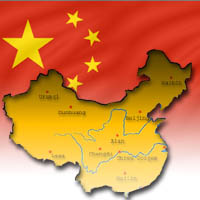
Cost of pollution, deteriorating soil and other impacts surged to 1.3tr yuan in 2008 - equivalent to 3.9% of country's GDP
China's economic growth is inflicting more than a trillion yuan's worth of damage on its environment each year, according to a government report that increases pressure on planners to slow the breakneck speed of development.
In one of the longest-term accountings of ecological degradation, the China academy for environmental planning calculated that the cost of pollution spills, deteriorating soil, vanishing wetlands, and other impacts surged to 1.3tr yuan (£130bn) in 2008. This was equivalent to 3.9% of the country's GDP.
See full Article.


After a wasted year, climate change must once again be our priority

There is no doubt that greenhouse gas emissions are rising remorselessly. We must sideline the sceptics
On an observatory 11,000 feet high on Mauna Loa, a volcano in Hawaii, a pair of ageing, automated detectors have been churning out details about the make-up of our atmosphere for several decades. This month, they produced their most alarming result to date. They showed that carbon dioxide levels in the atmosphere have touched 390 parts per million – a 40% increase on pre-industrial levels.
See full Article.
La Red de Observatorios acuerda elaborar en 2011 un Informe de Indicadores de Sostenibilidad Local aplicando criterios comunes

La Reunión de la Red de Observatorios de Sostenibilidad, que se celebró ayer en el CONAMA10, coordinada por el Observatorio de la Sostenibilidad en España (OSE), tuvo por objetivo principal la revisión y ampliación del programa de trabajo de la Red, que actualmente cuenta con un total de 35 Observatorios miembros.
En la reunión se puso en marcha la Plataforma de Comunicación de la Red de Observatorios de Sostenibilidad, una nueva herramienta interactiva que dotará de un mayor dinamismo al trabajo en red, como punto de encuentro y espacio para la acción y el desarrollo de proyectos.
También se celebró un taller del Grupo de Trabajo de “Evaluación de la Sostenibilidad en los Procesos de A21L”, que está implementando actualmente un sistema de indicadores prioritarios para analizar la sostenibilidad a nivel local a través de metodologías comunes que permitan la comparación de distintos municipios. Los resultados de este trabajo se publicarán en un Informe sobre Indicadores de Sostenibilidad Local de la Red, con la pretensión de que pueda convertirse en un modelo estratégico de evaluación de sostenibilidad local.
Ver Nota de Prensa completa.
Monitoring forests: Seeing the world for the trees

An international deal on deforestation makes it ever more important to measure the Earth’s woodlands
PERU’S forests cover 72m hectares of the country (278,000 square miles). That is three times the area of Britain. And Peru intends to hold on to its greenery. In 2000 its deforestation rate was 250,000 hectares a year. By 2005 that figure was down to 150,000. This year, according to Antonio Brack Egg, the country’s environment minister, it will be 90,000. In 2021, if all goes well, it will be zero.
See full Article.
Why biodiversity loss and climate change are equal threats

Our biggest ally will be lost if we do not protect and enhance biodiversity in forests and other systems
Since the Rio Earth Summit in 1992, the media and many organisations have pursued as separate narratives the issues of climate, biodiversity and sustainable development. One of the changes this year, at a UN level, has been recognition that this does not make sense.
Without protecting and enhancing biodiversity in forests and other systems we are losing our biggest ally.
See full Article.
2010 review of green technologies
From electric cars to solar-powered planes and giant turbines, 2010 has seen huge progress in green technology development
See full Article.
Thursday, December 30, 2010
A Scientist, His Work and a Climate Reckoning

Two gray machines sit inside a pair of utilitarian buildings here, sniffing the fresh breezes that blow across thousands of miles of ocean.
They make no noise. But once an hour, they spit out a number, and for decades, it has been rising relentlessly.
The first machine of this type was installed on Mauna Loa in the 1950s at the behest of Charles David Keeling, a scientist from San Diego. His resulting discovery, of the increasing level of carbon dioxide in the atmosphere, transformed the scientific understanding of humanity’s relationship with the earth. A graph of his findings is inscribed on a wall in Washington as one of the great achievements of modern science.
See full Article.
WikiLeaks, Cuba and More U.S. Cynicism on Climate Change
As more and more WikiLeaks cables become available, a portrait of the U.S. attitude toward climate change is emerging -- and it is not flattering. In a previous article, I discussed American diplomats' dismissive views toward Bolivia, a country which has done much to advance a progressive agenda on climate change. In another recently released cable, however, U.S. officials take a cynical view of Cuba. Over the past year or so, the island nation has criticized the U.S. for strong arming other countries when it comes to international climate change negotiations. Joining forces with leftist countries like Bolivia, as well as fellow island countries such as Tuvalu, Cuba has been an irritating thorn in the side of the Obama administration.
See full Article.
Getting to conflict free

Executive Summary:
Violent conflict has persisted in eastern Congo for more than a decade and a half, causing more death than any war since World War II. Although Congo’s conflict stems from long-standing grievances, the trade in conflict minerals provides the primary fuel for the conflict.2 Worth hundreds of millions of dollars per year, the conflict minerals trade provides incentives for rebel groups, militias, and criminal networks within the Congolese army to control strategic mines and trading routes through patterns of violent extraction and deeply exploitative behavior.3
See full Press Release.
Ozawa Bows to DPJ Pressure on Ethics Hearing

Japanese ruling-party heavyweight Ichiro Ozawa relented to pressure Tuesday and agreed to testify before parliament over his involvement in a funding scandal, a peace offering after weeks of escalating tensions within the party that have sapped the government's support.
The 68-year-old political leader has for weeks defied requests from the Democratic Party of Japan to testify before a parliamentary ethics committee over his role in a case involving the alleged misallocation of campaign funds. Mr. Ozawa denies any wrongdoing in a scandal that has already resulted in the arrest of two of his political aides.
See full Article.
Informe SOER 2010
Cuarto Informe sobre el estado y las perspectivas del medio ambiente; una exhaustiva evaluación de cómo y por qué está cambiando el medio ambiente europeo, y qué hacemos al respecto.
El SOER 2010 llega a la conclusión de que un enfoque integrado para convertir Europa en una economía verde y eficiente con los recursos no sólo dará lugar a un medio ambiente sano, sino que impulsará la prosperidad y la cohesión social.
El nuevo informeen de la AEMA indica que la demanda mundial de recursos naturales para alimentar, vestir, alojar y transportar a la población se está acelerando. Esta creciente demanda de capital natural ejerce cada vez más presión sobre los ecosistemas, las economías y la cohesión social en Europa y en otras partes del mundo. Sin embargo, el SOER2010 confirma que las políticas medioambientales bien diseñadas siguen contribuyendo a la mejora del medio ambiente europeo sin socavar el potencial de crecimiento de Europa.
Ver Nota de Prensa completa.
Richard Branson's Climate Change Agenda
His empire includes airlines, mobile phones, digital publishing, and space travel. Why the billionaire high-school dropout has added climate change to his agenda.
You have said that on global climate change, governments cannot lead by themselves. What role do you believe governments should play?
I don’t think governments can lead alone on anything, really. I think the world is moving much more to a world where the business community has to work closely with governments in helping them get a lot of problems resolved. And I’m a strong believer that business should be a force for good, not just a money-making machine for its shareholders. When it comes to climate change, business has to play its part, because governments have largely forsaken the world and not grasped the nettle. I think if governments were to set the rules by which we all played, to incentivize industry to move in a particular direction, that would really help us get on top of the problem.
See full Article.
Check out the latest Sudan Peace Watch

Here are the key developments covered in this issue:
See full Press Release.
Wednesday, December 29, 2010
Las consecuencias de Wikileaks para las empresas

Supongo que todos sabemos de Wikileaks y de su impacto por la diseminación de información gubernamental designada secreta y que los gobiernos tenían la intención de mantener privada. Como ha comentado Marco Antonio hace poco en estas páginas, esta organización también tiene al sector privado en su punto de mira y veremos salir cada vez más información corporativa interna.
Elena Gómez del Pozuelo, nos trae un artículo interesante hablando de qué impacto las empresas pueden esperar cuando Wikileaks haga su trabajo con información interna de estas empresas y qué deben hacer las empresas para prepararse para esos acontecimientos.
Ver Artículo completo.
Current emissions risk 'devastating' temperature rise, scientists warn
A rise in global temperatures of four degree Celsius is likely to occur during the 21st century causing "devastating impacts" if greenhouse gas emissions continue rising at the current rate, according to a group of international scientists.
In a special issue of the UK journal "Philosophical Transactions of the Royal Society A" -- which coincides with the start of the United Nations climate talks in Cancun, Mexico -- scientists argue that delays in reducing emissions is making the target of two degrees Celsius -- a rise currently deemed safe by scientists -- "extremely difficult" and "arguably impossible" to achieve.
See full Article.
India's languishing countryside: A village in a million

Shahabpur, a village on the Gangetic plain, is caste-addled and somehow cohesive. But modernity, fast encroaching, is changing its ancient ways
AFTER a night of civil war, the feral dogs that live around Sarju Prasad’s mud hut in Shahabpur, a village in eastern Uttar Pradesh (UP), have, at last, gone quiet. It is 5am. From a charpoy—a bed of sticks and string—set outside the hut, the boughs of the overhanging trees are dimly visible. Then a clumsy-footed crow awakes in them, stirring the branches and croaking mournfully. And with a creaking of its rickety string-bound frame, Sarju rises from the adjacent charpoy, steps between a dozen curled-up canine forms, and begins his working-day.
See full Article.
Japan admits whale meat scam
Japan's Fisheries Agency has admitted its officials accepted gifts of whale meat from the body that runs the country's so-called scientific whaling program.
Six months ago the ABC broadcast allegations by two whaling crew members that officials and crew were illegally taking thousands of dollars worth of whale cuts.
See full Article.
Foro Permanente de la Sostenibilidad
EL Foro Permanente de la Sostenibilidad del OSE (FPS) es una oportunidad para facilitar un debate público periódico sobre temas clave para un desarrollo más sostenible e identificar aspectos relevantes para avanzar en el mismo
Las sesiones, de índole monográfica (energía, transporte, usos del suelo, fiscalidad...), tendrán una estructura asamblearia en base a la intervención de un panel de expertos invitados. El Observatorio de la Sostenibilidad en España (OSE) aportará la información básica sobre la sesión. Al finalizar las exposiciones se efectuará un intercambio de opiniones con los asistentes al acto. El foro estará dirigido por un moderador.
Ver Nota de Prensa completa.
España intentará medir la calidad de vida y la sostenibilidad social
El INE trabaja en el diseño de indicadores de desarrollo diferentes al PIB
España se ha sumado a los países que en los últimos años se han interesado por calibrar el bienestar de los ciudadanos más allá del crecimiento económico puro y duro. La idea de que el producto interior bruto (PIB) ya no es un indicador suficiente para medir el progreso de las economías desarrolladas -no mide la sostenibilidad medioambiental o la inclusión social, por ejemplo- empezó a preocupar en 2004 en el seno de la OCDE, el club de los países más ricos del mundo. Pero ha tenido un gran impulso político en Europa y repercusión mediática a partir de 2008, con el proyecto que emprendió el presidente francés, Nicolas Sarkozy, y recientemente, por el interés del líder británico, David Cameron.
Ver Artículo completo.
Tuesday, December 28, 2010
A Scientist, His Work and a Climate Reckoning
Two gray machines sit inside a pair of utilitarian buildings here, sniffing the fresh breezes that blow across thousands of miles of ocean.
They make no noise. But once an hour, they spit out a number, and for decades, it has been rising relentlessly.
The first machine of this type was installed on Mauna Loa in the 1950s at the behest of Charles David Keeling, a scientist from San Diego. His resulting discovery, of the increasing level of carbon dioxide in the atmosphere, transformed the scientific understanding of humanity’s relationship with the earth. A graph of his findings is inscribed on a wall in Washington as one of the great achievements of modern science.
See full Article.
Optical wing generates lift from light

Scientists hope breakthrough will enable space vehicles to manoeuvre solely via Sun's rays.
A time-lapse photo of a microscopic rod lit by a laser from below shows transverse movement, demonstrating lift.
Physicists in the United States have demonstrated the optical analogue of an aerofoil — a 'lightfoil' that generates lift when passing through laser light.
The demonstration, which comes more than a century after the development of the first aeroplanes, suggests that lightfoils could one day be used to manoeuvre objects in the vacuum of outer space using only the Sun's rays. "It's almost like the first stages of what the Wright brothers did," says lead author Grover Swartzlander, a physicist at the Rochester Institute of Technology, New York, whose study appears in Nature Photonics today.
See full Article.
Rapidly developing countries are innovation champions

Top emerging economies are forging research collaborations to help the less well-off.
Rapidly developing countries such as Brazil are taking a larger share of renewable energy patents.Getty Images
The idea that poorer countries should catch up economically with wealthier ones before spending heavily on R&D was challenged by a report released last week. The Organisation for Economic Co-operation and Development (OECD) report contradicts theories widely held by development professionals and international organizations such as the World Bank.
Although the 34 OECD member countries, which are all industrialized, are likely to dominate much of R&D for the foreseeable future, other nations are starting to make their mark in this area, and will help to redraw the global science, technology and industry (STI) map, according to the analysis.
See full Article.
España considera el Acuerdo de Cancún como un paso histórico en la lucha contra el cambio climático y en la negociación multilateral
16ª Conferencia de las Partes de la Convención Marco de Naciones Unidas sobre Cambio Climático.
El Acuerdo de Cancún ha anclado los compromisos de reducción de emisiones de gases de efecto invernadero de los países dentro del marco de la ONU y supone un gran avance en la cooperación multilateral para resolver los problemas del cambio climático.
El Ministerio de Medio Ambiente, y Medio Rural y Marino, en representación de España ha valorado el Acuerdo de Cancún alcanzado en la madrugada del sábado en 16ª Conferencia de las Partes de la Convención Marco de Naciones Unidas sobre Cambio Climático como un paso histórico conseguido gracias a la cooperación multilateral de los países en la lucha contra el cambio climático.
Ver Nota de Prensa completa.
Does corruption sand or grease the wheels of economic growth?

Does corruption sand or grease the wheels of economic growth? This column reviews recent research that uses meta-analysis techniques to try to provide more concrete answers to this old-age question. From a unique, comprehensive data base of 460 estimates of the impact of corruption on growth from 41 studies, the main conclusion that emerges is that there is little support for the “greasing the wheels” hypothesis.
Corruption happens and it happens across the world. Although it is more common in poorer economies, corruption exists everywhere. A lingering debate that still provides a powerful research motivation is whether corruptions greases or sands the wheels of economic growth (Bardhan 1997, Pande 2008, Aidt 2009).
Those in favour of the greasing hypothesis argue that corruption facilitates trade that may not have happened otherwise and that it promotes efficiency by allowing private sector agents to circumvent cumbersome regulations (Leff 1964, Huntington 1968, Méon and Weill 2010).
See full Article.
Telefónica presenta los Telefónica Ability Awards | Telefonica Ability Awards

El presidente de Telefónica, César Alierta, ha presidido hoy el acto de presentación de los premios Telefónica Ability Awards, cuya finalidad es reconocer a aquellas empresas españolas que desarrollan modelos de negocio sostenibles e integran la discapacidad en su cadena de valor.
Los Ability Awards se celebran en Irlanda, con el patrocinio de Telefónica O2, desde hace ya cinco años y han conseguido un gran impacto en el mundo empresarial y en la sociedad irlandesa. España es el primer país donde se exportan unos premios que nacieron con vocación internacional y que se prevé que se celebren en próximos años en diversos países de Europa y Latinoamérica.
Ver Nota de Prensa completa.
The African Miracle

How the world's charity case became its best investment opportunity.
Not so long ago, the world lamented its broken continent. "The state of Africa is a scar on the conscience of the world," declared British Prime Minister Tony Blair in 2001 -- and his was a common refrain. Civil war, economic stagnation, and a high disease burden seemed irreversible, condemning the region to perpetual poverty.
A decade later, however, Africa has outgrown the gloom and doom. Far from the misery-stricken place so often portrayed, Africa today is alive with rising urban centers, a growing consumer class, and sizzling business deals. It's a land of opportunity.
See full Article.
Monday, December 27, 2010
Post Carbon - EPA announces plans to regulate power plant, oil refinery emissions

The Environmental Protection Agency announced Thursday that it would regulate greenhouse gas emissions from power plants and oil refineries next year, targeting the nation's two biggest sources of carbon dioxide.
The move, which comes as part of a legal settlement with several states, local governments and environmental groups which have sued EPA under the Bush administration for failing to act, highlights the Obama administration's intent to press ahead with curbs on carbon despite congressional resistance.
See full Article.
How to beat the media in the climate street fight
Researchers must take a more aggressive approach to counter shoddy journalism and set the scientific record straight, says Simon L. Lewis.
When science hits the news, researchers often moan about the quality of the coverage. A sharp reminder of the issue rolls round this month — the anniversary of the global media frenzy over the release of e-mails from climate researchers at the University of East Anglia, UK. So what should scientists do when reporting quality falls off a cliff? Earlier this year, I was seriously misrepresented by a newspaper and thrown into a political storm. Rather than take it lying down, I set the record straight. It has been an odd journey, and I think there are lessons for how we scientists should deal with the media.
See full Article.
The Great Beyond: Research trip to the Antarctic: Penguins at risk

Science journalist Jane Qiu is at the Palmer ecological research station on the Antarctic Peninsula, joining researchers investigating how climate change has affected the region in recent decades. Please check back for her dispatches from the bottom of the world.
If the Marr Ice Piedmont glacier is the backyard of the Palmer ecological research station in western Antarctic Peninsula, the tiny speck of rock known as Torgersen Island, less than one kilometre from the outpost, is its front garden. Boasting the largest penguin colonies in the region, the island is a popular destination of after-dinner strolls for people at Palmer, and is visited regularly by tourist cruises.
See full Article.
Consider giving to the poor rather than buying meaningless holiday 'stuff'

For the new year, I'd like to propose that those who give advice on how to budget should drop the expression "pay yourself first."
The principle behind the saying is that you will be setting aside money in an emergency or rainy-day account. I just want to tweak this notion a bit.
See full Article.
Innovación social - Reinventando el desarrollo sostenible
La computación en nube o cloud computing (servidores en la Red) no es un concepto pasajero y está aquí para quedarse. Se puede considerar el cloud computing como el siguiente estadio tecnológico de una sociedad global que evoluciona. Los ciudadanos, las empresas y el sector público, buscan acceder a su información en cualquier momento y lugar, lo que implica que esa información no puede seguir residiendo en sus ordenadores personales. La nube es una solución elegante a esta necesidad, centralizando la provisión de recursos informáticos en proveedores especializados que los hacen accesibles a sus clientes como si de energía se tratara.
Los expertos consideran que: “la nube es buena para todos, pero no para todo”, por lo que cada empresa tendrá que analizar qué subir a la nube y cuándo subirlo. Los expertos también han identificado las barreras que frenan la expansión de la nube y destacan el largo camino que queda por recorrer.
Ver Resumen ejecutivo completo, en formato pdf.
Best-Governed Companies in India Awarded
Every year, the Institute of Company Secretaries of India (ICSI) bestows its National Award for Excellence in Corporate Governance to the best-governed companies in the country. India's Finance Minister, Mr. Pranab Mukherjee, presented this year's award to Dr. Reddy's Laboratories Ltd (pictured). and Larsen & Toubro Ltd.
The Forum's Phil Armstrong delivered the keynote address at the event, which marked the tenth year of the award:
See full Press Release.
The importance of have a tight control of your supply chain
Amazing how there are still companies not attentive of their corporate responsabilities (CSR) and forget to review their service providers, even for their ads.
The retailer, Media Markt, should be ashamed of themselves!
Onésimo Alvarez-Moro
See Article in Spanish.
Sunday, December 26, 2010
The Latin American Corporate Governance Roundtable: Building on a Decade of Progress

10 years ago the first Latin American Roundtable of Corporate Governance took place. This provides a timely opportunity to take stock of what the Roundtable and the region as a whole have accomplished in terms of corporate governance. While the many reforms and improvements adopted in Latin American countries cannot be attributed to a single cause, it is clear that the Roundtable's discussions, reports and networks have provided strong input to, and support for, these processes.
See full Details.
13 Products Most Likely To Made By Child Or Forced Labor

There are some 128 goods among the products that most commonly use child labor, according to newly updated data from the U.S. Department of Labor (DOL). The broad definition of exploitive labor by underage workers used by the DOL includes "slavery or practices similar to slavery, the sale or trafficking of children, debt bondage or serfdom; the forcible recruitment of children for use in armed conflict; the commercial sexual exploitation of children; the involvement of children in drug trafficking; and work that is likely to harm children's health, safety, or morals."
The vast majority of the explotiive labor done by children is in agriculture (60 percent), followed by services (26 percent), and industry (7 percent), according to the DOL. But some industries are definitely worse than others.
See full Article.
Diversity at the head table

Bringing Complementary Skills and Experiences to the Board
A well-functioning board of directors needs diversity of experience and perspectives. If everybody thinks the same, then there is no need for a board; one individual would suffice! Diversity for its own sake, however, is not an improvement in overnance; what matters is the combination of complementary skills and experiences that members bring to the table to better address the challenges the company is likely to face.
Foreword
What caused the crisis? Many factors contributed, but poor governance certainly played a part—there is general agreement on that. So, what caused poor governance? People have spent countless hours considering this question, and the determination to improve governance has intensified since the crisis.
See full Summary, in pdf format.
Sustainability and Corporate Social Responsibility
How to integrate Socual Responsability Objectives with Business Incentives for Value Creation and Profit Maximization
Opening Remarks
Thank you for the invitation to address this November Forum. I congratulate the IE Business School for pushing the frontiers on sustainability by convening this dialogue. By facilitating these exchanges—the 5th no less—IE demonstrates a track record of leadership in helping to place social responsibility as a central agenda in boardroom decisions. “En hora buena!” Environmental protection and human rights movements have been the pioneers over many decades that persevered in the face of strong opposition. Their progress is the foundation of our current sustainability agenda. And, they continue to challenge our understanding about the proper role of free markets and the private sector.
See full Remarks.
Tide turns against corn ethanol

Biofuel subsidy sees limited extension in US tax bill as opposition grows.
Buffeted by the economic crisis and a drop in the oil price, US producers of corn ethanol are encountering increasing scepticism from the legislators on Capitol Hill even as producers of the 'greener' cellulose-derived ethanol struggle to move beyond basic research and development.
Producers of ethanol from corn (maize) starch got what they needed out of a tax package enacted by the US Congress last week: a year's extension of the subsidies and protections granted under current law.
See full Article.
Reporting On Corporate Governance

When: May 3-4, 2010
Where: Jordan
“The workshop was a good mix of theoretical and practical and taught us how to ask questions on corporate governance. Before, I thought that CG was bad for companies or at least provided limitations without much benefit. But now I learned how beneficial CG is to companies,” says Hala Al Hadidi from Jordan’s state news agency PETRA.
See full Details.
Leaders Summit 2010

The UN Global Compact Leaders Summit 2010 brought together leaders from all sectors to elevate the role of responsible business and investment in bringing about the needed transformation to more sustainable and inclusive markets. The event occurred on 24-25 June, 2010 in New York.
Our world is at a critical juncture.
Future advances in global integration, poverty reduction, protection of our planet and, ultimately, peace critically depend on our ability to collectively address the most pressing global challenges. Accelerating the practice of corporate sustainability and responsibility is an urgent task in these complex times, when crises – from financial market break downs to environmental degradation – are increasingly global and connected. The stakes could not be higher, given that climate change threatens the security of food, water and energy – the interlocking resource pillars which underpin prosperity and the productivity of the economy. Putting long-term sustainability, comprehensive risk management and ethics at the top of the corporate agenda must be a priority for business everywhere.
See full Details.
Saturday, December 25, 2010
The Role of Non-Executive Board Directors Today

As a non-executive board director, I have been thinking a great deal about what it means to do this role in today's environment.
We exist in a dramatically different economic climate. With that comes increased scrutiny by stakeholders and governments alike, and with good reason. If our companies are the engine for bringing us out of the doldrums, then we need to have the best foundations and tools for them to do just that.
The nature of what it takes to be a responsible board member anywhere in the world has changed. Simply looking over the shoulder of the executive team and offering an occasional word of wisdom or direction is not sufficient.
See full Article.
Impact Investing in Sustainable Agriculture for a New Economy

According to a recent article from Scientific American, agriculture is responsible for one third of global greenhouse gas emissions from human activity. Agribusiness farming operations are notorious for nitrogen and phosphorus runoff (particularly from poultry and hog farms). In the Chesapeake Bay region, for example, one study estimated the price tag for restoring the bay at $19 billion, of which $11 billion would go toward “nutrient reduction.”
There are more than 400 such dead zones throughout the world. Additionally, heavily subsidized corn and soy feed to livestock contribute to massive deforestation in the developing world. Tufts University researchers estimate that in the United States alone, between 1997 and 2005 the industrial animal sector saved more than $35 billion as a result of federal farm subsidies that lowered the price of the feed they purchased.
See full Article.
High Level Dialogue on Tourism and Biodiversity Marks World Tourism Day Celebrations
A panel of leading tourism and biodiversity experts will meet in China on World Tourism Day (WTD) to explore the synergies between tourism, biodiversity and sustainable development in an event marking the official celebrations of WTD 2010 (27 September).
WTD, is held this year under the theme ‘Tourism and Biodiversity’, in support of the United Nations International Year of Biodiversity. China, one of the world’s most biologically diverse countries and a major tourism destination, will lead the 2010 official WTD celebrations.
See full Article.
Colombian Connection Project

The Colombian Connection Project (TCCP) was started as an independent initiative seeking to make a positive contribution in Colombia. As part of its mission, TCCP designs learning journeys for foreigners that are interested in experiencing first-hand a different side of Colombia. Each journey is organized around a particular theme such as sustainability, culture, urban planning and biodiversity.
Each learning journey aims to take eight to ten professionals from different nationalities to Colombia on a seven to fifteen day trip. The aim is not only to travel around the country but also to emerge oneself into Colombian culture and every-day life.
See full Details.
Africa's heritage sites under threat
Many of Africa's natural and cultural sites are under threat from uncontrolled development, poaching and civil unrest, UNESCO has warned.
While less than 10 percent of all sites on the World Heritage List are in Africa, the continent has more than 40 percent of sites on the List of World Heritage in Danger, according to Lazare Eloundou, chief of the World Heritage Center's Africa unit.
UNESCO, the United Nations body in charge of preserving heritage, has now made Africa a priority and is now giving extra support to the continent's governments in helping mitigate the threats.
See full Article.
Japan spreads the satoyama message
It is a country that provides the world with much of its modern technology, but Japan is now adding some old-fashioned rural wisdom to its exports list in an effort to stem nature loss around the world.
The Satoyama Initiative has been set up by Japan's Ministry of the Environment and the United Nations University Institute of Advanced Studies (UNU-IAS) in an attempt to promote traditional Japanese land conservation around the world.
While its widely recognized that conservation of unspoilt wildernesses is vital to preserve eco-systems, the fight to preserve and promote biodiversity in human-influenced habitats is equally urgent.
See full Article.
Newsmaker of the year: In the eye of the storm

She set out to revolutionize US ocean management — but first she faced the oil spill. Jane Lubchenco is Nature 's Newsmaker of the Year.
Jane Lubchenco smiles as a dolphin leaps out of the water, arcs in the air and splashes back down just a few metres away. The 63-year-old marine ecologist is out on a boat near Pascagoula, Mississippi, with a team of researchers studying how the recent oil spill in the Gulf of Mexico has affected dolphin communities there.
See full Article.
Friday, December 24, 2010
Does paying to protect the environment work?
One of the biggest dilemmas for conservationists is that preserving the environment often conflicts with the needs of the poorest communities who live there.
In many areas, forests of outstanding biodiversity are being chopped down by poor subsistence farmers in need of firewood and land to grow the food they need to survive, ecologists say.
Enter Payments for Environmental Services, or PES, an idea gaining popularity among conservationists as a way of allowing communities to benefit from conservation of their environment.
See full Article.
Improving energy efficiency in the hotel industry
Measuring energy consumption, the carbon footprint and providing sustainable investment possibilities are the key components of an E-toolkit which could have a path-breaking impact on the tourism sector, helping hotels reduce their carbon footprint while increasing business profits. The Hotel Energy Solutions (HES) E-toolkit will be presented at the second annual HES Conference, ‘An Innovative Energy Toolkit for Hotels’ during the International Tourism trade fair FITUR 2011 (Madrid, Spain, 20 January 2011).
The HES E-toolkit, an easy to use software application, has been designed to reduce the impact of the accommodation sector on the environment and fight climate change. The E-toolkit provides a practical means for hoteliers to asses their current energy consumption and presents the most profitable investment alternatives in terms of energy efficiency and renewable energies.
See full Article.
United Nations General Assembly acknowledges role of tourism for sustainable development and poverty eradication
The United Nations General Assembly has adopted by consensus at its 65th session three separate resolutions emphasizing the role on tourism in sustainable development. The three resolutions, on the implementation of the Global Code of Ethics for Tourism, on the promotion of ecotourism and on the importance of sustainable tourism for Small Island Developing States stress the significance of the sector to the development agenda in terms of sustainability, employment and poverty elimination. The resolutions further welcomed the efforts and work of UNWTO in promoting sustainable tourism for poverty eradication.
The Global Code of Ethics for Tourism – promoting sustainable and responsible development
The resolution on the Global Code of Ethics for Tourism welcomed the work of UNWTO, of its World Committee on Tourism Ethics and the increasing level of institutional and legal commitment by member States towards the implementation of the Code.
See full Article.
Going green to save the white of the Alps

In the Alps, the term "going green" is not necessarily a good thing.
While efforts to be more environmentally friendly are welcome, the region is under threat from climate change that could mean in the future the snowy, white slopes in the winter are more a grassy, green color.
"The Alps is a climate sensitive region," said Professor Harald Kunstmann, a climate scientist for Karlsruhe Institute of Technology.
See full Article.
Subscribe to:
Posts (Atom)






 Posts
Posts