Sunday, February 28, 2010

Leona Lewis backs Earth Hour


SHE famously sang "light up, light up" - but Leona Lewis will be switching them all OFF for next month's Earth Hour.

The superstar singer is making her home a no-glow zone from 8.30pm on March 27.

And we are urging every single one of our readers to do the same, as part of our Go Green & Save campaign.

It is our way of supporting WWF's Earth Hour - which aims to get a billion people across the world to turn off their lights for 0 minutes to remind politicians just how important climate change is.

See full Article.

Yo Líder - Desarrollando mis competencias directivas


Fecha: 15/03/2010 - 16/03/2010
Lugar: Madrid, España


Este curso enfocado a desarrollar en los participantes capacidades de liderazgo a partir del conocimiento individual y de una metodología eminentemente práctica y participativa.

* Reflexionará sobre la línea entre donde uno está y lo que uno quiere conseguir. Se dan las claves básicas para liderar euquipos.
* Conerá las 3 áreas clave de trabajo, para mejorar como persona o como líder:
o Yo conmigo mismo
o Yo con el equipo
o Yo con mi entorno
* Desarrollará los comportamientos y habilidades clave de liderazgo necesarios para consguir resultados deseados y empezar a desarrollarlos.
* Mejorará su autoconfianza y credibilidad a la hora de gestionar personas y equipos.
* Aprenderá herramientas para influir y motivar a otras personas
* Autoevaluándose, en lo personal y lo profesional, identificará aspectos susceptibles de mejora y establcerá las acciones necesarias para desarrollarse como líderes.
* Aprenderá técnicas y herramientas para evaluar a las personas, ofrecer feedback y desarrollar el talento en sus equipos.

Ver Detalles completos.

From Compliance Governance to Strategic Governance


The year 2010 finds companies and investors at a transformational moment. The financial crisis demonstrated that corporate governance should be more than just a compliance exercise. In the next proxy season, corporate boards will come under increasing pressure to explain how they integrate governance with performance and long-term strategic business goals. With both companies and investors under pressure and looking for redemption, the 2010 annual meeting season will be a shadow referendum on the crisis and an inflection point in the evolution of corporate governance.

See full Details.

CO2 abatement: Exploring options for oil and natural gas


Oil and natural gas companies play a central role in CO2 emissions. How can the industry meet the challenge from climate change regulations?

The oil and natural gas industry is directly responsible for just 6 percent of global CO2 emissions, but the debate over how to reduce the global greenhouse gases (GHG) commonly associated with climate change focuses primarily on oil and natural gas companies. These companies are under constant regulatory and reputational pressure to reduce both upstream and downstream CO2 emissions, and in the coming years they will increasingly be expected to provide solutions and make investments. The reason for this emphasis on the industry is that when you add the CO2 emitted in the end uses (transportation, power and heat generation), the petroleum and gas sectors account for almost half of all global emissions.

It is important to understand the position of the oil and gas industry in the context of the larger debate over climate change. By exploring some of the options that the sector has for reducing GHG emissions, oil and natural gas companies can not only stay ahead of regulatory and economic developments but also potentially profit from them.

See full Article.

Banks suffer as fraud rides high


- Fraud up 50% to £630m in first half of 2008
- Banks suffer all-time high of over £350m
- Mortgage fraud starting to make an impact
- Rise in accounting and employee frauds


Banks have been the main targets of a major spike in fraud coming to court in the first six months of 2008, according to KPMG Forensic's Fraud Barometer. Over £630m of fraud came to court across 128 cases, substantially up from £421m across 91 cases in the previous six month period, and of that more than half (£350m) was against the financial sector. KPMG has warned that the figures are likely to get worse as the full impact of the credit crunch unfolds.

Fraud against banks totalled more in six months than in any previous entire year of the 20 year history of KPMG's Fraud Barometer. Previously the highest level of fraud against the financial sector was £200m in 1998. The six-month high was fuelled in part by two big cases - an alleged £220m attempt to hack into Sumitomo Matsui Banking Corporation's systems, and a £70m attempted fraud within HSBC's securities services division (it does not include the Jerome Kerviel Societe Generale case, which took place in France).

See full Press Release.

How helping women helps business


Companies whose social investments focus on women in developing economies help not only the recipients but also themselves.

This is a Conversation Starter, one in a series of invited opinions on topical issues. Read the essay, then share your thoughts by commenting below.

Few companies make social investments specifically aimed at empowering women in developing economies, but we believe that supporting this goal is good business and good practice for all companies. In the course of our work,1 we’ve uncovered a startlingly wide range of ways in which private-sector companies can offer sizable economic benefits not only to women and their societies but also to the companies themselves. The benefits to businesses come from enlarging their markets, improving the quality or size of their current and potential workforce (for instance, by attracting talent globally), and maintaining or improving their reputations.

See full Article.

Risk roundup 2010


Top risk forecasters highlight their picks for this year’s economic and political hot spots.

Where will the greatest risks—known and unknown—flare up on the global business landscape this year? In this roundup, three prominent forecasters scan the horizon.

Among the risks the Economist Intelligence Unit’s latest global business risk assessment highlights are growing political instability from rising global unemployment, macroeconomic risks as stimulus measures fade, and financial-system risk spreading to sovereign debt in Greece and other countries.

European fiscal divergence makes the list as well at the Eurasia Group, which also sees diminished appeal of economic partnership between China and the United States raising concern, while Iran faces growing pressure at home, regionally, and globally.

See full Article.

Saturday, February 27, 2010

New value at stake in regulation


Escalating value at risk from government regulation clearly has a place on the agendas of most CEOs.

The expanding role of goverments in the marketplace has become a hot topic in many executive suites around the world. But how much value is actually at stake from state intervention in the wake of the financial crisis of 2008? The answer, according to our analysis, is close to $800 billion a year of earnings before interest, taxes, depreciation, and amortization (EBITDA) worldwide—on top of around $2.8 trillion on the table before the crisis.

Regulation’s impact varies by industry: half of the new value at stake is in banking and insurance, 15 percent in the automotive industry, and the remaining 35 percent scattered among other sectors. In banking and insurance, the crisis has added close to $400 billion to the industry EBITDA affected by government intervention and regulation, for a total of $970 billion (exhibit). This means that two-thirds of the sector’s profits are now at stake.

See full Article.

Women at work


A vanguard of women in the MENA region is driving changes in business and society. How can the economic potential of half the region’s population be unleashed?

Hana Barqawi realised her dream of opening her own children's furniture store two years ago in the Jordanian capital of Amman. Ms Barqawi is part of a wave of female entrepreneurs that has swept across the Middle East and North Africa area over the past decade or more. She is not surprised: "Arab women are well-educated, openminded, open to new ideas, new cultures, new challenges," she says. Nor has she found cultural attitudes to be a major problem, with Jordanian men accepting the new female business presence. But Ms Barqawi notes that while servants and nannies are available to help with childcare, balancing work and family life has now become a daily juggle for many women like her. But to what extent do Ms Barqawi's experiences reflect those of other women across the Middle East and North Africa region?

This is a key policy question. Sure enough, women have started to emerge in business and government in several MENA countries, with some countries moving faster than others, but overall they represent a small minority. Nor are all women in the region well-educated or indeed able to enter the work force.

See full Aticle.

EthicsPoint and Kroll Expand Partnership to Help Companies Address Fraud and Other High-Risk Incidents


EthicsPoint, a leading provider of hotline and anti-fraud reporting and technology services, and Kroll, the world’s leading risk consulting company, today announced their expanded partnership to provide organizations with the tools and support to properly resolve incidents ranging from employee misconduct to widespread fraud schemes.

Without processes to effectively detect, investigate and resolve incidents, companies are at risk of potentially significant financial losses and non-compliance penalties. Kroll and EthicsPoint are strengthening their partnership to address this gap, which has become more important with the rising incidence of corporate theft, misconduct and fraud in 2009.

“We are pleased to expand our partnership with EthicsPoint,” said Tim Whipple, President of Kroll’s Consulting Services Group. “EthicsPoint’s state-of-the art technology is a natural fit with Kroll’s suite of investigative and compliance monitoring services and will help our clients effectively manage their internal reporting requirements.”

See full Press Release.

Climate change: The case for nuclear energy


Reducing greenhouse gas (GHG) emissions is a key objective of energy policies in many countries. As energy consumption will continue to increase in the medium and long term, even if the recent financial crisis might curtail this rise momentarily, there is a general consensus on the need to foster the development and use of all carbon-free options for energy supply. What role can nuclear energy play?

The Intergovernmental Panel on Climate Change (IPCC) has estimated that to stabilise global temperatures at 2ºC above pre-industrial levels–the cut required to avoid catastrophic consequences for the planet–global GHG emissions in 2050 should be reduced by at least 50% below 2000 levels. This could imply reductions of up to 80% by 2050 for OECD countries.

With expected population and energy demand growth, this means reducing the carbon intensity of the world energy system by a factor of four. This is an enormous challenge, and it cannot be faced without mobilising all the available options, including energy conservation and the large-scale deployment of low-carbon energy sources.

See full Article.

Executive Compensation Task Force


The Conference Board Task Force on Executive Compensation Lays Out Five Guiding Principles

The economic crisis and subsequent, unprecedented government intervention, along with much publicized payments to executives of companies with plunging stock prices, has intensified public scrutiny on corporate practices regarding executive compensation.

The Conference Board Task Force on Executive Compensation, which was convened in March 2009, believes public corporations and directors are at a crossroads with respect to executive compensation. In a report published Sept. 21, 2009, the Task Force recommends that publicly traded companies take immediate and credible action to restore trust in the ability of boards of directors to oversee executive compensation.

The Task Force recognizes that a "rules-based" approach cannot provide the essential flexibility required to accommodate the disparate industries, strategies, business models, and stages of development represented in the more than 12,000 U.S. public companies.

See full Press Release.

Boom in organised crime takes fraud cases to record levels


- Organised gang frauds double in second half of 2006
- 40 percent of fraud (£350m) committed by managers
- Government and investors the biggest victims


A surge in frauds perpetrated by organised crime gangs led to a record number of fraud cases in 2006, according to KPMG Forensic's Fraud Barometer. The year saw 277 fraud cases coming to court, the largest number ever recorded in the 20 year history of the Barometer. Over 40 percent of all fraud cases in the second half of last year were carried out by professional criminals (63 cases out of 154), compared with a quarter of cases in the first half of the year (30 out of 123). Meanwhile, companies' own managers were responsible for 40 percent of fraud by value - some £350m.

KPMG's analysis, the longest-running research in the UK of its kind, considers major fraud cases being heard in the UK (charges of over £100,000 in the Crown Court). The 277 cases reaching court in 2006 were worth £837m, compared to 222 cases worth £942m in 2005.

See full Press Release.

Obstacles to social mobility weaken equal opportunities and economic growth, says OECD study


It is easier to climb the social ladder and earn more than one’s parents in the Nordic countries, Australia and Canada than in France, Italy, Britain and the United States, according to a new OECD study. Intergenerational Social Mobility: a family affair? says weak social mobility can signal a lack of equal opportunities, constrain productivity and curb economic growth.

Climbing the social ladder depends on a range of factors such as individual ability, family and social environments, networks and attitudes. But public action – particularly education and to some extent tax policies - can play an key role in helping people achieve a higher income and social status than their parents.

Across all countries family and socio-economic background is a major influence on a person’s level of education and earnings, but the impact of parental education, or lack of it, on a child’s future prospects is particularly marked in southern European countries and the UK.

See full Press Release.

Friday, February 26, 2010

Donors’ mixed aid performance for 2010 sparks concern

Aid to developing countries in 2010 will reach record levels in dollar terms after increasing by 35 per cent since 2004. But it will still be less than the world’s major aid donors promised five years ago at the Gleneagles and Millennium + 5 summits. Though a majority of countries will meet their commitments, the underperformance of several large donors means there will be a significant shortfall, according to a new OECD review.

Africa, in particular, is likely to get only about USD 12 billion of the USD 25 billion increase envisaged at Gleneagles, due in large part to the underperformance of some European donors who give large shares of official development assistance (ODA) to Africa.

In 2005, the 15 countries that are members both of the European Union and of the OECD Development Assistance Committee (DAC) committed to reach a minimum ODA country target in 2010 of 0.51% of their Gross National Income.

See full Press Release.

Greener Gadgets › Home


The Greener Gadgets Conference wrapped up in New York with an extremely successful day of discussion on sustainable product design, advances in packaging and manufacturing, and how to bring green electronic systems into the home.

Check below for photos, videos and stories from the event, and don’t miss the winners from the annual design competition!

See show page.

Is solar power a bright investment


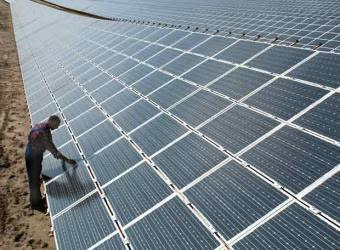
It costs £12,500 to install solar cells on your roof, but new tariffs should give you a return of at least £25,000. So what's the catch? There isn't one, says Miles Brignall

If the government offered to pay you £1,000 a year for the next 25 years, in return for an up-front investment of £12,500, you'd snap it up in a second. Well, that's pretty much the deal on offer this week after the government finally revealed what it will pay those who install electricity generating solar panels – in and around their homes – through the new "Feed-in Tariffs" (FITs).

After years of campaigning by environmental groups – helped in small part by this newspaper – the government has finally agreed to reward households and businesses installing electricity-generating measures with enough of a return to make it a serious financial, as well as an environmental, investment. If you've got the money (which is a big "if") and, crucially, a sunny, south-facing roof, you can earn a 7%-10% tax-free return, an income that will rise in line with inflation. At the same time, you get to do more than your fair share in reducing the UK's carbon­ emissions.

See full Article.

Telefonía celular verde, negocio rentable


En el mundo hay 5.000 millones de líneas de teléfonos celulares, tres veces más que la cantidad de números fijos. Son miles de millones de dispositivos que cada año quedan desactualizados y que si bien no todos son renovados, muchos terminan en la basura o en el baúl de los recuerdos.

Se trata de una cantidad ingente de plástico, metales, cerámica, vidrio... Materia prima que se necesita para fabricar los nuevos dispositivos y de la que sólo se recicla un 5%.

Esto sin contar la cantidad de energía requerida por las operadoras para las transmisiones; lo que hace que las tecnologías de comunicación e información sean responsables del 2,8% de las emisiones de carbono, según la organización Global e-Sustainability Initiative (GeSI).

See full Article.

Fraudsters warned - prosecutions to become easier under Fraud Act


With the Fraud Act becoming effective from Monday 15 January, KPMG Forensic has warned any prospective fraudsters that the Act is likely to lead to a greater number of successful prosecutions.

The Act creates, for the first time, a specific offence of fraud, split into three principal categories: fraud by false representation (under which ID theft could fall), fraud by failure to disclose information, and fraud by abuse of position.

As well as creating these specific offences, the Act will also make it easier to prosecute defendants as it focuses on what the perpetrator intended rather than what necessarily resulted - a major change of emphasis in the law. Whereas under previous law, the prosecution in a case would have had to show that a victim believed in or acted upon the actions of the defendant, and that the defendant either made a gain or the victim suffered a loss, under the new Act this will no longer be necessary - the mere intention to cause these is now the crucial point, and there does not even have to be an identifiable victim.

See full Press Release.

'Flexible working patterns can boost employee health'


Flexible working patterns can result in improved job satisfaction and employee health, a new study has found.

Research by Durham University revealed that employees with flexible work patterns had lower blood pressure and better sleep quality than those working fixed hours.

According to the Trade Unions Congress (TUC), new work patterns can take the pressure off over-stretched permanent employees.

See full Article.

Thursday, February 25, 2010

Global Energy: The Future of Global Oil Supply: Understanding the Building Blocks


OIL SUPPLY--WHAT BLUEPRINT FOR THE FUTURE?

The controversy surrounding future oil supply can be divided into two components: a determination of the factors that will drive the much-debated future of oil supply and then, longer term, a consideration of consequences and the actions required when oil supply eventually plateaus. IHS CERA identifies a number of critical observations at the core of this analysis of future supply:

* Supply evolution through 2030 is not a question of resource availability.
* IHS CERA projects growth of productive capacity through 2030, with no peak evident.
* There is no unique picture of the course of future of supply: we are dealing with a complex, multicomponent system.
* Aboveground drivers—economics, costs, service sector capability, geopolitics, the timing and nature of government decision making, and, centrally of course, investment—are crucial to future supply availability.
* Market dynamics will remain highly volatile.
* The upstream oil industry faces major challenges in finding new oil and turning discoveries into commercial production.

Access full Report.

How to build great leaders


To help prepare promising leaders for the future, top companies are forcing their employees to take on new (global) risks.

For John Tolva, IBM's Chicago-based director of citizenship and technology, the value of his four-week assignment to Ghana last year really hit him during a game of Scrabble by candlelight.

He and teammates from India, Germany, Brazil, and other countries had agreed on an unorthodox rule: You could use any language you knew. "That's when I understood what a globally integrated enterprise looks like," he says.

See full Article.

Top UN climate official resigns


Yvo de Boer, the UN's top climate change official, says he will resign after nearly four years in the post.

His departure takes effect from 1 July, five months before 193 countries are due to reconvene in Mexico for another attempt at global deal on climate.

Nations failed to reach a binding deal at the Copenhagen meeting in December.

See full Article.

"Hay mujeres con currículum brillantes que están en casa cuidando criaturas"


Las autoras de 'El timo de la superwoman' reivindican que la conciliación sea también un problema de hombres

Hablo con las autoras y me confiesan que este libro no ha nacido con la intención de lanzar más leña al fuego en los consolidados tópicos de guerra de sexos entre los hombres y las mujeres. Todas las historias que cuentan la experta en recursos humanos y psicóloga Esther Casademont, y la periodista de La Vanguardia, Mar Galtés, en su libro "El timo de la superwoman" son reales y nacen de experiencias que rodean a su grupo de amistades y a otras profesionales que han logrado perpetuar una carrera de éxito. Son pocas, aunque esperan que en cuestión de generaciones haya muchas más.

Según las autoras, se da por hecho que las mujeres han hecho un paso importante en el ámbito laboral, pero el hombre no ha hecho ningún paso en el ámbito doméstico". Y es aquí donde entra la, según ellas, mal entendida conciliación laboral. "La igualdad de oportunidades profesionales y de conciliación no son problemas exclusivos femeninos, sino que sólo tienen sentido si se contemplan desde un punto de vista del conjunto de la sociedad".

Ver Artículo completo.

Fraud cases double in wake of financial crisis


The value of fraud detected in Australia more than doubled in the second half of last year, possibly as a result of the global financial crisis, new research shows.

The latest Fraud Barometer released by business services firm KPMG shows there were 81 large fraud cases before Australian courts in the six months to December 31, worth $217.9 million in total.

That compared to 69 cases in the first six months of 2009, worth a total of $100.1 million.

See full Article.

State Department Briefing on Climate Change


Special Envoy on Climate Change Todd Stern spoke to reporters about international climate negotiatiations.

See C-SPAN Video.

UK’s Round 3 Offshore to Test Global Wind Industry


INDUSTRY DEVELOPMENT

On 8 January 2010, the UK’s Crown Estate announced the successful bidders for the nine zones defined in the Round 3 offshore wind site tender. These players have been awarded development rights for a total combined capacity of up to 32.2 GW. The offshore wind capacity awarded in Round 3 could account for over 38% of the country’s current overall generation capacity, estimated to be 84 GW.

Successful bidders include players with experience in offshore and new entrants such as EDP Renovaveis and Siemens Project Ventures. Among the winners, four companies including Centrica, Scottish and Southern Energy (SSE), RWE, and Scottish Power captured nearly 50% of the capacity awarded and will develop the larger zones representing over 63% of the megawatts awarded.

Ver Artículo completo, in pdf format.

Wednesday, February 24, 2010

Sustainable Haiti – Social Venture Capital/Social Enterprise Conference


See full Details.

The top companies for leaders


These are the global businesses that are tops in attracting, retaining and nurturing talent.

Most large companies love to talk about developing strong leaders. But when it comes down to it, many of them don't know how to turn their words into action. So Fortune teamed with human resources consultants Hewitt Associates and the RBL Group to find out which companies do it best.

The names that top our list, like IBM (IBM, Fortune 500) and Procter & Gamble (PG, Fortune 500), have gone beyond the basics of grooming strong leaders and have come up with new ways to test their employees in the global marketplace.

See full Article.

If you only do one thing this week ... tell your bosses what you think of them


Employers should receive appraisals as well as employees – just be careful how you go about '360-degree feedback'

Bottling up frustration at your boss is not advisable. Photograph: Teri Pengilley/Teri Pengilley

Whether it's a failure to communicate useful information or a tendency for slip-ups that make you and your colleagues look bad, the chances are you could tell your boss a thing or two about the way he or she works. Recently it was even claimed that doing so would make you less stressed.

The trouble is finding the right way to approach the matter. Bottle things up and you may end up exploding and saying things you regret, but speak out on the spur of the moment and you may come across as antagonistic. So what is the most constructive way to go about telling your boss what you think of him or her?

See full Article.

VAT zero-rating of carbon emissions allowances should minimise fraud risk


HM Treasury announced yesterday that all supplies of emissions allowances within the UK will be VAT zero rated from today. This means that whilst VAT is no longer due on UK carbon credit transactions, businesses retain the right to recover VAT they incur on their associated costs.

This is an interim measure that will remain in force pending implementation of an EU-wide solution.

Difficulties remain with cross-border carbon transactions and brokerage and related charges

Frank Sangster, head of environmental tax at KPMG, commented:
"Whilst the Treasury's move should minimise the risk of fraud in UK carbon trading, the risk of VAT fraud continues to exist in relation to transactions on non-UK exchanges such as the European Energy Exchange (EEX) in Germany and Sendeco2 in Spain. The exceptions to this are trades in the Netherlands and France, who have already acted in relation to the potential fraud.

"We recommend that participants in the market continue to exercise caution and undertake thorough Know Your Customer (KYC) procedures before transacting in overseas markets.

See full Press Release.

FSA gets tough in its adoption of the Walker Review


"This sends a clear message to the industry that the FSA means business. Their proposals are consistent with those of Sir David Walker in his review - but are even wider-reaching in that they put heavy emphasis on personal accountability at senior levels and extend to institutions and individuals that were not encompassed by the review. Some aspects will even extend to foreign holding companies that own UK-based regulated companies.

"The FSA is putting personal accountability firmly at the heart of its approach. The proposals will ensure that non executives who act as chairmen of key committees will be subjected to the rigours of the approval regime and will be challenged during the supervisory review process.

"The proposals also show the FSA increasing their requirements and expectations of Chief Risk Officers and risk control functions. The FSA has indicated here that its approach towards testing the effectiveness of governance within firms will be accorded a high level of priority.

See full Press Release.

The Continuing Climate Meltdown


More embarrassments for the U.N. and 'settled' science.

It has been a bad—make that dreadful—few weeks for what used to be called the "settled science" of global warming, and especially for the U.N. Intergovernmental Panel on Climate Change that is supposed to be its gold standard.

First it turns out that the Himalayan glaciers are not going to melt anytime soon, notwithstanding dire U.N. predictions. Next came news that an IPCC claim that global warming could destroy 40% of the Amazon was based on a report by an environmental pressure group. Other IPCC sources of scholarly note have included a mountaineering magazine and a student paper.


See full Article.

Fraud highs set to continue in 2010, says KPMG

"Fraud has been running at historically high levels in the UK over the last few years and this is set to continue. Initial assessments of 2009 for KPMG's Fraud Barometer, due to be published in the next few weeks, indicate that fraud ran at record or near-record levels during the year.

"Fraud has a 'long tail' in that it can take several years after a fraud has been committed for it to be detected, investigated and brought to court (if at all). Therefore, the full impact of the credit crunch on fraud is yet to be seen and the figures we see now show only part of the picture.

"As companies look to increase top-line growth and reduce operational costs in the current stressed economic environment, supply chain and accounting related frauds are likely to be an issue in 2010. The drive to secure new business means that bribery and corruption offences by employees may become an issue for companies - this is an area of focus for the authorities and the draft Bribery Bill, under which companies can potentially be prosecuted for negligent failure to prevent bribery and corruption, is expected to come into force in the UK before the end of the year.

See full Press Release.

Tuesday, February 23, 2010

San Francisco Area Prepares for the Electric Car


If electric cars have any future in the United States, this may be the city where they arrive first.

The San Francisco building code will soon be revised to require that new structures be wired for car chargers. Across the street from City Hall, some drivers are already plugging converted hybrids into a row of charging stations.

In nearby Silicon Valley, companies are ordering workplace charging stations in the belief that their employees will be first in line when electric cars begin arriving in showrooms. And at the headquarters of Pacific Gas and Electric, utility executives are preparing “heat maps” of neighborhoods that they fear may overload the power grid in their exuberance for electric cars.

See full Article.

EPA Increases Transparency of Proposed Regulations


The U.S. Environmental Protection Agency (EPA) is launching a new Web site giving the public additional opportunity to participate in the agency’s rulemaking process, demonstrating President Obama’s commitment to more transparent and open government. The online Rulemaking Gateway serves as a portal to EPA’s priority rules, providing citizens with earlier and more concise information about agency regulations. It also allows users to search for EPA rules that relate to specific interests, including impacts on small business; children’s health; environmental justice; and state, local and tribal government.

Rulemaking Gateway provides information as soon as work begins and provides updates on a monthly basis as new information becomes available. Time-sensitive information, such as notice of public meetings, is updated on a daily basis.

Rulemaking Gateway complements Regulations.gov, the federal government’s main portal for tracking rules from all federal agencies, by providing brief overviews of specific EPA rules and additional ways to search rules based on the phases they are in (e.g., pre-proposal, proposal), the topics they relate to (e.g., air, water), and the impacts they might have (e.g., impacts on small businesses or environmental justice).

See full Press Release.

Super bug peps up biofuel


Tony Atkinson, creator of bacteria that can make fuel from waste plant material

WHEN Tony Atkinson discovered an ethanol-belching microbe in his laboratory in 1973 it seemed interesting but not very useful. The fact that the tiny bugs could be induced to generate small amounts of the fuel was of little consequence.

At the time the North Sea oil industry was about to take off and thoughts of finding cleaner, sustainable sources of petrol were far from people’s minds.

Nearly four decades later, the world is a different place and Atkinson’s discovery is now the basis for a well-funded renewable energy firm.

See full Article.

IASB softens stance on convergence


The International Accounting Standards Board would no longer pursue convergence with its US peer as “an objective in itself”, its oversight body said on Monday, in the latest sign of eroding consensus on accounting rules.

The IASB, which sets standards for most of the world outside the US, was nominated by the Group of 20 nations to oversee the development of a single high-quality accounting standard by mid-2011.

This was widely assumed to include convergence of US and international standards with a view to US adoption of International Financial Reporting Standards, which are already used or due to be used by more than 110 countries, including India, China and Japan. However, increasing politicisation of the accounting process and tensions over sovereignty has made this harder to achieve, say regulators and accountants.

See full Article.

SEC and UK FSA Hold Fifth Meeting of the SEC-FSA Strategic Dialogue


Securities and Exchange Commission Chairman Mary Schapiro and UK Financial Services Authority (FSA) Chairman Adair Turner and Chief Executive Hector Sants met in London today as part of the SEC-FSA Strategic Dialogue. The purpose of the Dialogue, established in 2006, is to engage at the senior levels of the two agencies on current matters affecting the U.S. and UK capital markets and areas of future collaboration. This was the fifth meeting of the Dialogue.

Some of the areas of mutual interest discussed during today's meeting included:

* Corporate governance and executive compensation
* Disclosure regimes around client asset risk
* Regulation of hedge funds and investment advisers and the protection of customer assets
* Market infrastructure, particularly relating to central counterparties for OTC derivatives
* Market supervision
* Cooperation on cross-border supervision

See full Press Release.

Climate change: the biggest threat to economic recovery


After a year of pain and pessimism, we are starting to see signs of an economic recovery. Green shoots are sprouting. Governments' bold economic and financial actions of over the past year are beginning to take effect.

But we are not out of the woods yet. We now need to make sure that recovery is sustained, and for that bold action on climate change will be needed. As world leaders prepare for the UN climate change talks in Copenhagen this December, one of their top priorities must be to move their economies towards a low-carbon future.

Business as usual is not an option if the economic recovery is to be sustained. If we carry on increasing greenhouse gas emissions, the resulting climate change will lead to massive upheavals: floods and droughts, more violent storms, more intense heat waves, escalating conflicts over food and water and resources.

See full Article.

Recession affects sales of Fairtrade products


Fairtrade’s explosive growth slowed in the UK last year as shoppers thought twice about buying costlier ethical products in the recession, figures released today show.

Overall Fairtrade sales rose by 12 per cent to an estimated £799m, with tea and coffee performing well but cotton fading, the Fairtrade Foundation said.

The rise represents a marked slowdown in the runaway growth of the trade-not-aid movement, following sales leaps of 71 per cent in 2007 and 45 per cent in 2008.

During 2009 several companies announced they would move some lines exclusively to Fairtrade lines: Starbucks switched all its espresso-based coffees to Fairtrade while Cadbury converted its best-selling Dairy Milk range.

See full Article.

Monday, February 22, 2010

Foreign direct investment: Putting in money


Foreign direct investment is on the wane

THE flow of foreign direct investment (FDI) fell by 39% in 2009 to just over $1 trillion, from a shade under $1.7 trillion in 2008, according to the UN Conference on Trade and Development. All kinds of investment—equity capital, reinvested earnings and intra-company loans—were affected by the downturn.

See full Article.

Also see Press Release and Report, in pdf format.

Ten to-do's for audit committees in 2010


"Audit committee members know they have a sizeable task in 2010 as they confront high shareholder expectations, new regulations and legislative reforms, and a tenuous economic recovery," said Timothy Copnell, director of KPMG's UK Audit Committee Institute (ACI) and an Associate Partner at KPMG."

To help audit committees focus their agendas on key challenges in the year ahead, KPMG's Audit Committee Institute again offers its annual "aide memoire" to directors - "Ten To-Do's for Audit Committees in 2010" - highlighting issues that should be at the top of the audit committee agenda in the coming year.

"The year ahead is sure to test virtually every audit committee and these to-do's can be a great catalyst for shaping the audit committee's agenda and focusing its discussions," Copnell said.

See full List.

OECD Policy Guidance on Integrating Climate Change Adaptation into Development Co-operation


Summary

The OECD has recently developed a Policy Guidance with information and advice on how to facilitate the integration of adaptation within development processes. While efforts to integrate climate change adaptation will be led by developing country partners, international donors have a critical role to play in supporting such efforts as well as in integrating consideration of adaptation within their own plans and activities. To this end, partners and donors alike need operational guidance.

The objectives of the OECD Policy Guidance are to: i) promote understanding of the implications of climate change on development practice and the associated need to mainstream climate adaptation in development co-operation agencies and partners countries; ii) identify appropriate approaches for integrating climate adaptation into development policies at national, sectoral and project levels and in urban and rural contexts; and iii) identify practical ways for donors to support developing country partners in their efforts to reduce their vulnerability to climate variability and climate change.

See full Press Release.

The Right Fight: How Great Leaders Use Healthy Conflict to Drive Performance, Innovation, and Value by Book Review


The Right Fight: How Great Leaders Use Healthy Conflict to Drive Performance, Innovation, and Value by Saj-nicole Joni and Damon Beyer makes “a convincing and counterintuitive argument that instigating dissent, if done selectively, can produce big results,” says a review in Publishers Weekly.

Backed by real-world expertise and original research, these in-demand consultants reveal that, contrary to popular belief, happy employees aren’t necessarily the most driven employees; in fact, in a culture of harmony they often grow complacent and unproductive.

According to Joni and Beyer, great leaders meet this challenge head-on by instigating and overseeing right fights, company-wide tensions that, when channeled properly, can create breakthrough performance, meaningful innovation, and lasting value. The authors’ fundamental premise: A certain amount of struggle and stress energizes organizations and individuals and leads to optimal execution. In fact, all great leaders use alignment and conflict in balanced measure to drive exceptional results over time. Alignment is extremely important – but it’s only part of the story. Once people are aligned and share high trust, they are then in a position to fight for what really matters, in a noble and high-minded way.

See full Article.

The politics of repression in China: What are they afraid of?


The economy is booming and politics stable. Yet China’s leaders seem edgy

“THE forces pulling China toward integration and openness are more powerful today than ever before,” said President Bill Clinton in 1999. China then, though battered by the Asian financial crisis, was busy dismantling state-owned enterprises and pushing for admission to the World Trade Organisation. Today, however, those forces look much weaker.

A spate of recent events, from the heavy jail sentences passed on human-rights activists to an undiplomatic obduracy at the climate-change negotiations in Copenhagen last December, invite questions about the thinking of China’s leaders. Has their view of the outside world and dissent at home changed? Or were the forces detected by Mr Clinton and so many others after all not pulling so hard in the direction they were expecting?

See full Article.

Improvements to Regulations.gov Make for Easier Access to Federal Regulations


As part of President Obama’s commitment to more effective and open government, the public can more quickly access federal regulations at Regulations.gov, thanks to comments received during the Regulations.gov Exchange online forum held last year. Regulations.gov provides one-stop public access to information related to current and forthcoming regulations issued by the federal government.

The eRulemaking Program made the following specific-site improvements to Regulations.gov:

* a new rotating panel of images and video clips offering a preview to the latest Web site changes
* a dashboard of regulatory documents housed on Regulations.gov
* a new A-Z index of rules and proposed rules categorized by topic
* instructional video-clips highlighting site functions
* improvements to the site's homepage and search wizard

See full Press Release.

Sunday, February 21, 2010

EPA Awards $17 Million to Support Research on the Impacts of Climate Change


The U.S. Environmental Protection Agency is awarding nearly $17 million in Science to Achieve Results (STAR) grants to universities across the country to study the consequences of climate change on the air we breathe and the water we drink.

“EPA is engaging the academic research community, through these grants, to enable solutions that will both adapt to and mitigate the impact of climate change,” said Dr. Paul T. Anastas, assistant administrator for the Office of Research and Development.

The agency solicited grants in four areas:

Climate Change and Allergies
Allergies are responsible for a substantial proportion of healthcare costs in the United States, and chronic allergies have been increasing since 1970. Following on to research showing links between climate and the production and distribution of pollen and mold, the new research being funded will provide information on how climate change influences the production, distribution, dispersal, and potency of allergens produced by weeds, grasses, and trees, and the associated impacts on human health.

See full Article.

Aiding a low carbon future


Around 30 billion tonnes of Carbon dioxide were released into the atmosphere in 2007. Public utilities – the companies responsible for providing electricity and heat – emitted 36.3% of the total, followed by the transport industry with 25.5%. Road transport alone produced 4.8 billion tonnes of CO2 or 16% of global carbon emissions. Energy-intensive industries such as steel-making have high carbon emissions. But so too does agriculture. Deforestation is estimated to be responsible for 17% of greenhouse gas emissions.

See full Details.